Hidden hemoplasma species within the “Candidatus Mycoplasma haemominutum” lineage in Thai cats revealed by analyses of two independent genetic markers
Kritsada Thongmeesee, Thuong Thi Huyen Bui, Duriyang Narapakdeesakul, Patchana Kamkong, Suchansa Thanee, Aung Aung, Chalida Sri-in, Wittawat Wechtaisong, Saruda Tiwananthagorn, Vito Colella, Sonthaya Tiawsirisup

TL;DR
Researchers found new hemoplasma species in Thai cats by analyzing genetic markers, suggesting more diversity in feline blood parasites.
Contribution
Identification of two putative novel hemoplasma species related to Candidatus Mycoplasma haemominutum in Thai cats using 16S and 23S rRNA gene analyses.
Findings
68 out of 388 cats tested positive for hemoplasma infection, with 49 sequenced for both 16S and 23S rRNA genes.
Analysis revealed at least three groups within Candidatus Mycoplasma haemominutum and two putative novel species.
A lack of Candidatus Mycoplasma turicensis reference sequences limits identification of ntST#11.
Abstract
Hemotropic Mycoplasma spp. (hemoplasmas) parasitize erythrocytes and cause hemolytic anemia in several mammalian species, including cats. Mycoplasma haemofelis (Mhf), “Candidatus Mycoplasma haemominutum” (CMhm) and “Candidatus Mycoplasma turicensis” (CMt) are the three main feline hemoplasma species. A species closely related to CMhm was recently proposed as a putative novel species based on the 23S ribosomal RNA (rRNA) gene. In this study, 16S and 23S rRNA genes were used to investigate hemoplasma diversity in cats. Blood samples from 388 cats were obtained and screened for hemoplasma infection based on a PCR assay targeting the 16S rRNA gene. Positive samples were sequenced based on the 16S and 23S rRNA genes. All obtained sequences were analyzed by the nucleotide Basic Local Alignment Search Tool (BLASTn), the DnaSP6 computer program, phylogenetic construction, genetic network and…
Genes, proteins, chemicals, diseases, species, mutations and cell lines named across the full text — each resolved to its canonical identifier and authoritative record.
Click any figure to enlarge with its caption.
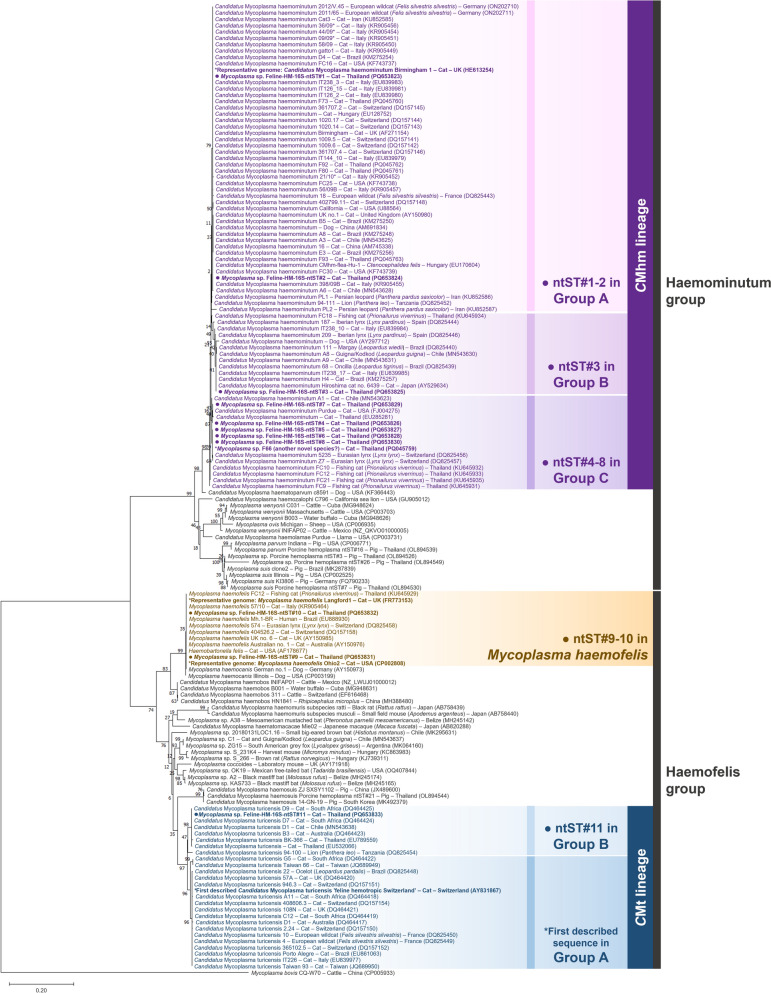 Figure 1
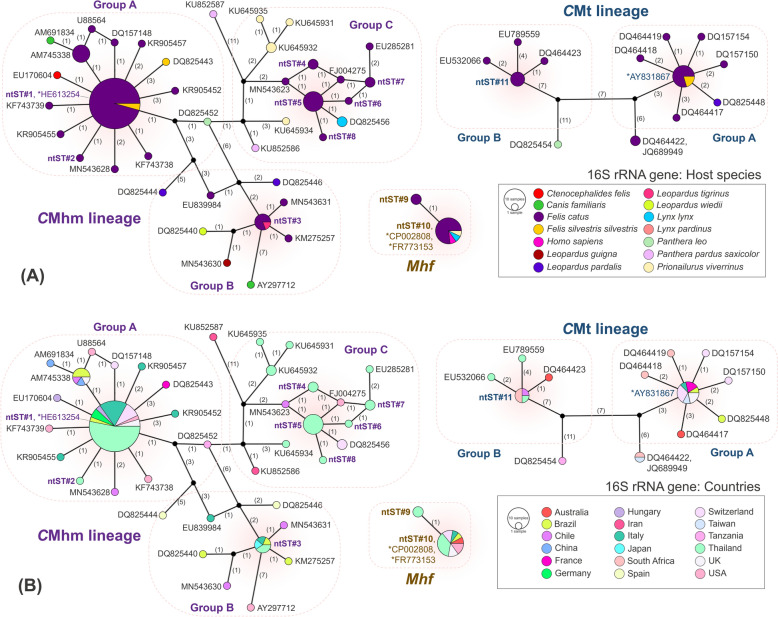 Figure 2
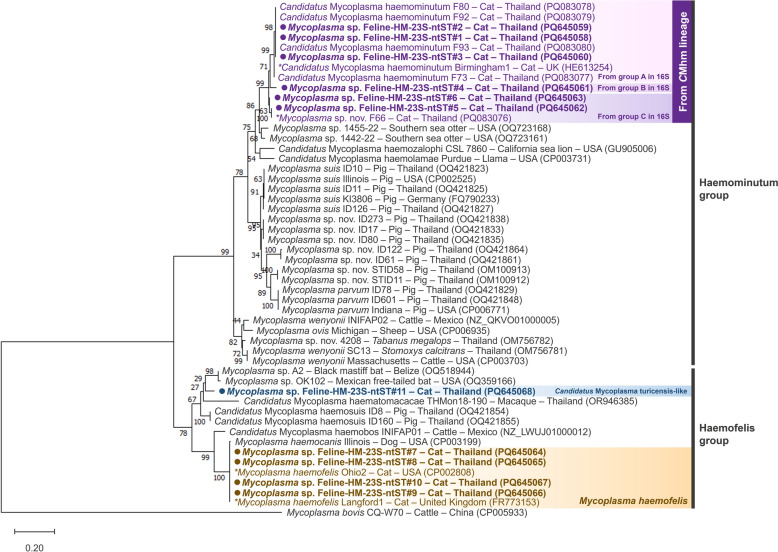 Figure 3
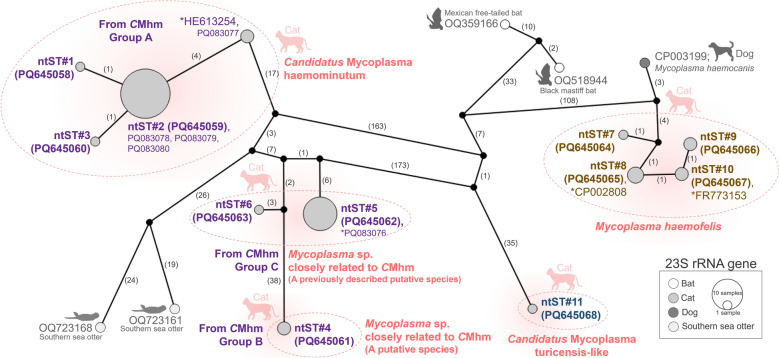 Figure 4
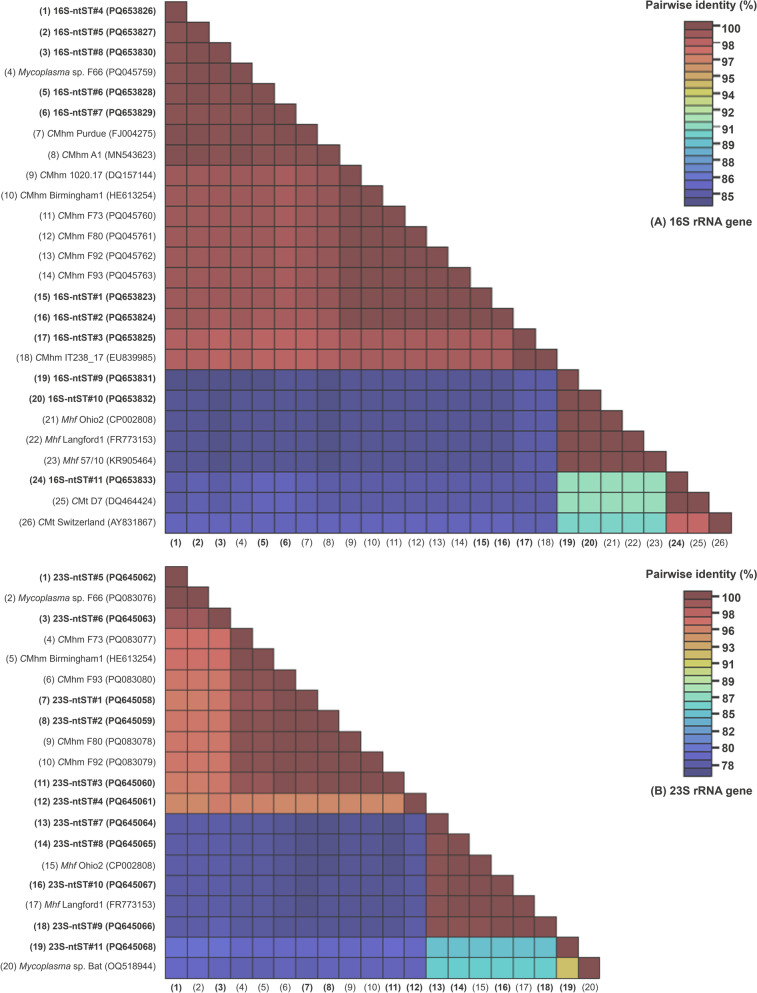 Figure 5
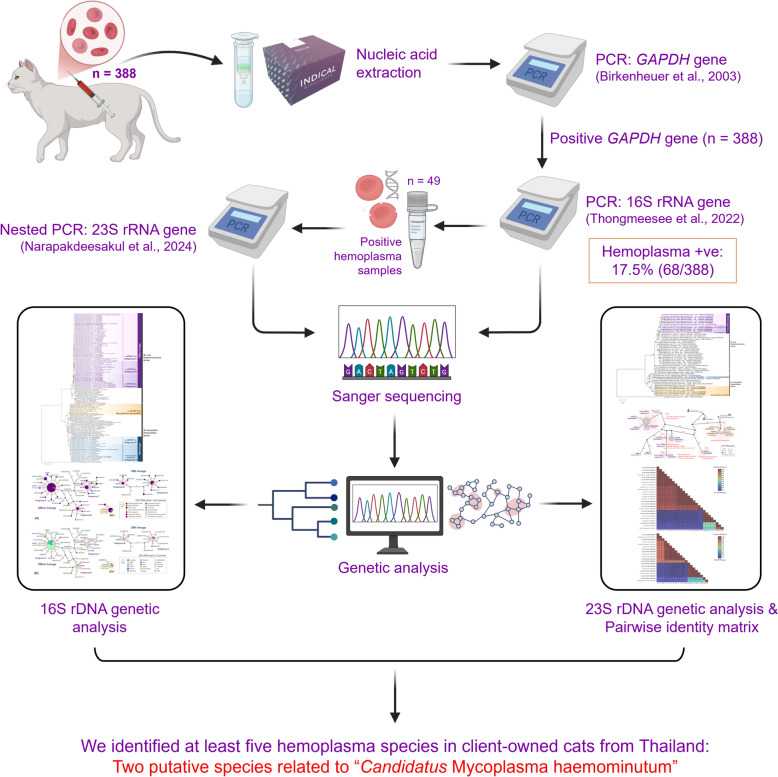 Figure 6
Peer Reviews
No public reviews on file for this paper yet. If you reviewed it on a platform where reviews are public (OpenReview, ICLR, NeurIPS, ICML), you can paste yours below so the community can read it here.
Videos
No videos yet. Explain this paper in a talk, walkthrough, or lecture? Add one.
Taxonomy
TopicsVector-borne infectious diseases · Microbial infections and disease research · Bartonella species infections research