A novel biomarker of human exposure to Aedes albopictus based on the Ag5-3 salivary protein from the tiger mosquito
Maria Greta Dipaola, Eleonora Perugini, Giulia Mancini, Nicolò Gennari, Paola Serini, Giulia Bevivino, Alessio Borean, Fabrizio Lombardo, Marco Pombi, Fabrizio Montarsi, Paolo Gabrieli, Federico Forneris, Bruno Arcà

TL;DR
This study identifies a new biomarker, the Ag5-3 protein, to measure human exposure to tiger mosquitoes, which could improve tracking of mosquito-borne disease risks.
Contribution
The study introduces the Ag5-3 salivary protein as a more sensitive biomarker for human exposure to Aedes albopictus compared to existing markers.
Findings
IgG responses to alAg5-3 increased significantly after the summer mosquito season in both study areas.
The combination of alAg5-3 and al34k2 antigens better detected spatial and temporal exposure variations.
Ag5-3's high conservation suggests it may also detect exposure to other Aedes species like Aedes aegypti.
Abstract
Mosquito-borne arboviral diseases represent a growing threat and serious worldwide concern for public health authorities. Host immunoglobulin G (IgG) responses to mosquito salivary antigens emerged as a useful additional tool to evaluate human–vector contact, which is crucial for transmission risk assessment and planning vector control interventions. We previously reported that IgG responses to the Aedes albopictus 34k2 salivary protein (al34k2) are suitable, although with some limitations, to reveal variation of human exposure to the tiger mosquito. In this study we evaluated the Ae. albopictus Ag5-3 (alAg5-3), an Antigen 5 family member specifically and abundantly expressed in the saliva of adult females. IgG responses to recombinant alAg5-3, as well as to a combination of alAg5-3 and al34k2, were measured in a set of sera previously collected from healthy human blood donors before…
Genes, proteins, chemicals, diseases, species, mutations and cell lines named across the full text — each resolved to its canonical identifier and authoritative record.
Click any figure to enlarge with its caption.
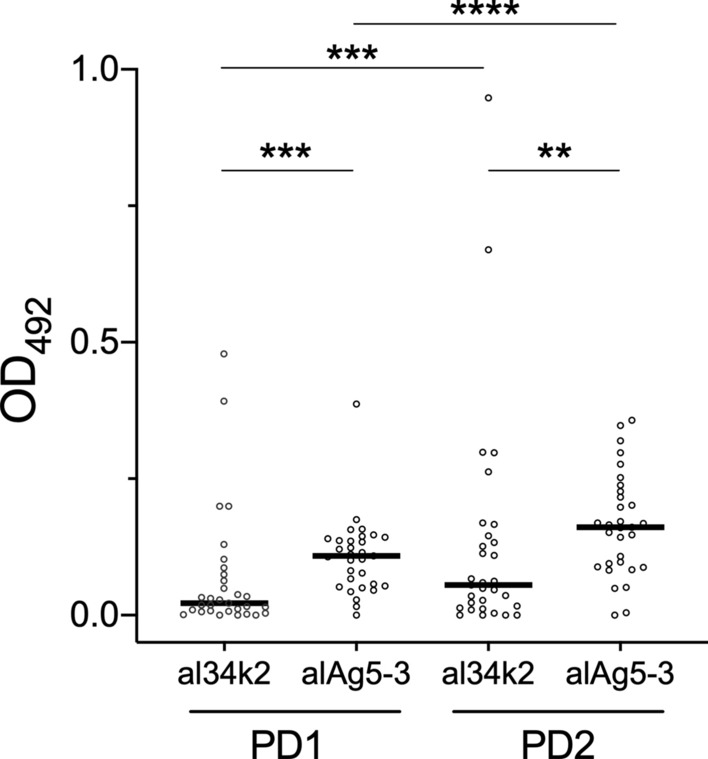 Figure 1
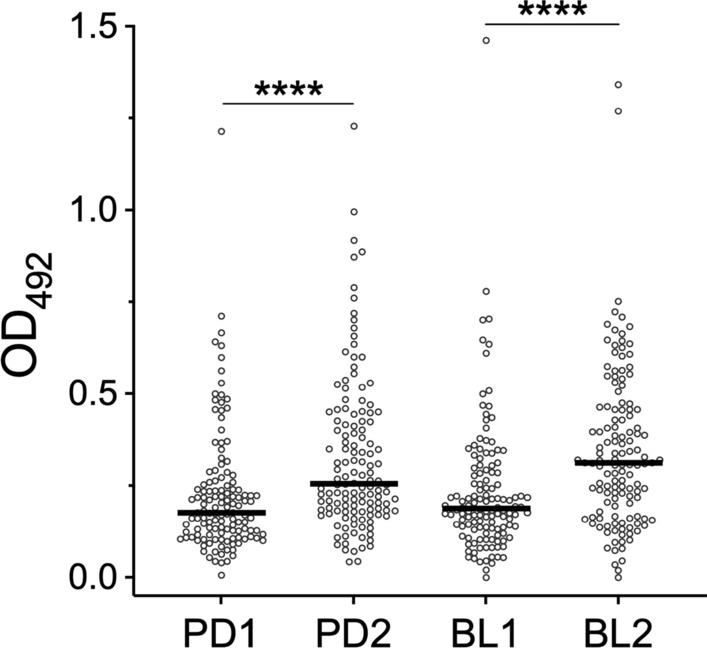 Figure 2
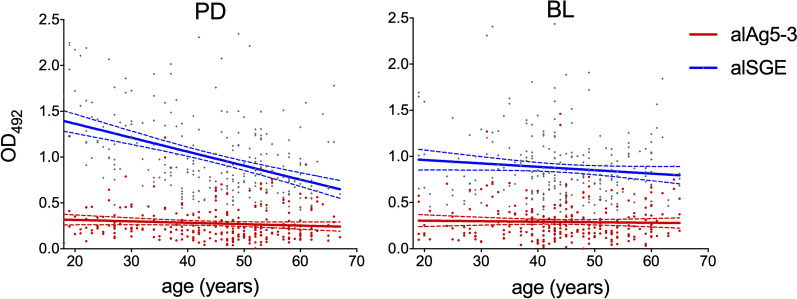 Figure 3
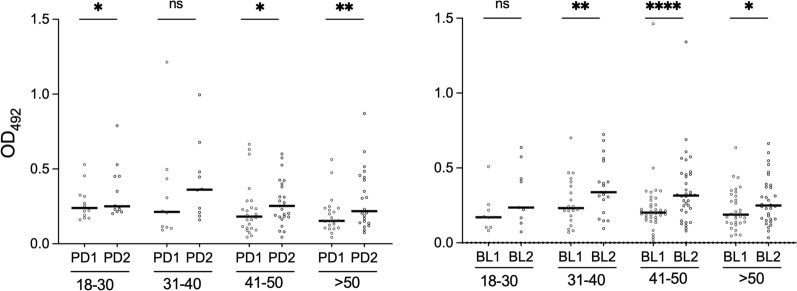 Figure 4
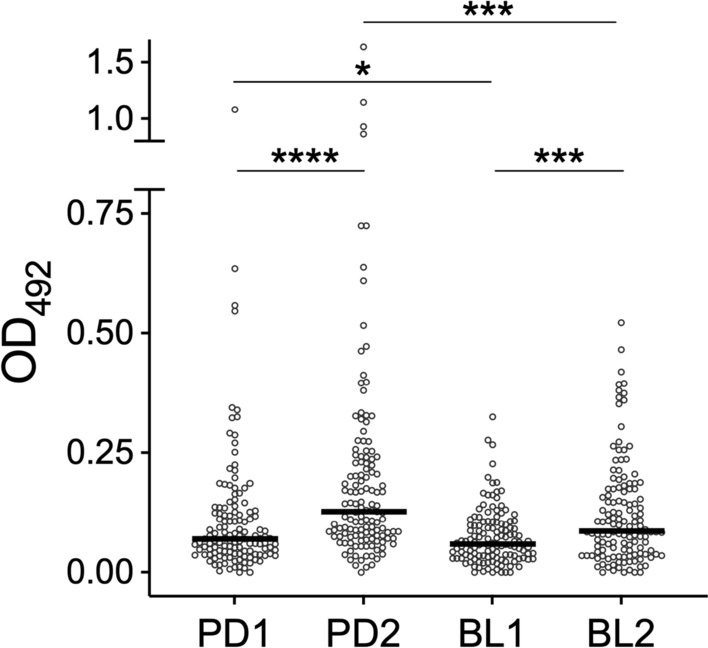 Figure 5
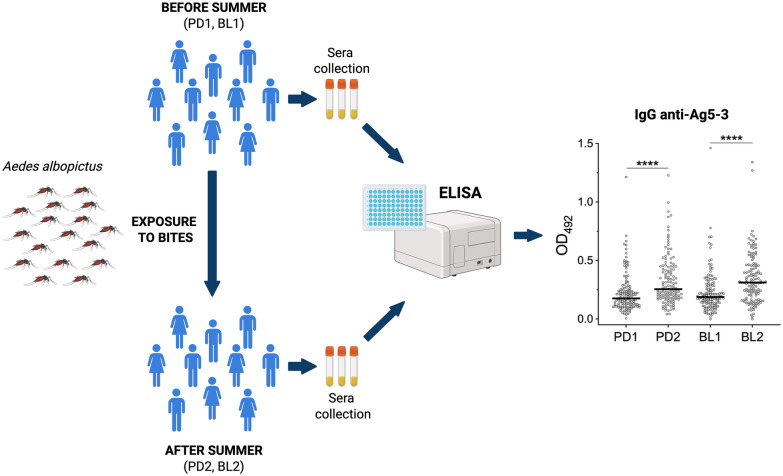 Figure 6
Peer Reviews
No public reviews on file for this paper yet. If you reviewed it on a platform where reviews are public (OpenReview, ICLR, NeurIPS, ICML), you can paste yours below so the community can read it here.
Videos
No videos yet. Explain this paper in a talk, walkthrough, or lecture? Add one.
Taxonomy
TopicsMosquito-borne diseases and control · Studies on Chitinases and Chitosanases · Insects and Parasite Interactions