Intravitreal faricimab in patients with aflibercept-refractory neovascular age-related macular degeneration: short and long-term outcomes and assessment of volume dynamics using an artificial intelligence-based tool
Mickael Barbosa, Nicolò Bartolomeo, Yannic Pannatier Schuetz, Anna Chiara Nascimbeni, Daniela Gallo Castro, Mamadou Pathé Barry, Aude Ambresin

TL;DR
This study shows that faricimab can improve retinal health and allow longer treatment intervals in patients with nAMD who did not respond well to aflibercept.
Contribution
The study introduces an AI-based tool to assess retinal fluid dynamics and evaluates faricimab's efficacy in aflibercept-refractory nAMD patients.
Findings
Faricimab significantly reduced retinal thickness and fluid volumes in patients with refractory nAMD.
Treatment intervals increased from 4.4 weeks to 6.5 weeks after switching to faricimab.
Visual acuity remained stable over 12 months despite reduced treatment frequency.
Abstract
This study assessed the short- and long-term outcomes of intravitreal (IVT) faricimab treatment in patients with neovascular age-related macular degeneration (nAMD) refractory to aflibercept. The main aim was to investigate whether faricimab might enable longer treatment intervals versus aflibercept through improved fluid control, evaluated through use of an artificial intelligence-based quantification tool to evaluate retinal fluid dynamics. This observational cohort study involved patients with refractory nAMD who received at least three consecutive IVT aflibercept 2.0 mg injections before switching to IVT faricimab (with a four-month loading phase followed by a treat-and-extend regimen) due to persistent or recurrent disease despite 4–8-week treatment intervals. Functional and anatomical outcome measures were recorded, and fluid volume dynamics were quantified, at baseline, monthly…
Genes, proteins, chemicals, diseases, species, mutations and cell lines named across the full text — each resolved to its canonical identifier and authoritative record.
Click any figure to enlarge with its caption.
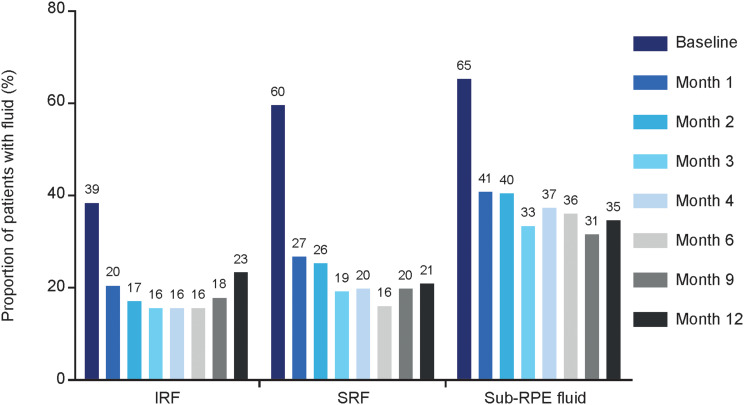 Figure 1
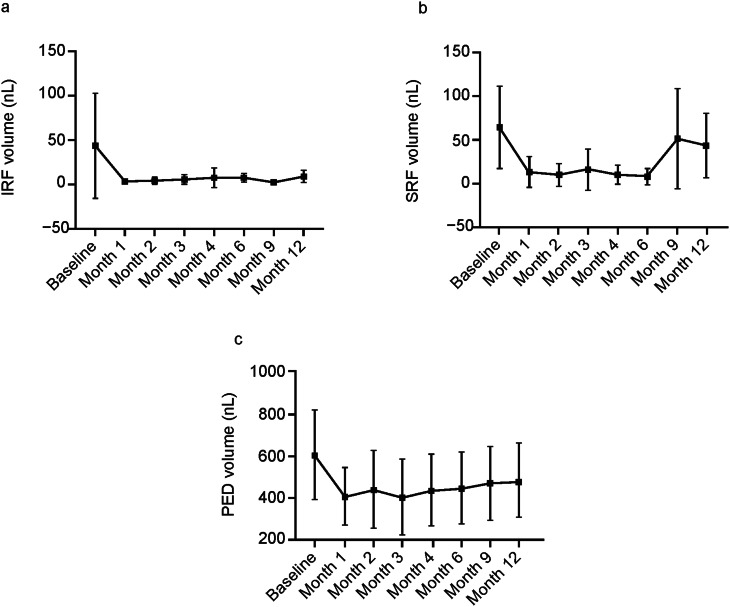 Figure 2
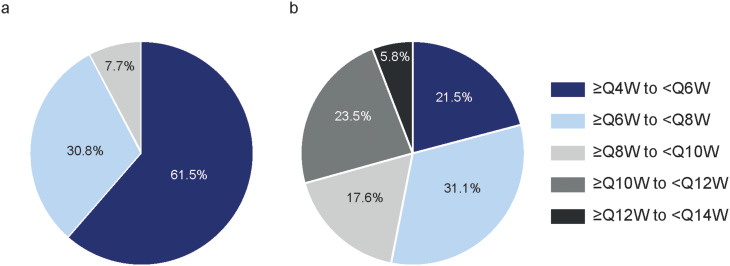 Figure 3
Peer Reviews
No public reviews on file for this paper yet. If you reviewed it on a platform where reviews are public (OpenReview, ICLR, NeurIPS, ICML), you can paste yours below so the community can read it here.
Videos
No videos yet. Explain this paper in a talk, walkthrough, or lecture? Add one.
Taxonomy
TopicsRetinal Diseases and Treatments · Ophthalmology and Visual Impairment Studies · Retinal Imaging and Analysis