Engineering broad-spectrum phage-resistant Escherichia coli via adaptive and programmable defense strategies
Zhenwen Xu, Yunfei Huang, Yuqi Dong, Xiaoping An, Yigang Tong, Mengzhe Li

TL;DR
This paper presents two methods to make E. coli resistant to phage contamination in industrial fermentation, using spontaneous mutations and CRISPR/Cas9.
Contribution
The study introduces two phage resistance strategies in E. coli with distinct trade-offs in effectiveness and stability.
Findings
Spontaneous mutations confer broad resistance but reduce bacterial fitness and stability.
CRISPR/Cas9 provides programmable, long-term immunity with minimal growth defects.
Both strategies protect E. coli from phage infection without affecting recombinant protein production.
Abstract
Phage contamination, which impacts product quality and production efficiency, remains a major challenge in industrial fermentation. Although bacteria have evolved various defense systems to combat phage infection, these systems often suffer from narrow host specificity and limited efficacy. In this study, we isolated and characterized a novel lytic Escherichia coli phage, TR2, from a contaminated fermentation substrate. Its strong environmental stability, short latency period, and high lytic activity render it a significant threat to fermentation processes. Genomic sequencing revealed that phage TR2 has a linear, double-stranded DNA genome of 45,171 bp with a G+C content of 44% and 74 coding sequences. On the basis of the physiological characteristics and genomic features of this phage, we developed two strategies to generate phage-resistant E. coli strains: (i) selection of spontaneous…
Genes, proteins, chemicals, diseases, species, mutations and cell lines named across the full text — each resolved to its canonical identifier and authoritative record.
Click any figure to enlarge with its caption.
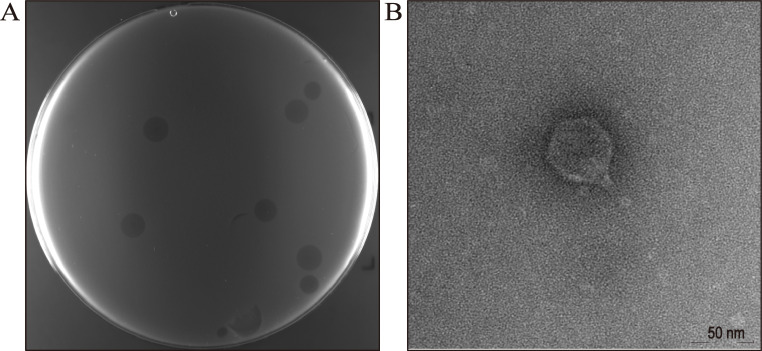 Figure 1
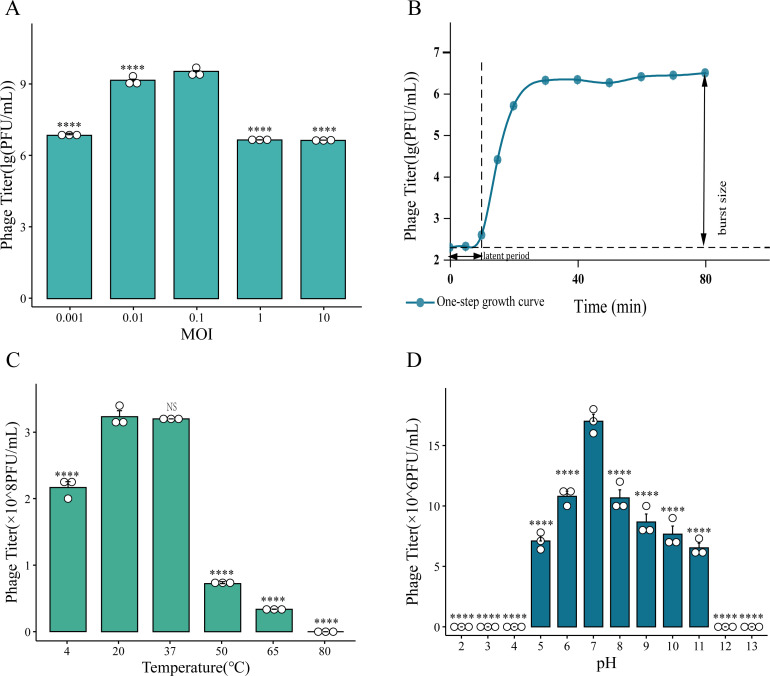 Figure 2
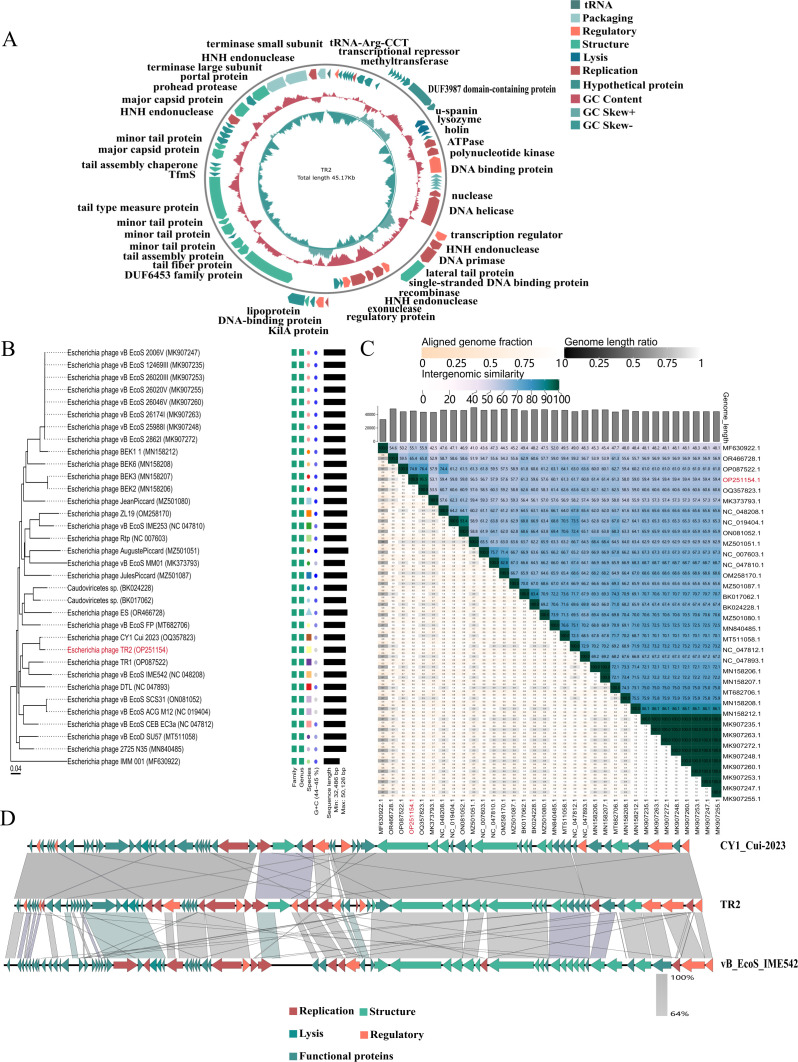 Figure 3
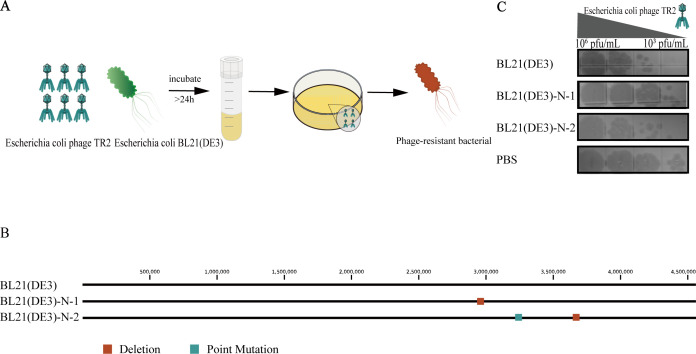 Figure 4
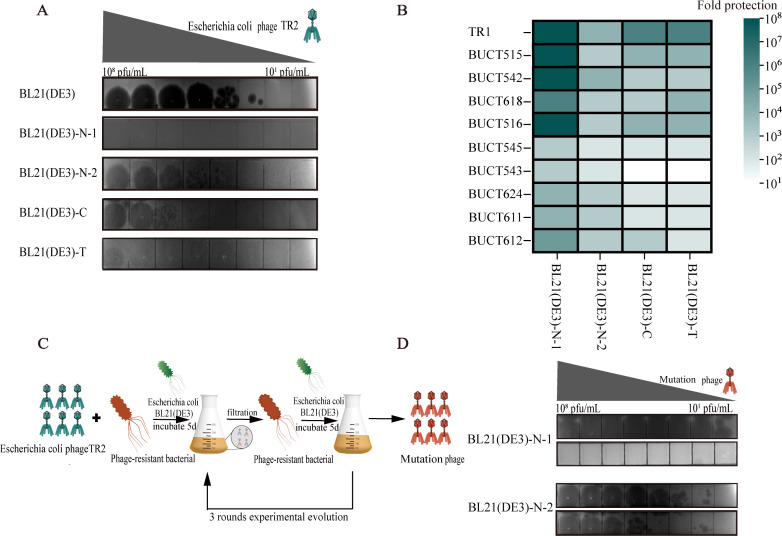 Figure 5
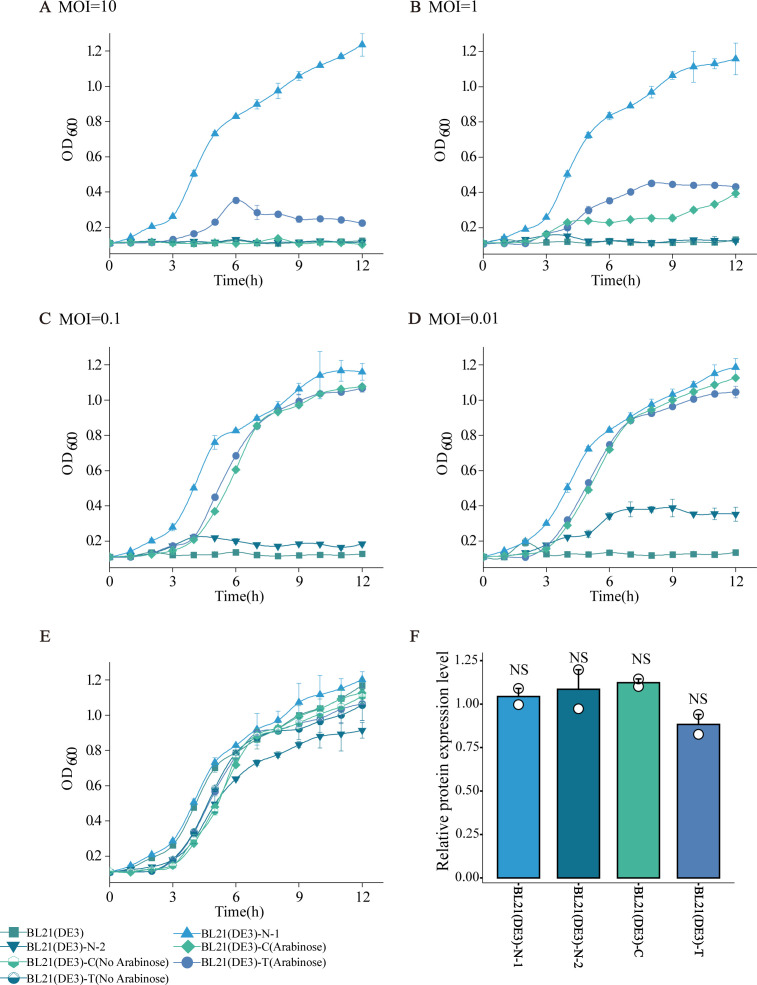 Figure 6
Peer Reviews
No public reviews on file for this paper yet. If you reviewed it on a platform where reviews are public (OpenReview, ICLR, NeurIPS, ICML), you can paste yours below so the community can read it here.
Videos
No videos yet. Explain this paper in a talk, walkthrough, or lecture? Add one.
Taxonomy
TopicsBacteriophages and microbial interactions · CRISPR and Genetic Engineering · RNA and protein synthesis mechanisms