Genomic footprint of a shared Type 5 prophage in “Candidatus Liberibacter asiaticus” and “Candidatus Liberibacter africanus,” two destructive bacterial pathogens of citrus Huanglongbing
Frédéric Labbé, Claudine Boyer, Fernando Clavijo-Coppens, Blandine Benoist, Patrick Turpin, Santatra Ravelomanantsoa, Olivier Pruvost

TL;DR
This study identifies a new shared prophage in two citrus disease-causing bacteria, expanding our understanding of their evolution and genomic diversity.
Contribution
The first evidence of a shared Type 5 prophage between CLas and CLaf, indicating horizontal gene transfer and positive selection.
Findings
A new CLas Type 5 prophage was identified and characterized in Réunion.
85.7% of CLas and all CLaf strains tested contained the Type 5-like prophage.
The prophage suggests horizontal gene transfer and co-evolution among HLB-associated bacteria.
Abstract
Huanglongbing (HLB) is a bacterial disease that affects citrus trees and is considered the most severe citrus disease in the world. The three HLB-associated “Ca. Liberibacter” species harbor prophage regions which have been described to play critical roles in their evolution and biology. In this study, using infected insect vectors, we assembled and characterized the accessory genome of the first circular de novo “Candidatus Liberibacter asiaticus” (CLas) assembly (V1R1) from Réunion, one of the sparse areas worldwide hosting CLas and “Ca. Liberibacter africanus” (CLaf). This 1.272 Mb-long whole-genome harbored 1,129 coding sequences and two complete prophages, including a 37,934 bp-long Type 1 prophage, frequently present in CLas genomes, and a 40,501 bp-long undescribed CLas prophage designated as P-V1R1-5. Comparative genomic approaches suggested that P-V1R1-5 has all the genetic…
Genes, proteins, chemicals, diseases, species, mutations and cell lines named across the full text — each resolved to its canonical identifier and authoritative record.
Click any figure to enlarge with its caption.
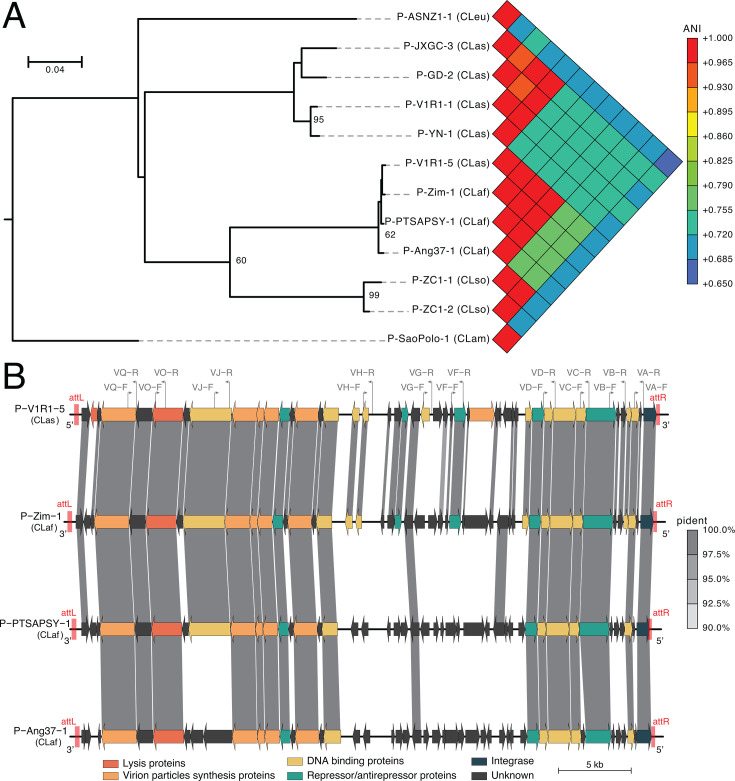 Figure 1
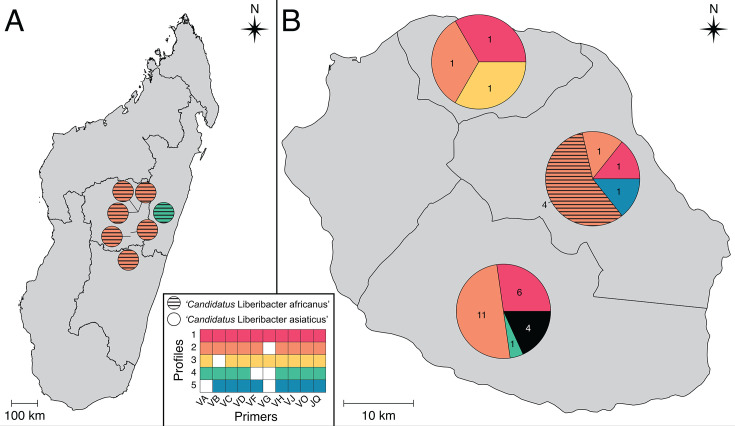 Figure 2
Peer Reviews
No public reviews on file for this paper yet. If you reviewed it on a platform where reviews are public (OpenReview, ICLR, NeurIPS, ICML), you can paste yours below so the community can read it here.
Videos
No videos yet. Explain this paper in a talk, walkthrough, or lecture? Add one.
Taxonomy
TopicsPhytoplasmas and Hemiptera pathogens · Insect symbiosis and bacterial influences · Entomopathogenic Microorganisms in Pest Control