A capsule-dependent lytic phage for targeting multidrug-resistant and hypervirulent Klebsiella pneumoniae
Ziyan Tian, Lin Gan, Junxia Feng, Guanhua Xue, Bing Du, Jinghua Cui, Chao Yan, Hanqing Zhao, Yanling Feng, Zheng Fan, Tongtong Fu, Ziying Xu, Zihui Yu, Yang Yang, Ke Yuehua, Xiaohu Cui, Zhijie Tang, Jing Yuan

TL;DR
This study introduces a phage called phiK2044 that effectively targets dangerous, drug-resistant Klebsiella pneumoniae strains and works well in mice without harmful side effects.
Contribution
The discovery of phiK2044, a lytic phage with high specificity for hypervirulent K. pneumoniae and a novel wcaJ-dependent binding mechanism.
Findings
PhiK2044 showed strong efficacy against hypervirulent K. pneumoniae subtypes in both in vitro and in vivo models.
The phage binds to the host via the wcaJ gene, which is essential for capsular synthesis.
PhiK2044 safely cleared bacterial infections in mice without significant side effects.
Abstract
As the threat of multidrug-resistant Klebsiella pneumoniae strains rises, the potential of phages as promising alternatives to antibiotics is increasingly being demonstrated. In this study, we isolated and characterized phiK2044, a highly specific and efficient lytic phage targeting the model strain K. pneumoniae NTUH-K2044. Demonstrating wide host compatibility, potent lytic activity, and robust environmental adaptability, phiK2044 exhibited exceptional efficacy against hypervirulent subtypes, including hypervirulent K. pneumoniae (45.2%), sequence type 23 (87.5%), and capsular K1 (92.3%). In the mouse model, phiK2044 effectively cleared bacteria without significant side effects, highlighting its therapeutic potential. Mechanistically, we identified wcaJ, a gene encoding a glycosyltransferase essential for capsular synthesis, as the critical determinant of the binding of phiK2044 to…
Genes, proteins, chemicals, diseases, species, mutations and cell lines named across the full text — each resolved to its canonical identifier and authoritative record.
Click any figure to enlarge with its caption.
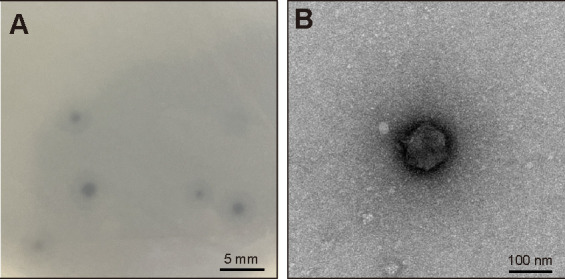 Figure 1
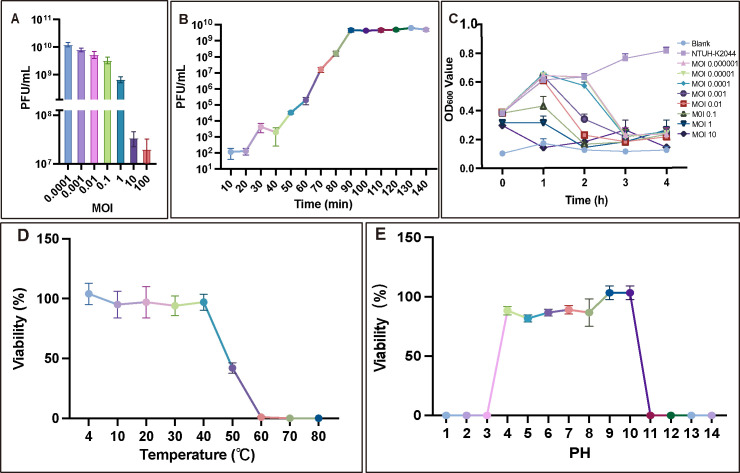 Figure 2
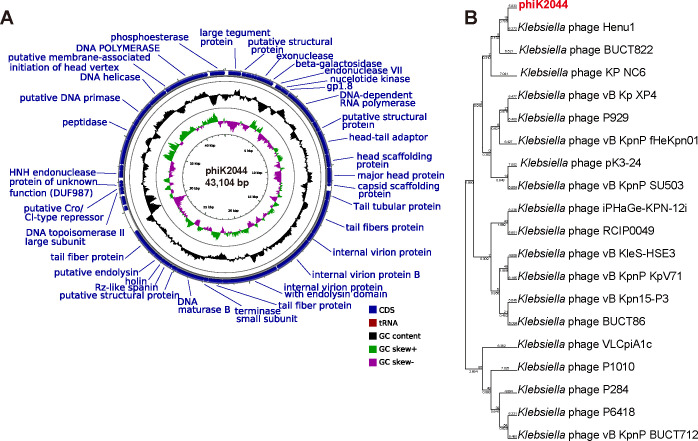 Figure 3
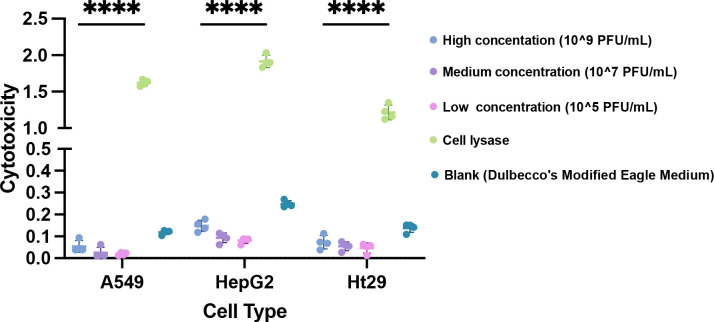 Figure 4
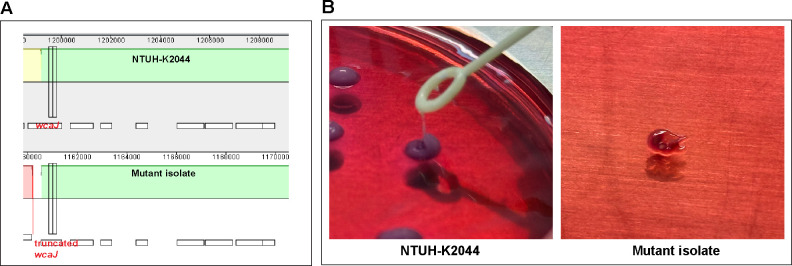 Figure 5
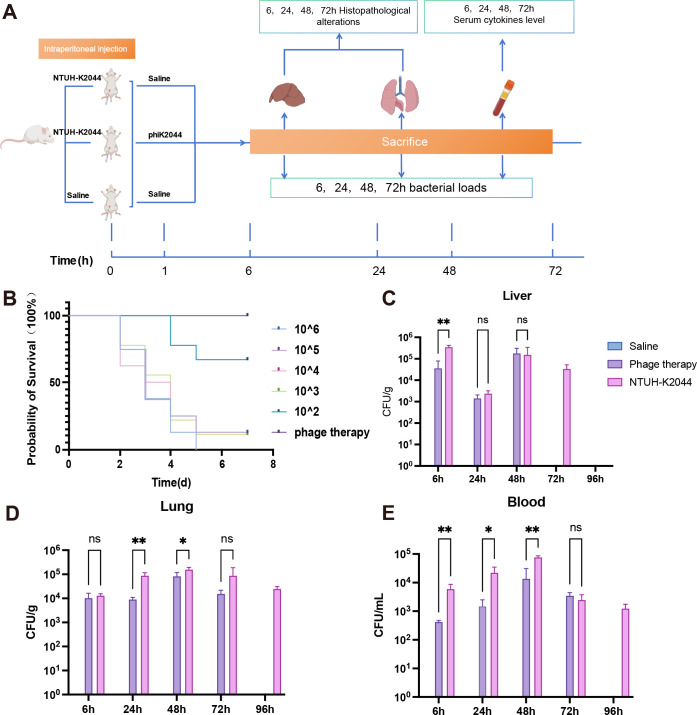 Figure 6
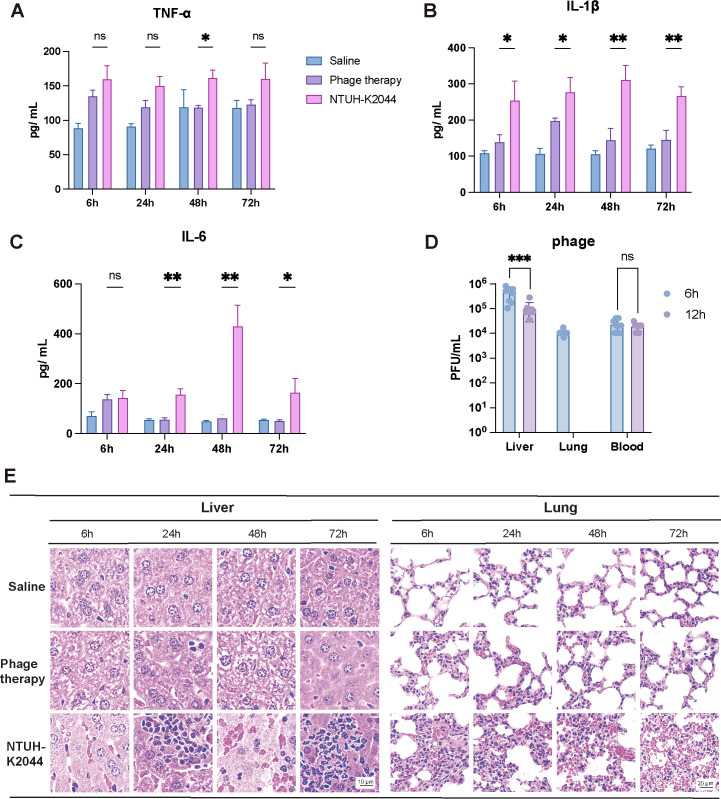 Figure 7
Peer Reviews
No public reviews on file for this paper yet. If you reviewed it on a platform where reviews are public (OpenReview, ICLR, NeurIPS, ICML), you can paste yours below so the community can read it here.
Videos
No videos yet. Explain this paper in a talk, walkthrough, or lecture? Add one.
Taxonomy
TopicsBacteriophages and microbial interactions · Antibiotic Resistance in Bacteria · Bacterial Genetics and Biotechnology