The C-terminal domain of T9SS component protein SprA assists Flavobacterium psychrophilum bacteriophage endolysin Ely174 to lyse Gram-negative bacteria
Shuaishuai Xie, Yaoyajie Lu, Xueer Li, Yifan Xu, Xianglin Cao, Jianjun Chen

TL;DR
Researchers engineered a phage-derived endolysin to effectively kill Flavobacterium psychrophilum, a harmful bacteria in aquaculture, without relying on antibiotics.
Contribution
The study introduces a modified endolysin that can bypass the outer membrane of Gram-negative bacteria using T9SS components.
Findings
Ely174 endolysin reduced F. psychrophilum optical density from 0.8 to 0.2 in 6 minutes at 2.5 µg/mL.
Fusion with the C-terminal domain of T9SS protein SprA allowed Ely174 to lyse untreated F. psychrophilum.
Protein engineering improved Ely174's thermal stability and lytic activity threefold.
Abstract
Flavobacterium psychrophilum is the pathogen of bacterial cold-water disease, causing enormous economic losses in aquaculture. Antibiotic therapy to control F. psychrophilum risks the development of drug-resistant strains. The use of phage-derived endolysins as effective substitutes for antibiotics is a current research hotspot. In this study, the endolysin Ely174 of F. psychrophilum bacteriophage was heterologously expressed. The optical density of Triton-pretreated F. psychrophilum at 600 nm was decreased from 0.8 to 0.2 in approximately 6 min using 2.5 µg/mL endolysin Ely174. In addition to its wide pH tolerance range, Ely174 also displayed a broad host spectrum. The presence of Mg2+, Ca2+ and Na+ in the reaction system enhanced its bactericidal activity. The lytic activity of Ely174 was increased threefold by random mutagenesis. The thermal stability of cold-adapted Ely174 has been…
Genes, proteins, chemicals, diseases, species, mutations and cell lines named across the full text — each resolved to its canonical identifier and authoritative record.
Click any figure to enlarge with its caption.
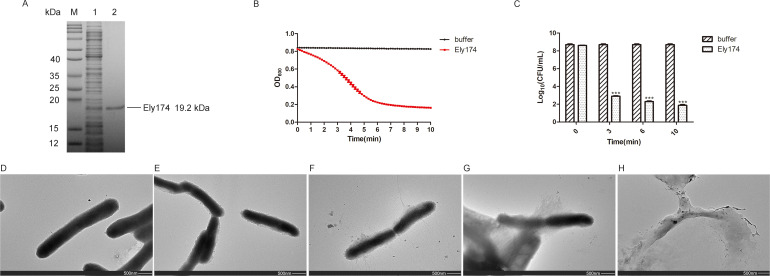 Figure 1
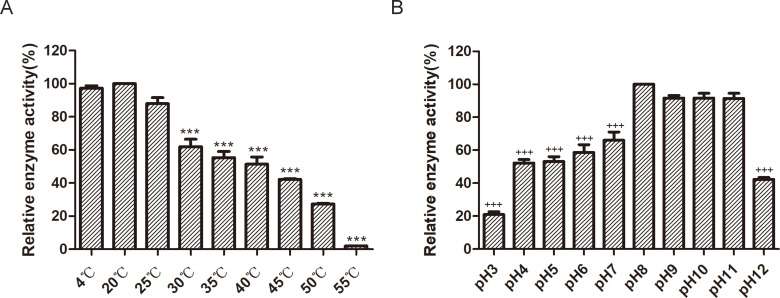 Figure 2
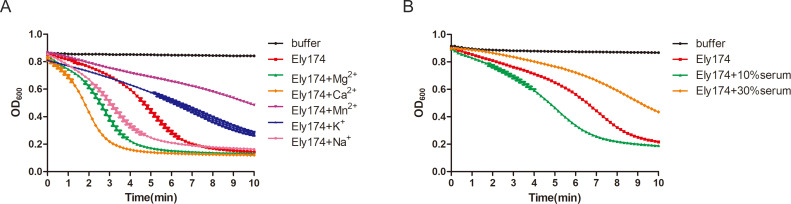 Figure 3
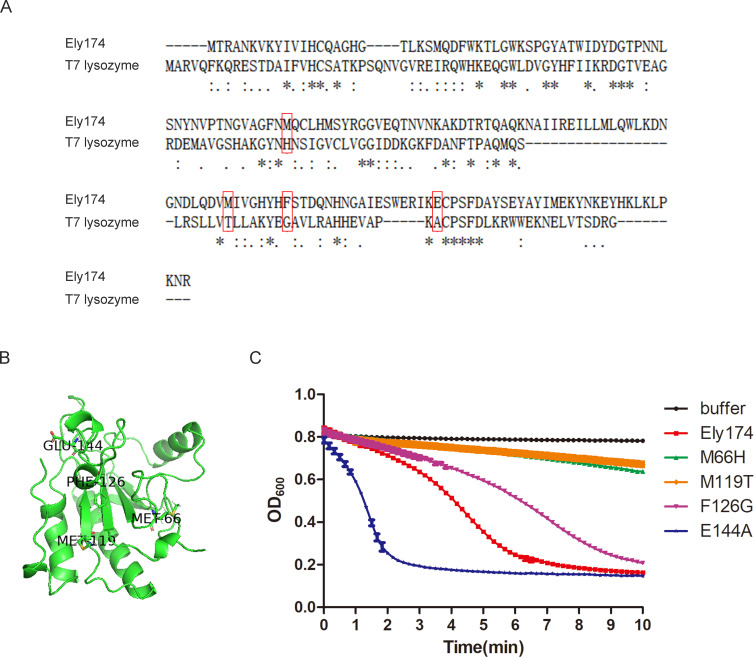 Figure 4
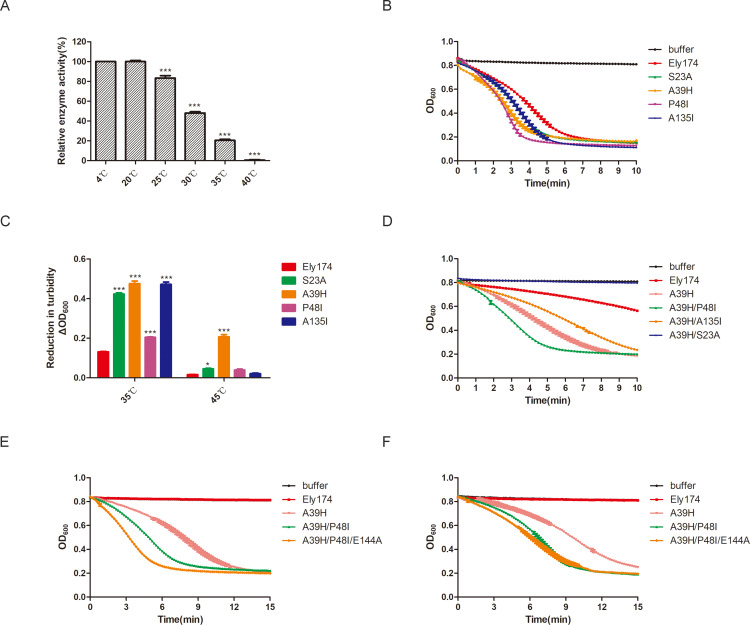 Figure 5
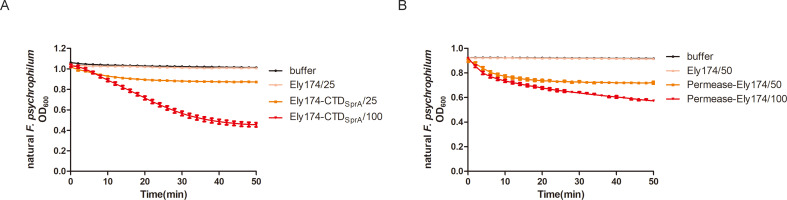 Figure 6
Peer Reviews
No public reviews on file for this paper yet. If you reviewed it on a platform where reviews are public (OpenReview, ICLR, NeurIPS, ICML), you can paste yours below so the community can read it here.
Videos
No videos yet. Explain this paper in a talk, walkthrough, or lecture? Add one.
Taxonomy
TopicsBacteriophages and microbial interactions · Bacterial Genetics and Biotechnology · Aquaculture disease management and microbiota