Development of a CRISPR/Cas9-induced gene editing system for Pseudoalteromonas fuliginea and its applications in functional genomics
Zedong Duan, Ruyi Yang, Tingyi Lai, Wanning Jiang, Jin Zhang, Bo Chen, Li Liao

TL;DR
A CRISPR/Cas9 system was developed for Pseudoalteromonas fuliginea to enable efficient gene editing, aiding studies on cold adaptation and biotechnology.
Contribution
The novel CRISPR/Cas9 system enables efficient gene knockout and insertion in Pseudoalteromonas fuliginea, overcoming prior genetic manipulation limitations.
Findings
CRISPR/Cas9 gene editing in P. fuliginea achieved over 70% efficiency for deletions and insertions.
Successful edits included genes like fliJ, indA, and Pf sRNAs, impacting motility and stress response.
The system supports functional genomics and biotechnological applications in cold-adapted bacteria.
Abstract
Pseudoalteromonas has been used as a model system to study cold adaptation and is of widespread interest in biotechnology and ecology. To explore its physiological responses to extreme cold, uncover functional genes, and clarify their ecological roles, efficient genetic tools are essential. However, existing genetic manipulation methods in Pseudoalteromonas rely on traditional homology-based recombination, which is laborious and time-consuming in this bacterial system. Consequently, improving editing efficiency is crucial for advancing both basic research and applied potential. Here, we established a CRISPR/Cas9 system in Pseudoalteromonas and carried out an extensive investigation of the Type II CRISPR/Cas9 platform for gene editing in Pseudoalteromonas fuliginea, a representative species thriving in the frigid polar oceans. To validate the feasibility of the CRISPR/Cas system in P.…
Genes, proteins, chemicals, diseases, species, mutations and cell lines named across the full text — each resolved to its canonical identifier and authoritative record.
Click any figure to enlarge with its caption.
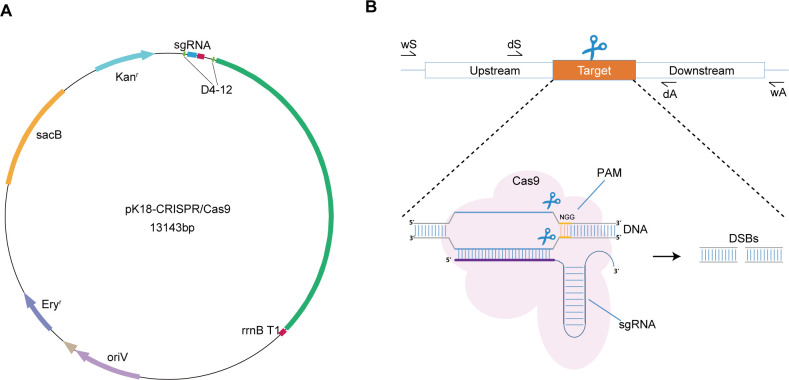 Figure 1
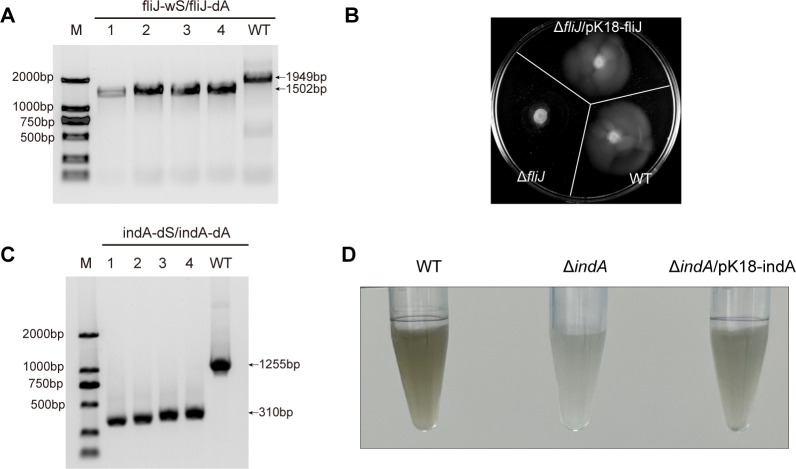 Figure 2
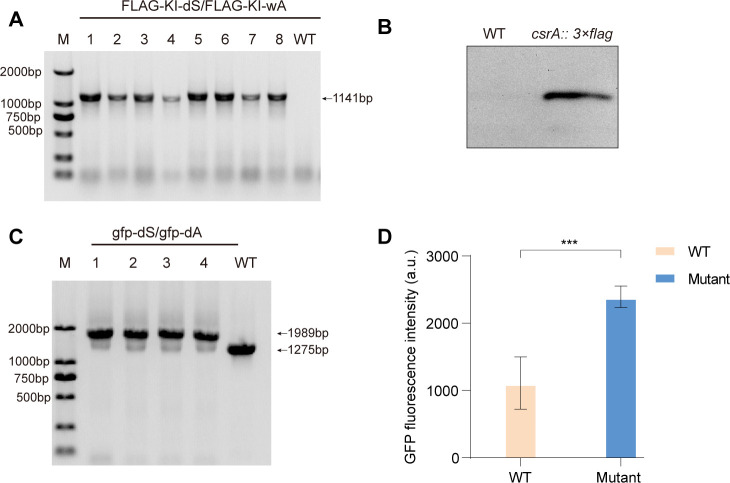 Figure 3
Peer Reviews
No public reviews on file for this paper yet. If you reviewed it on a platform where reviews are public (OpenReview, ICLR, NeurIPS, ICML), you can paste yours below so the community can read it here.
Videos
No videos yet. Explain this paper in a talk, walkthrough, or lecture? Add one.
Taxonomy
TopicsCRISPR and Genetic Engineering · bioluminescence and chemiluminescence research · Microbial Community Ecology and Physiology