A phage-selective trigger hints at an SOS-independent mechanism of prophage induction by oxidative stress
Magdalena Jancheva, Thi-Hong Nhung Nguyen, Felix Anderl, Shubham Joge, Jessica Neubauer, Clarissa Rominger-Baumann, Alexandra Walter, Golo Storch, Thomas Böttcher

TL;DR
This study shows that certain compounds from Pseudomonas aeruginosa can selectively activate specific prophages in Staphylococcus aureus through oxidative stress, not the usual SOS response.
Contribution
The discovery of an SOS-independent mechanism of prophage induction triggered by oxidative stress from phenazines.
Findings
Prophage induction correlates with redox cycling and ROS generation, not antibiotic activity of phenazines.
Strong oxidative agents can selectively induce one of multiple prophages in the host.
The HiLOS response is proposed as a new mechanism for prophage induction.
Abstract
We identified a prophage-selective induction in poly-lysogenic Staphylococcus aureus induced by certain phenazines, such as pyocyanin, produced by Pseudomonas aeruginosa. Using a focused library of phenazines, we discovered that prophage induction correlates not with antibiotic activity but with the compounds' ability to undergo redox cycling and generate reactive oxygen species (ROS). Importantly, we demonstrated that strong oxidative agents alone could selectively induce one of multiple prophages harbored by the bacterial host. Based on these findings, we propose the High-Level Oxidative Stress (HiLOS) response as an SOS-independent mechanism of prophage induction. We report an SOS-independent mechanism of selective prophage induction in a poly-lysogenic Staphylococcus aureus host triggered by redox cycling of phenazine compounds.
Genes, proteins, chemicals, diseases, species, mutations and cell lines named across the full text — each resolved to its canonical identifier and authoritative record.
Click any figure to enlarge with its caption.
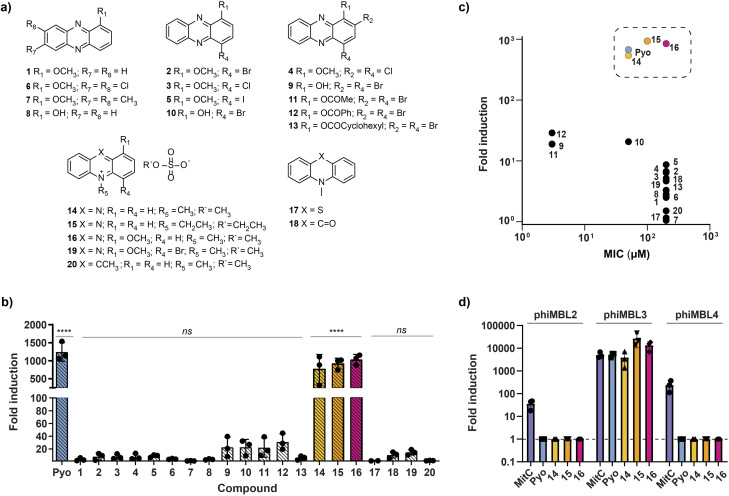 Figure 1
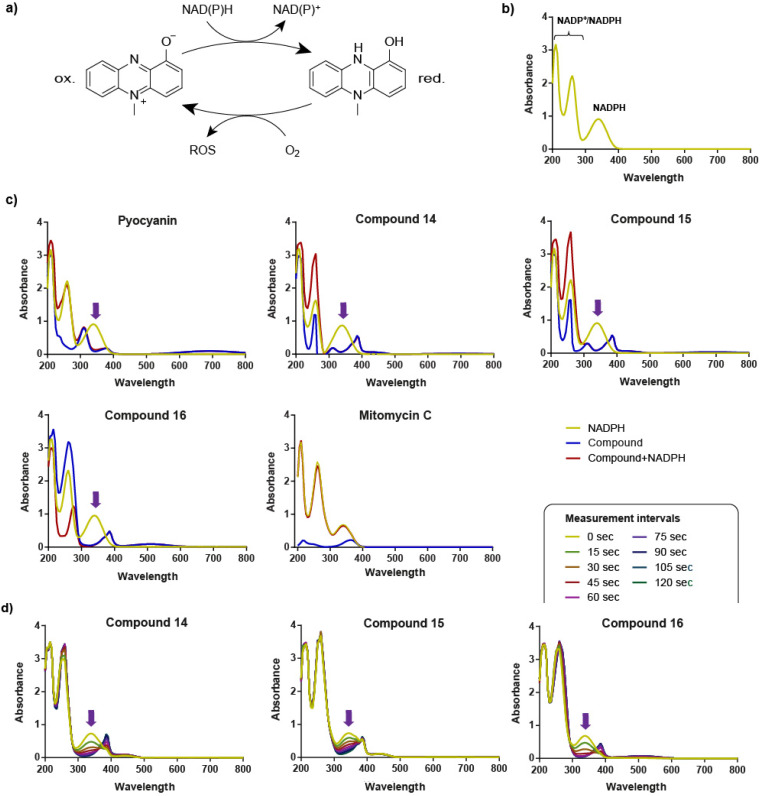 Figure 2
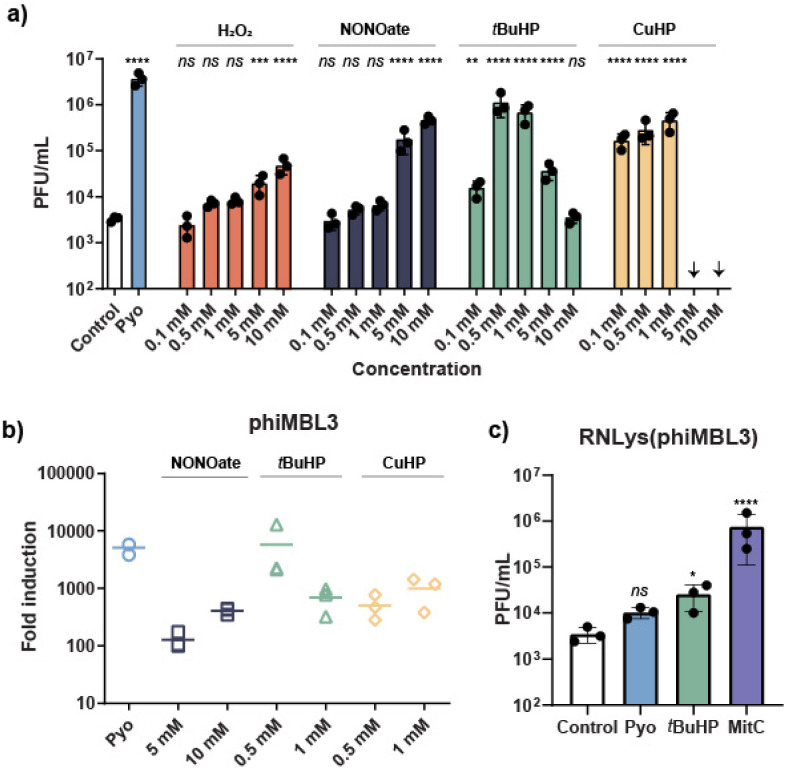 Figure 3
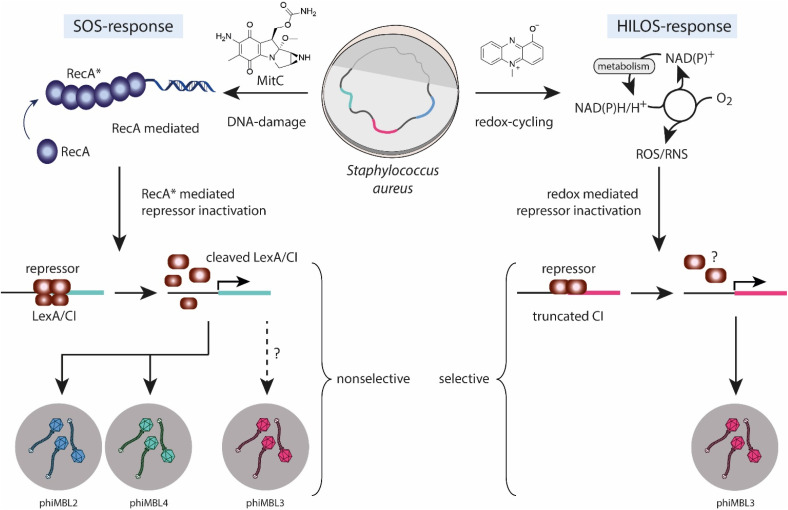 Figure 4
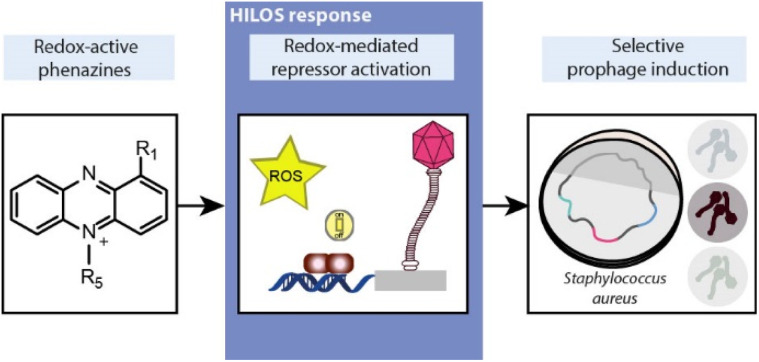 Figure 5
Peer Reviews
No public reviews on file for this paper yet. If you reviewed it on a platform where reviews are public (OpenReview, ICLR, NeurIPS, ICML), you can paste yours below so the community can read it here.
Videos
No videos yet. Explain this paper in a talk, walkthrough, or lecture? Add one.
Taxonomy
TopicsBacterial biofilms and quorum sensing · Antimicrobial agents and applications · Bacteriophages and microbial interactions