Unusual regulation of the CO2 concentrating mechanism of marine chemolithoautotroph Thiomicrospira pelophila
Jana Wieschollek, Ren R. Payne, Carlos Abel Morales Alvarez, Nick Cisneros, Holly David, Christopher Dixon, Hannah Grzech, Sarah Oster, Charles Kasban, Connor Lunsford, Jacqueline Mikhaylov, Nicole Nauman, Clare L. Dennison, Dale Chaput, Kathleen Scott

TL;DR
This paper explores how the marine bacterium Thiomicrospira pelophila manages carbon fixation using a unique CO2 concentrating mechanism.
Contribution
The study reveals a novel regulatory pattern in CCM gene expression under low CO2 conditions in T. pelophila.
Findings
T. pelophila expresses a functional CO2 concentrating mechanism with multiple DIC transporters.
Only one transporter is upregulated under DIC limitation despite having six potential transporters.
Carboxysome abundance does not increase significantly under DIC limitation in T. pelophila.
Abstract
Autotrophic organisms fix dissolved inorganic carbon (DIC: CO2, HCO3-, CO3-2) into biomass, introducing organic carbon into the global carbon cycle. Many lineages of autotrophs developed CO2 concentrating mechanisms (CCMs) to grapple with the catalytic constraints of the carboxylase of the Calvin-Benson-Bassham cycle, ribulose-1,5-bisphosphate carboxylase/oxygenase (RubisCO). Carboxysomes and DIC transporters act together to form CCMs, which facilitate DIC fixation by autotrophic bacteria when DIC is scarce. Autotroph Thiomicrospira pelophila has carboxysomes, with an unusual carbonic anhydrase, and encodes six potential DIC-transporters, more than other chemolithoautotrophs. We conducted experiments on how these carboxysomes and multiple transporters are integrated into a functioning CCM in T. pelophila. T. pelophila expresses a functional CCM. Four out of six transporters were capable…
Genes, proteins, chemicals, diseases, species, mutations and cell lines named across the full text — each resolved to its canonical identifier and authoritative record.
Click any figure to enlarge with its caption.
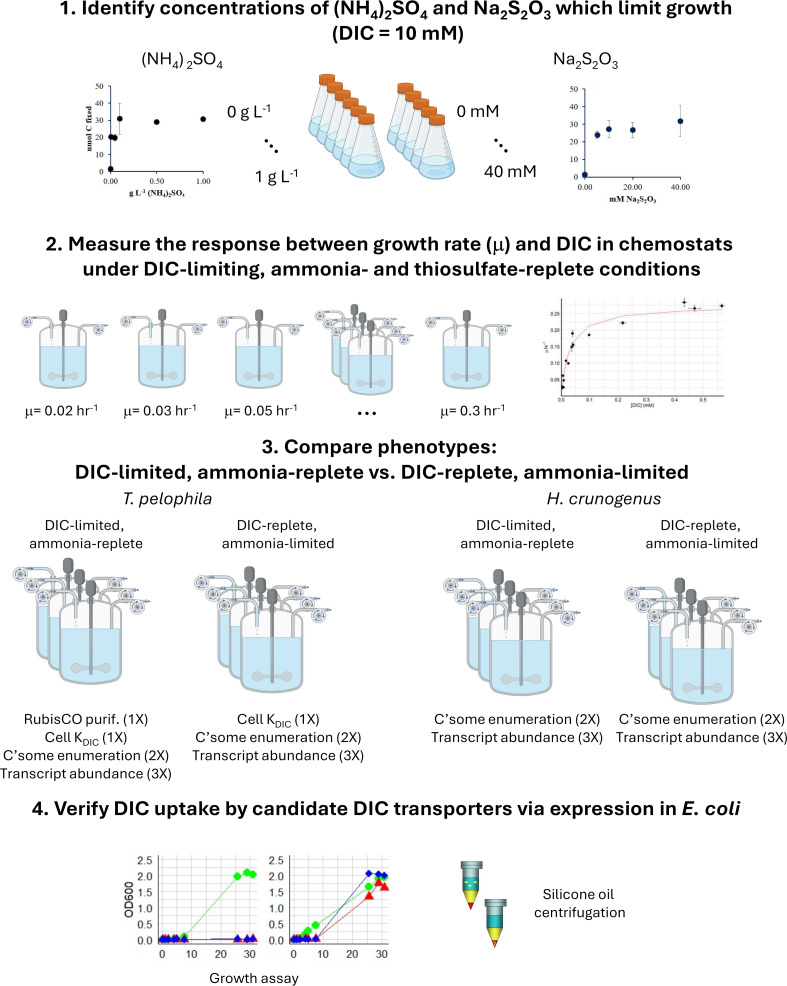 Figure 1
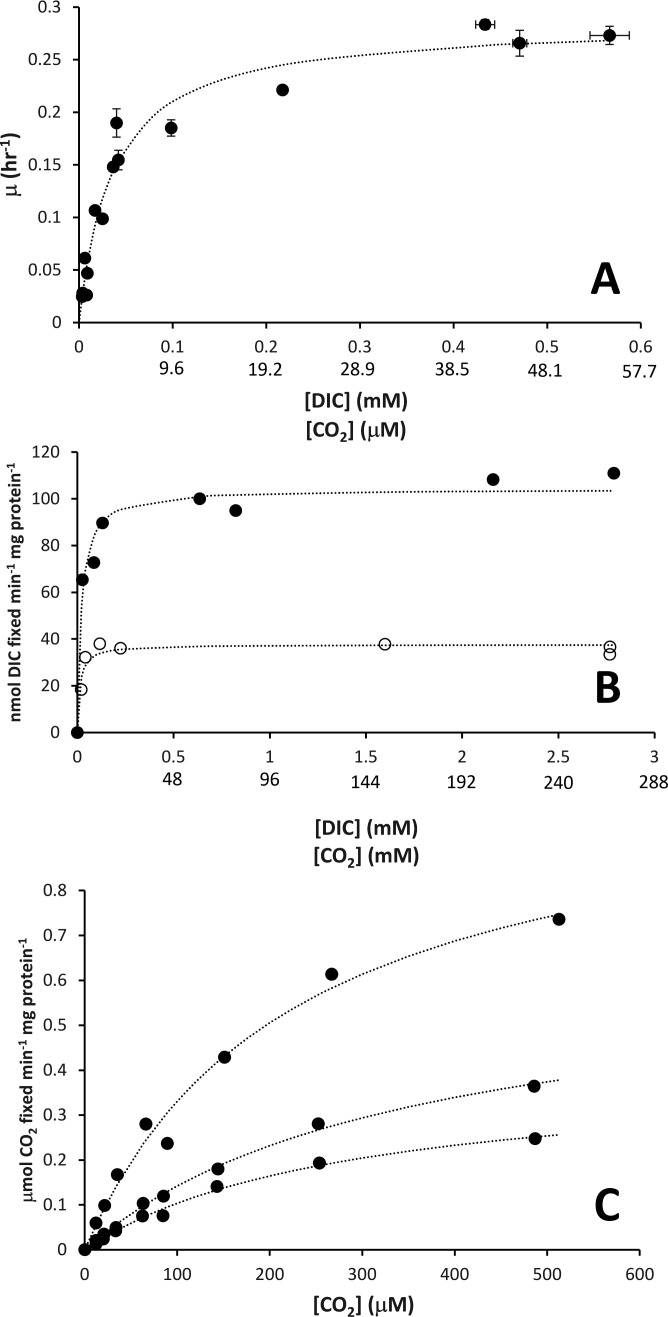 Figure 2
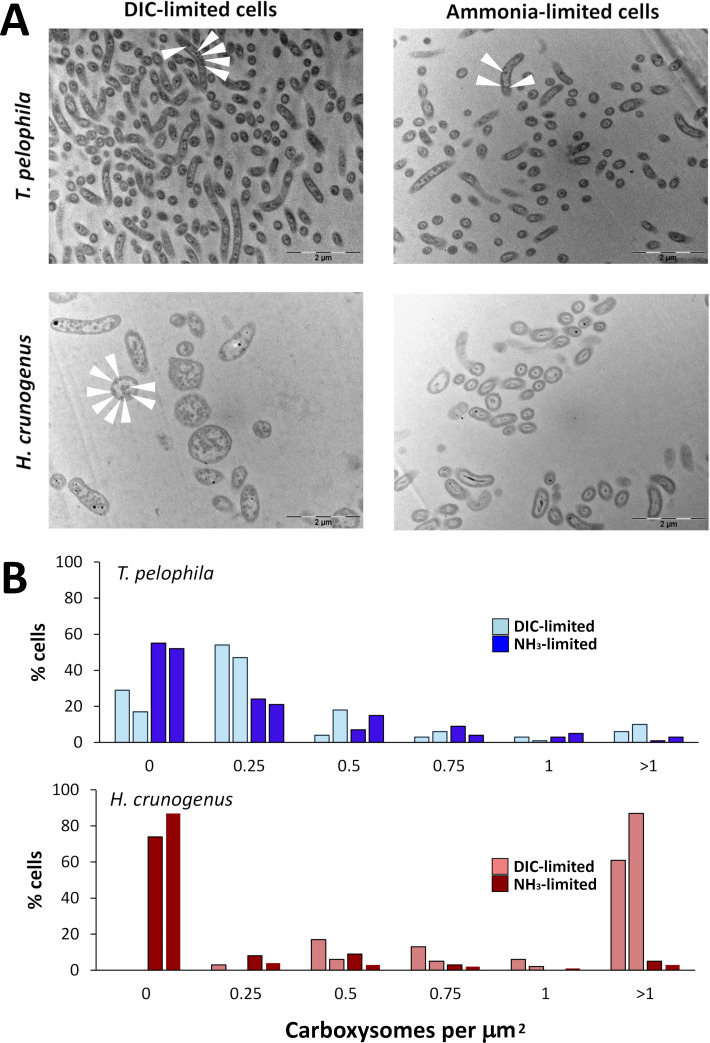 Figure 3
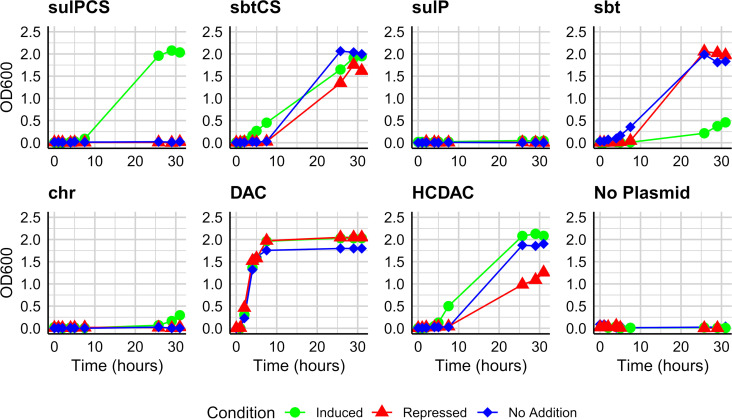 Figure 4
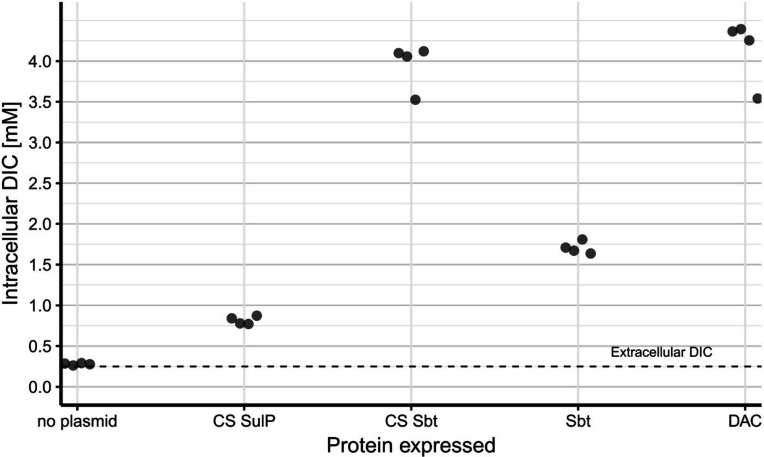 Figure 5
Peer Reviews
No public reviews on file for this paper yet. If you reviewed it on a platform where reviews are public (OpenReview, ICLR, NeurIPS, ICML), you can paste yours below so the community can read it here.
Videos
No videos yet. Explain this paper in a talk, walkthrough, or lecture? Add one.
Taxonomy
TopicsMicrobial Community Ecology and Physiology · Mitochondrial Function and Pathology · Microbial Fuel Cells and Bioremediation