The center of wheat domestication drives diversity of Clavibacter pathogens
Asma Rahmanzadeh, S. Mohsen Taghavi, Sadegh Zarei, Hamid Abachi, Nastaran Zamani, Mozhde Hamidizade, Ardavan Soleimani, Xiang Li, Jiacheng Chuan, Nemanja Kuzmanović, Marie-Agnès Jacques, Perrine Portier, Ebrahim Osdaghi

TL;DR
This study shows that the Iranian Plateau, where wheat, barley, and oat were first domesticated, is also a hotspot for diverse Clavibacter pathogens that cause plant diseases.
Contribution
The study identifies three new Clavibacter clades in the center of domestication of small grain cereals, revealing high taxonomic diversity not seen elsewhere.
Findings
Five distinct Clavibacter clades were found in the Iranian Plateau, including three previously unknown.
All five clades can cause mosaic and chlorosis symptoms on their host plants.
Genomic analysis showed similar virulence traits among the diverse Clavibacter strains.
Abstract
Microbial plant pathogens possess higher diversity in the center of domestication of their host plants than in the introduced geographic area of the corresponding crops. In this study, the center of wheat, barley, and oat domestication in the Iranian Plateau was surveyed to shed light on the population structure, taxonomic diversity, and biology of Clavibacter species associated with these crops. Comprehensive field surveys completed with pathological assays and molecular-phylogenetic analyses showed that phylogenetically diverse groups of Clavibacter strains were associated with bacterial mosaic symptoms on small grain cereals in this domestication center. Besides the two previously described species, Clavibacter tessellarius and Clavibacter zhangzhiyongii, three clades of atypical Clavibacter strains, phylogenetically distinct from all described Clavibacter species, were isolated from…
Genes, proteins, chemicals, diseases, species, mutations and cell lines named across the full text — each resolved to its canonical identifier and authoritative record.
Click any figure to enlarge with its caption.
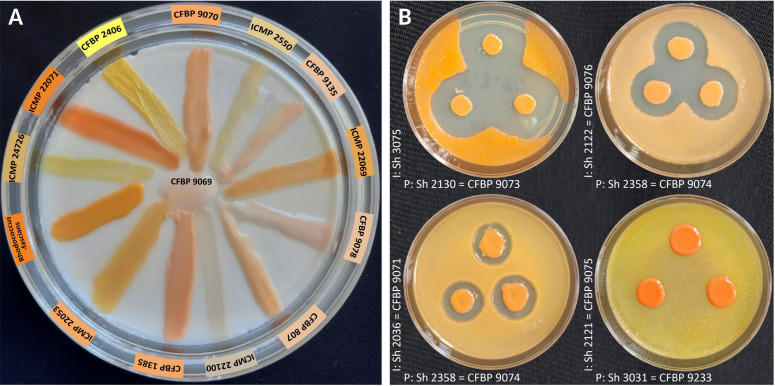 Figure 1
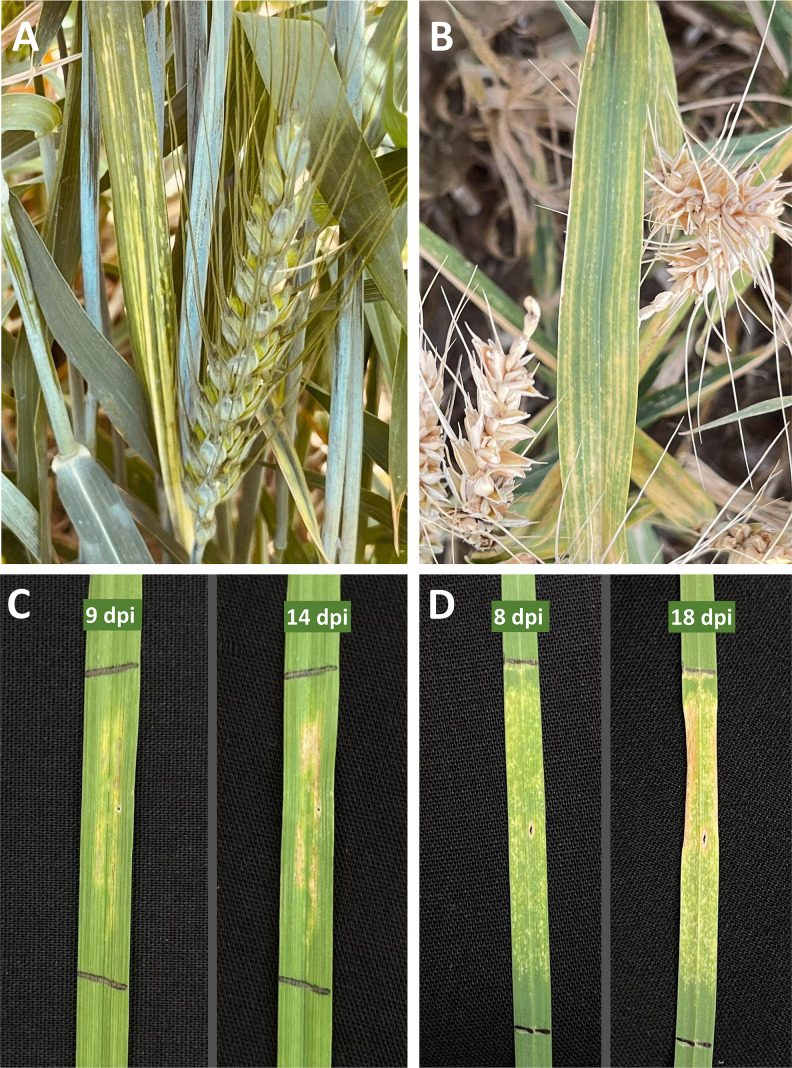 Figure 2
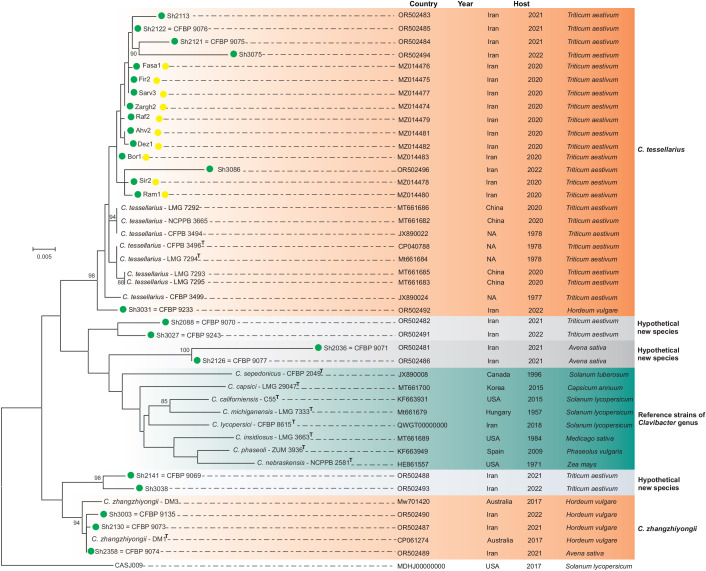 Figure 3
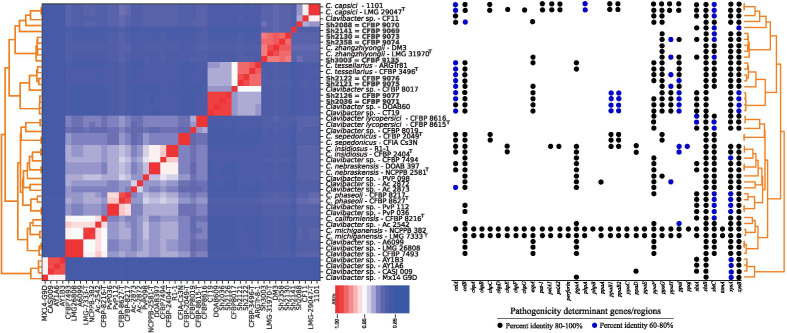 Figure 4
Peer Reviews
No public reviews on file for this paper yet. If you reviewed it on a platform where reviews are public (OpenReview, ICLR, NeurIPS, ICML), you can paste yours below so the community can read it here.
Videos
No videos yet. Explain this paper in a talk, walkthrough, or lecture? Add one.
Taxonomy
TopicsPlant Pathogenic Bacteria Studies · Legume Nitrogen Fixing Symbiosis · Plant pathogens and resistance mechanisms