Identification and regulation of an alternative PTS for disaccharide utilization in Clostridium acetobutylicum
Zhenxing Ren, Zili Qiu, Yali Tian, Mengcheng You, Chenggang Xu

TL;DR
This study identifies a new transport system in Clostridium acetobutylicum for using disaccharides like cellobiose and explains how it is regulated, which could help improve biofuel production.
Contribution
The paper discovers and characterizes a novel regulatory mechanism involving a ribonucleic antiterminator for disaccharide utilization in C. acetobutylicum.
Findings
The β-glucoside PTS (bglT) is expressed in response to cellobiose and sucrose but is not essential for sugar transport.
The upstream anti-transcriptional termination factor bglG regulates bglT expression through a ribonucleic antiterminator (RAT).
Modifications to the RAT structure affect transcriptional read-through and termination of downstream genes.
Abstract
Clostridium acetobutylicum is an important solventogenic bacterium capable of acetone-butanol-ethanol fermentation by utilizing a variety of carbon sources. It employs the transport systems of the phosphoenolpyruvate:sugar phosphotransferase systems (PTSs) to assimilate various saccharides. Here, we investigated a β-glucoside PTS (bglT) encoded by the bgl operon (bglGTH) in C. acetobutylicum, which showed significant expression in response to cellobiose and sucrose. Interestingly, bglT is not essential for the transport of these sugars, as C. acetobutylicum possesses dedicated PTSs for the uptake of each individual sugar. We further elucidated the regulatory mechanism of bglT, which is governed by an upstream anti-transcriptional termination factor (bglG). A putative ribonucleic antiterminator (RAT) was identified upstream of bglG and bglT. Inactivation of bglG led to consistent…
Genes, proteins, chemicals, diseases, species, mutations and cell lines named across the full text — each resolved to its canonical identifier and authoritative record.
Click any figure to enlarge with its caption.
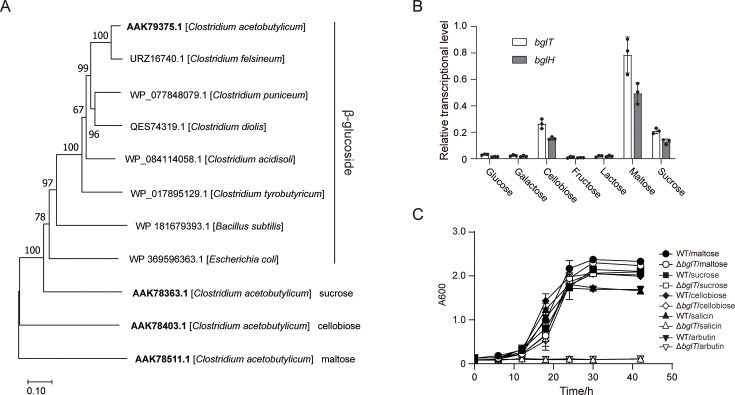 Figure 1
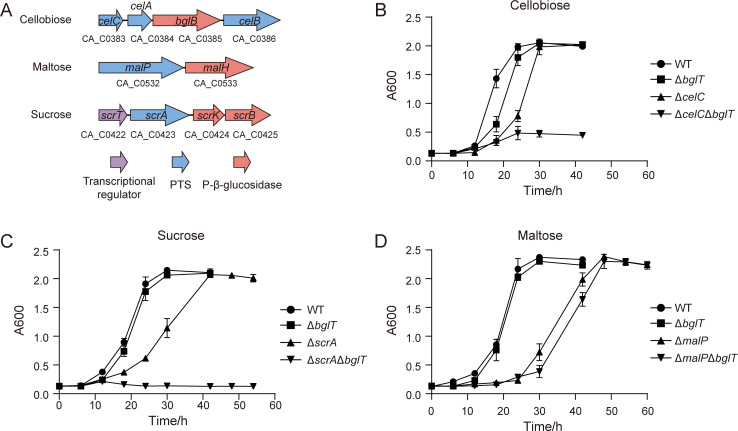 Figure 2
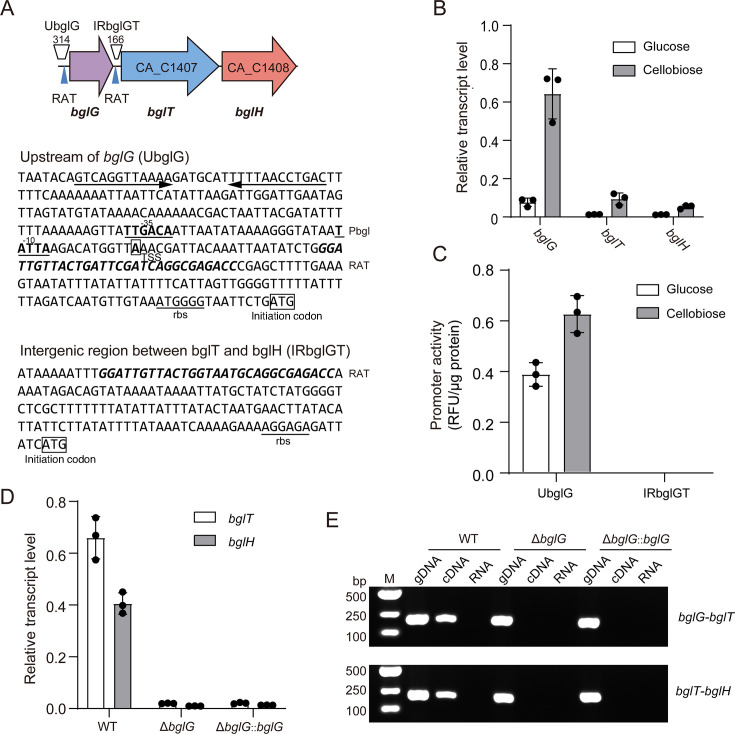 Figure 3
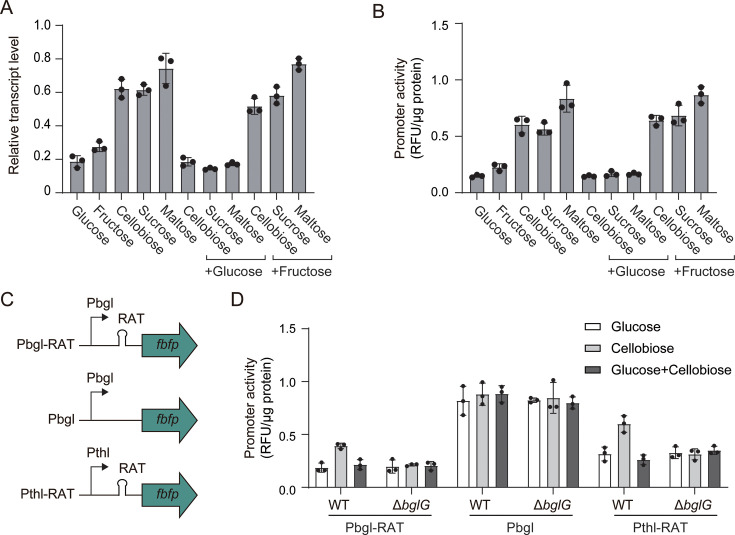 Figure 4
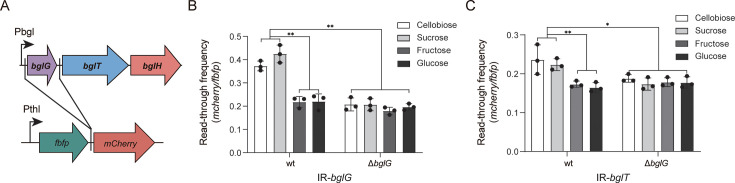 Figure 5
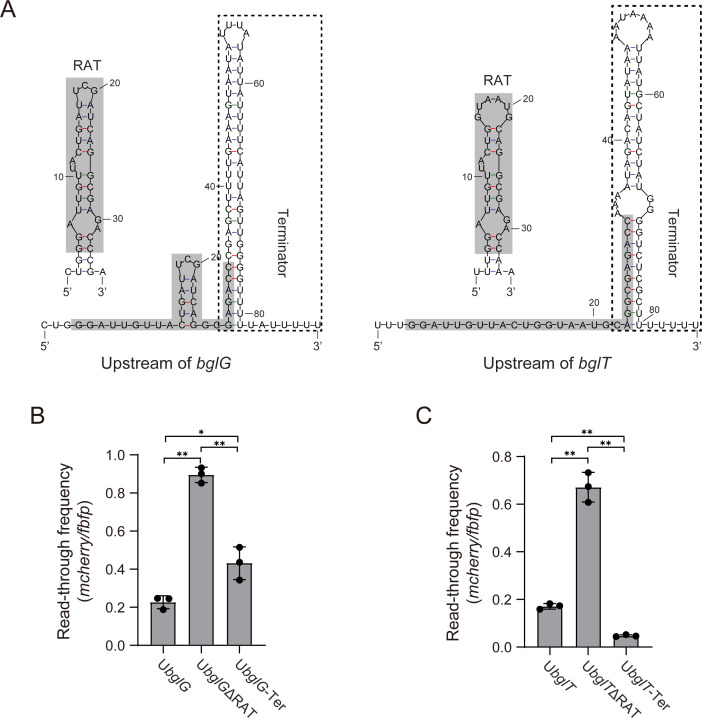 Figure 6
Peer Reviews
No public reviews on file for this paper yet. If you reviewed it on a platform where reviews are public (OpenReview, ICLR, NeurIPS, ICML), you can paste yours below so the community can read it here.
Videos
No videos yet. Explain this paper in a talk, walkthrough, or lecture? Add one.
Taxonomy
TopicsBiofuel production and bioconversion · Microbial Metabolic Engineering and Bioproduction · Fungal and yeast genetics research