Influence of process parameters on single-cell oil production by Cutaneotrichosporon oleaginosus using response surface methodology
Max Schneider, Felix Melcher, Robert Fimmen, Johannes Mertens, Daniel Garbe, Michael Paper, Marion Ringel, Thomas Brück

TL;DR
This study shows how adjusting temperature, pH, and oxygen levels can boost lipid production and tailor fatty acid profiles in a yeast, making it a better sustainable oil source for food, fuel, and materials.
Contribution
The study introduces optimized cultivation conditions using response surface methodology to enhance lipid productivity and modulate fatty acid profiles in Cutaneotrichosporon oleaginosus.
Findings
Lipid productivity increased by 46% under optimized oleate lipid titer conditions (27.6°C, pH 5.6, 10% DO).
Temperature was the main factor influencing fatty acid saturation, while pH adjusted the C16/C18 ratio.
The saturation degree of fatty acids could be modulated by more than 10% through process parameter adjustments.
Abstract
The growing demand for sustainable lipid sources has fostered interest in single-cell oils from oleaginous yeasts as renewable alternatives to plant-derived and fossil-based oils, with applications in food, fuel, and material production. The oleaginous yeast Cutaneotrichosporon oleaginosus is of industrial relevance due to its ability to accumulate in excess of 60% (w/w) of its dry cell weight as lipids, while metabolizing a broad range of substrates. However, economic feasibility depends on improving productivity and adapting fatty acid profiles to application requirements. This study investigated the influence of temperature, pH, and dissolved oxygen concentration (DO) on lipid production and fatty acid composition in C. oleaginosus ATCC 20509. A three-level, three-factor Box–Behnken design was applied to assess their effects on lipid titer, oleate lipid titer, and the proportions of…
Genes, proteins, chemicals, diseases, species, mutations and cell lines named across the full text — each resolved to its canonical identifier and authoritative record.
Click any figure to enlarge with its caption.
 Figure 1
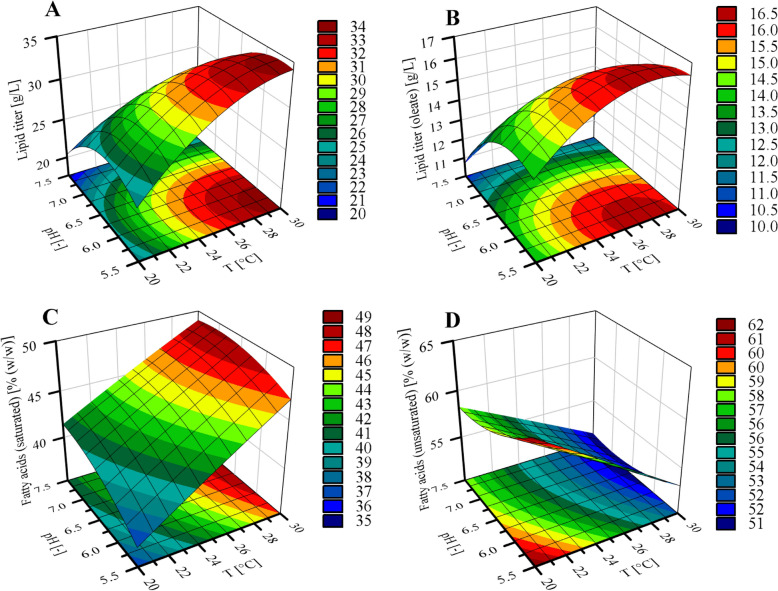 Figure 2
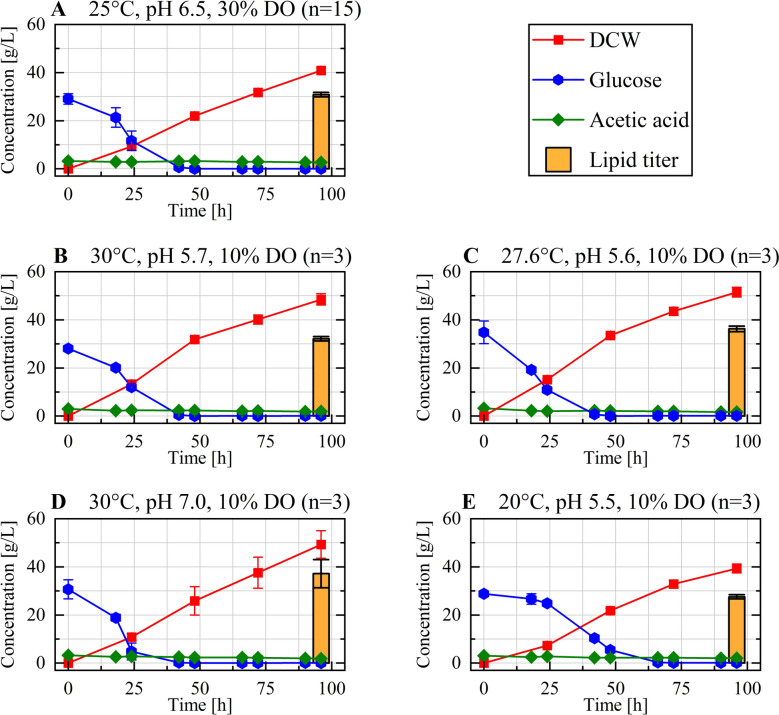 Figure 3
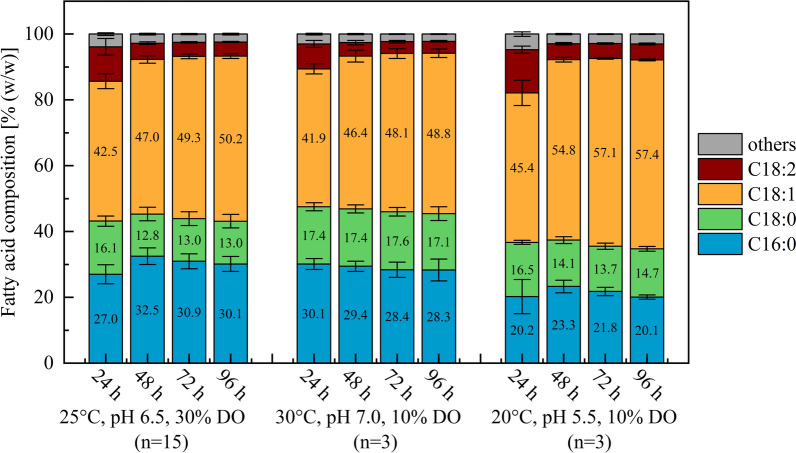 Figure 4
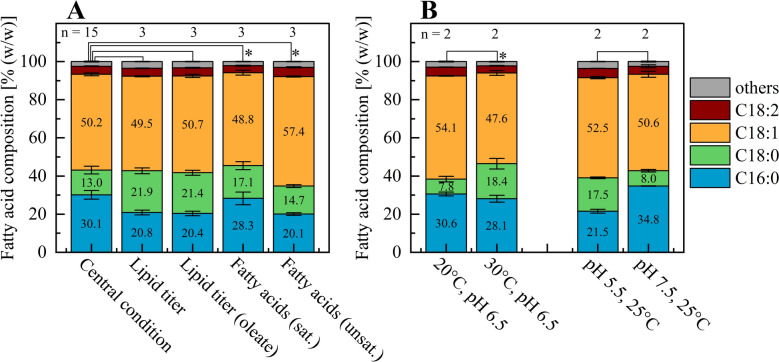 Figure 5
 Figure 6
Peer Reviews
No public reviews on file for this paper yet. If you reviewed it on a platform where reviews are public (OpenReview, ICLR, NeurIPS, ICML), you can paste yours below so the community can read it here.
Videos
No videos yet. Explain this paper in a talk, walkthrough, or lecture? Add one.
Taxonomy
TopicsMicrobial Metabolic Engineering and Bioproduction · Enzyme Catalysis and Immobilization · Lipid metabolism and biosynthesis