Segmental range of motion of vertebral body tethering: an in-vitro analysis of single-tether, double-tether, and hybrid constructs
Marx Ribeiro, Eduardo A. Fancello, Jana Seggewiß, Johannes Greven, Andreas Prescher, Bernd Markert, Marcus Stoffel, Agnes Beckmann, Stephanie Da Paz, Per D. Trobisch, Miguel Pishnamaz, Frank Hildebrand, Philipp Kobbe, Jörg Eschweiler, Luis F. Nicolini

TL;DR
This study examines how different vertebral body tethering techniques affect spinal motion in cadavers, showing that these methods preserve most motion while providing stability.
Contribution
The study experimentally evaluates the biomechanical effects of single-tether, double-tether, and hybrid VBT constructs on spinal motion.
Findings
Instrumented cases preserved at least 80% of native segmental ROM during flexion and extension.
Hybrid constructs preserved 65% ROM in axial rotation and 29% in lateral bending.
Hybrid constructs increased ROM at adjacent levels near the titanium rod compared to single or double tethers.
Abstract
Vertebral Body Tethering (VBT) is emerging as a promising approach for treating Adolescents with Idiopathic Scoliosis. This study aims to address the limited experimental research on vertebral body tethering by examining its biomechanical effects on the segmental spinal range of motion (ROM). Six human spine samples (T10-L3) were subjected to pure moment testing under four different conditions: native, and instrumentation with single-tether (T10-L3), double-tether (T11-L3), and hybrid (T12-L2) techniques in flexion (FL) and extension (EX), lateral bending (LB), and axial rotation (AR). The intersegmental ROM was measured from sensors inserted in each vertebra using an electromagnetic tracking system. All instrumented cases preserved at least 80% of the native segmental ROM during FL-EX for all tested segments. In AR, all segments preserved at least 88% ROM mobility for single-tether…
Genes, proteins, chemicals, diseases, species, mutations and cell lines named across the full text — each resolved to its canonical identifier and authoritative record.
Click any figure to enlarge with its caption.
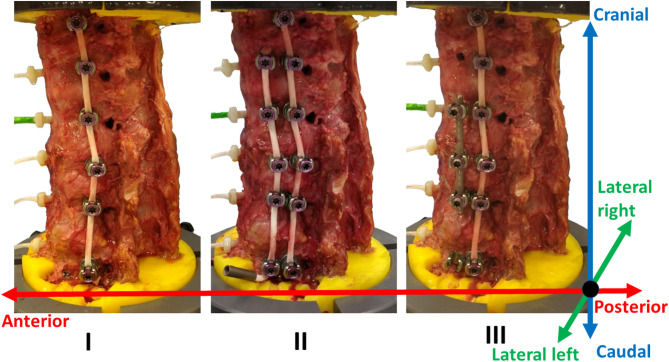 Figure 1
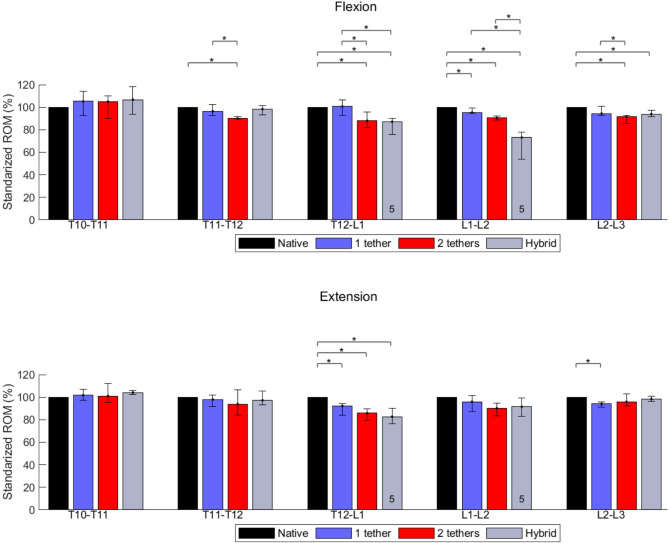 Figure 2
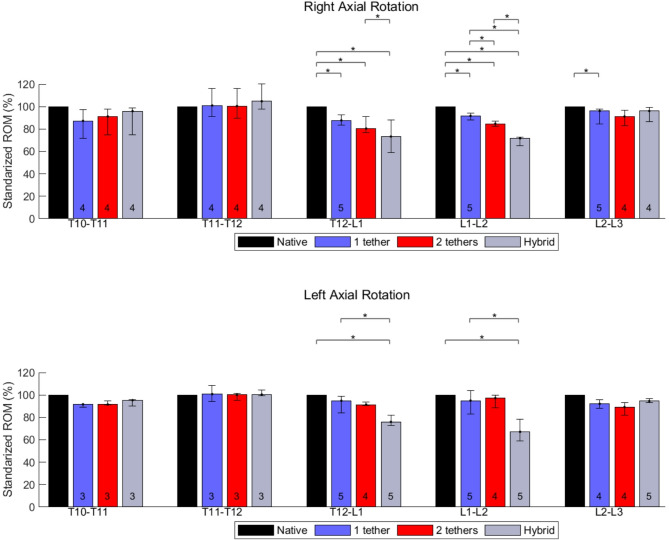 Figure 3
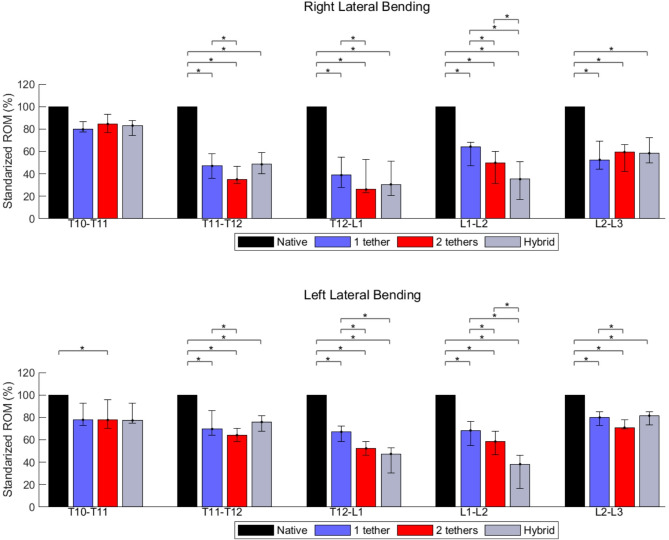 Figure 4
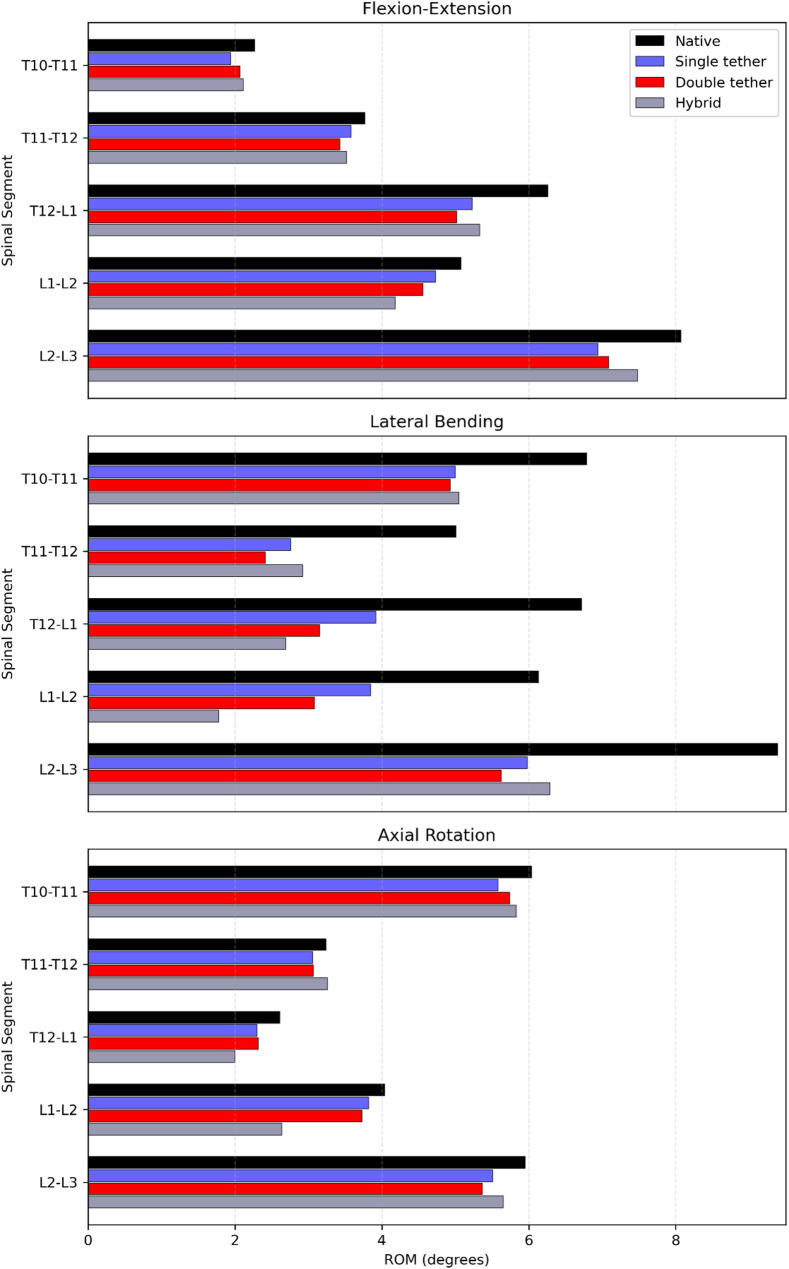 Figure 5
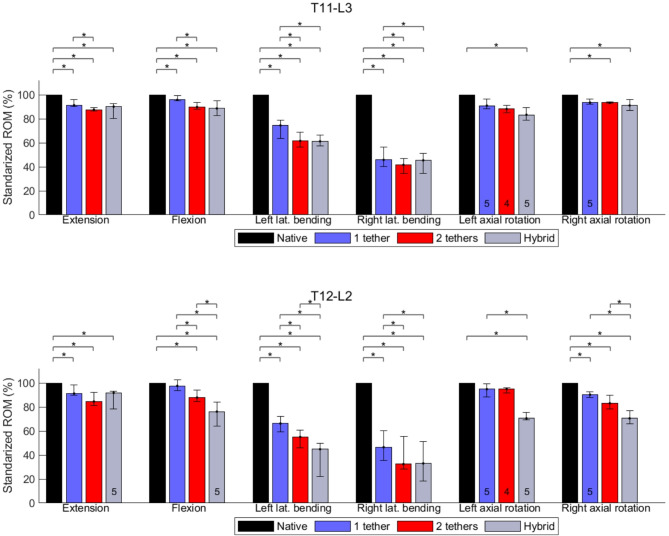 Figure 6
Peer Reviews
No public reviews on file for this paper yet. If you reviewed it on a platform where reviews are public (OpenReview, ICLR, NeurIPS, ICML), you can paste yours below so the community can read it here.
Videos
No videos yet. Explain this paper in a talk, walkthrough, or lecture? Add one.
Taxonomy
TopicsSpine and Intervertebral Disc Pathology · Spinal Fractures and Fixation Techniques · Scoliosis diagnosis and treatment