Opposing expression pattern of opsin 3 and opsin 5 in the developing and adult nasal epithelium
Ramanujam Karthikeyan, Anna-Carin Hägglund, Ebba Bengtsson, Wayne I L Davies, Lena Gunhaga

TL;DR
The study shows that Opn3 and Opn5 have opposite expression patterns in the nasal epithelium, helping to distinguish sensory and respiratory regions during development and in adults.
Contribution
The paper identifies Opn3 and Opn5 as novel molecular markers for sensory and respiratory nasal epithelia, respectively.
Findings
Opn3 is expressed in the olfactory sensory domain from early embryonic stages.
Opn5 is up-regulated in the respiratory epithelium at later developmental stages.
In adults, Opn3 is found in sustentacular cells, while Opn5 remains in the respiratory epithelium.
Abstract
In the nasal cavity, olfactory receptor neurons are situated in the sensory epithelium and act to transduce odor signals, whereas the respiratory epithelium is responsible for removing unwanted particles from inhaled air. Although several molecular markers have been identified to define multiple specific cell types in the sensory epithelium, less is known to indicate cells in the respiratory domain. We have recently shown that the non-visual photoreceptor opsin 3 (Opn3) is expressed in the developing olfactory region. This raised the question as to which functional role/s Opn3 might play in the nasal epithelium, as well as whether other non-visual photoreceptors may be expressed in this region. By using Opn3-eGFP and Opn5-tdTomato reporter mice in combination with Foxj1, Ker8, OMP, Sox2, and Tubb3 immunohistochemistry analyzes, our findings show that Opn3 is restricted to the olfactory…
Genes, proteins, chemicals, diseases, species, mutations and cell lines named across the full text — each resolved to its canonical identifier and authoritative record.
Click any figure to enlarge with its caption.
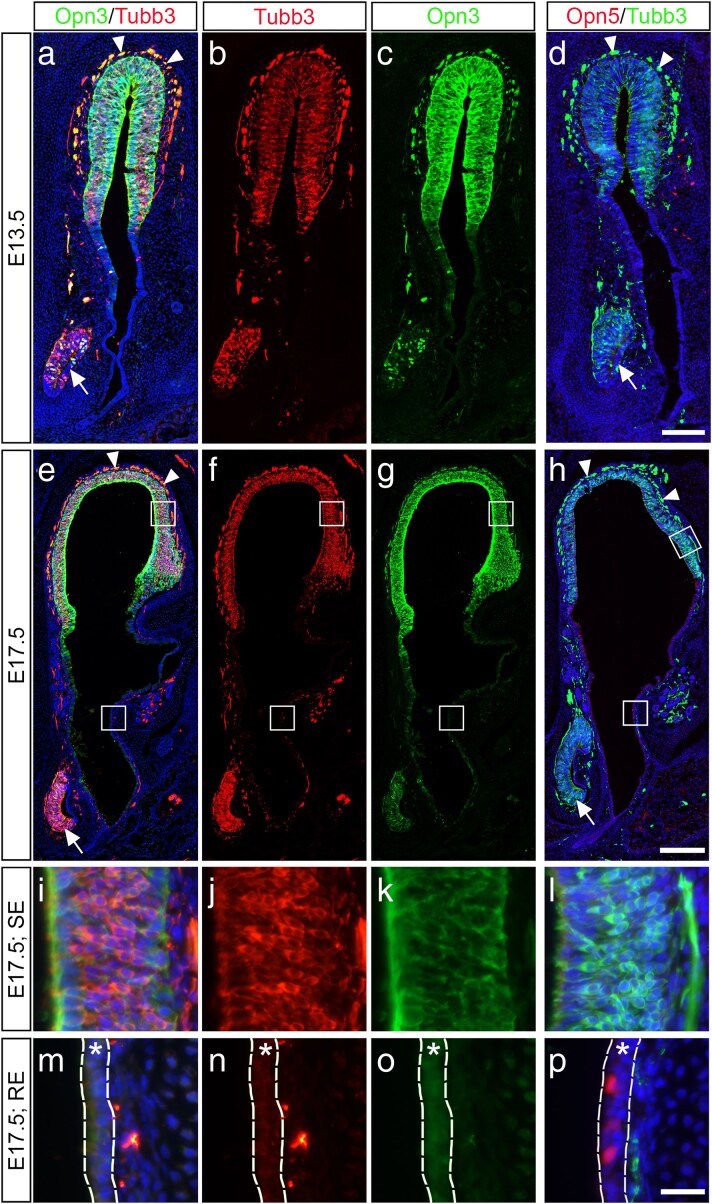 Figure 1
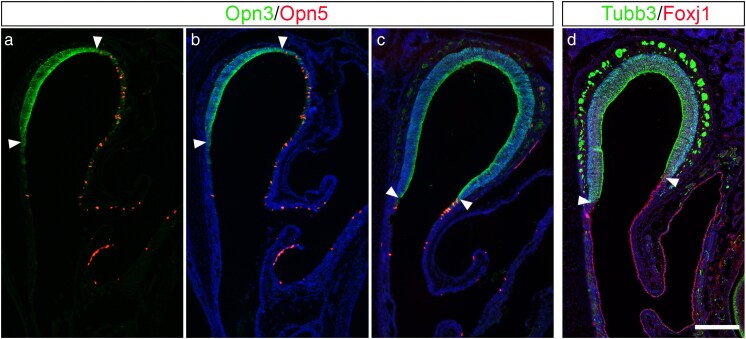 Figure 2
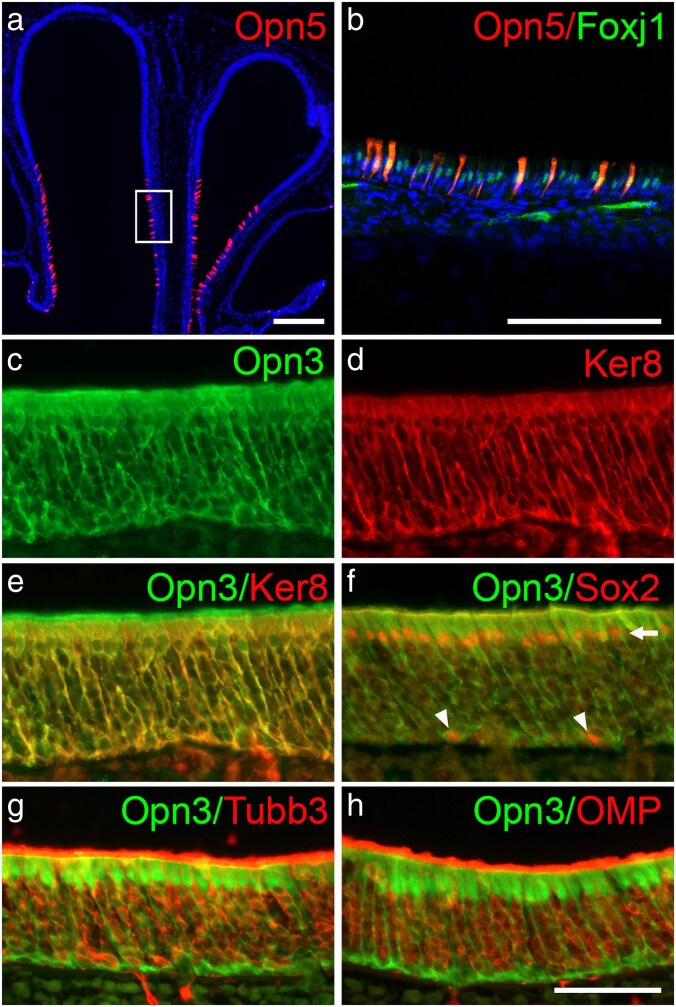 Figure 3
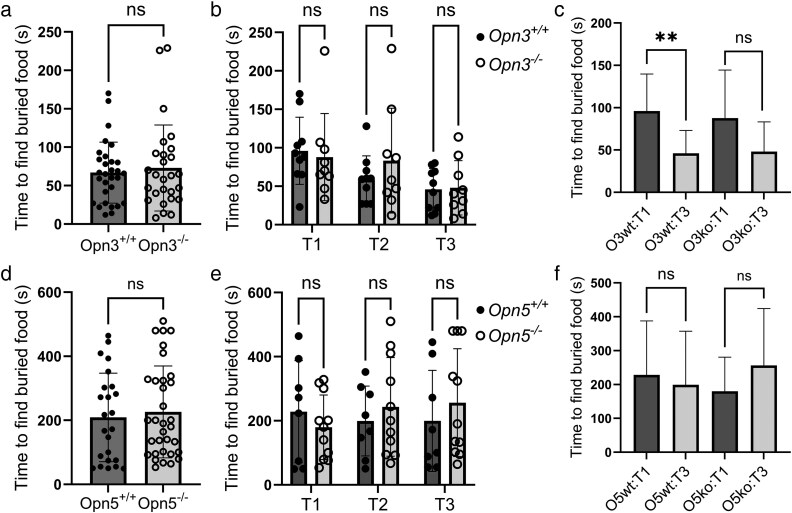 Figure 4
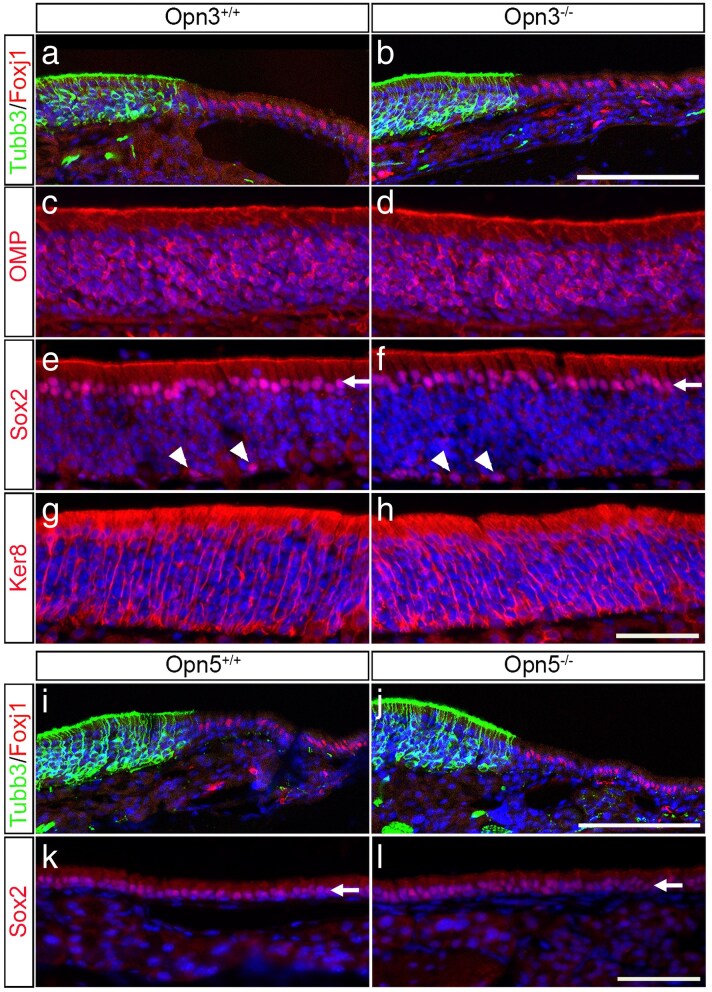 Figure 5
Peer Reviews
No public reviews on file for this paper yet. If you reviewed it on a platform where reviews are public (OpenReview, ICLR, NeurIPS, ICML), you can paste yours below so the community can read it here.
Videos
No videos yet. Explain this paper in a talk, walkthrough, or lecture? Add one.
Taxonomy
TopicsOlfactory and Sensory Function Studies · Circadian rhythm and melatonin · Biochemical Analysis and Sensing Techniques