Inhibition of cGAS-STING signaling pathway alleviates high glucose-induced mesothelial-mesenchymal transition in human peritoneal mesothelial cell line HMrSV5
Fuxing Dong, Luli Zheng, Fuyuan Hong

TL;DR
Blocking the cGAS-STING pathway reduces high glucose-induced changes in peritoneal cells linked to fibrosis.
Contribution
Demonstrates that inhibiting cGAS-STING signaling can alleviate mesothelial-mesenchymal transition in peritoneal cells.
Findings
High glucose increases cGAS-STING pathway activation in HMrSV5 cells.
Inhibiting cGAS-STING reduces MMT markers and cell invasion.
Suppression of the pathway lowers pro-inflammatory cytokine levels.
Abstract
The mesothelial-mesenchymal transition (MMT) of peritoneal mesothelial cells is a critical factor contributing to the progression of peritoneal fibrosis. This study aimed to explore the effect of cGAS-STING signaling pathway on the MMT process in peritoneal mesothelial cells. The expressions of cGAS, STING, α-SMA, and Vimentin in HMrSV5 cells treated with high glucose were analyzed using WB. Subsequently, si-cGAS and the cGAS inhibitor RU.521 were employed to intervene in HMrSV5 cells. qPCR was utilized to evaluate the expression levels of genes involved in the cGAS-STING signaling pathway (cGAS, STING, IRF3, TBK1) and MMT-related genes (E-cadherin, Vimentin, α-SMA, TGF-β1). The protein expressions of the cGAS-STING signaling pathway and MMT-related proteins were detected by WB. The invasive capacity of cells in each cell was assessed using a Transwell assay, and the levels of…
Genes, proteins, chemicals, diseases, species, mutations and cell lines named across the full text — each resolved to its canonical identifier and authoritative record.
Click any figure to enlarge with its caption.
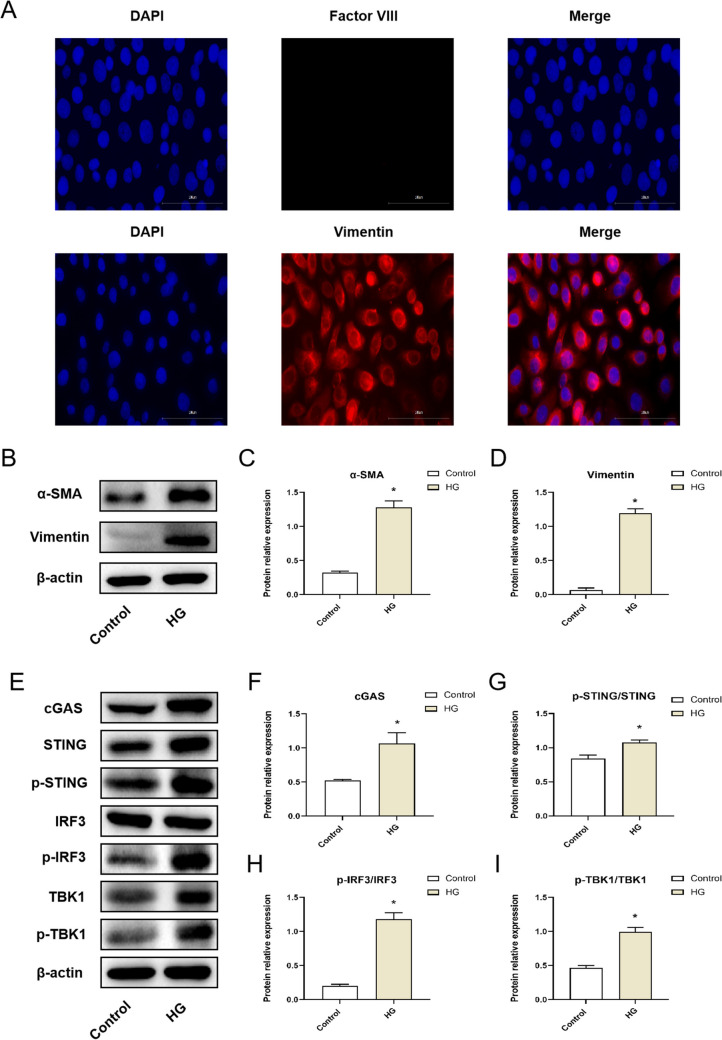 Figure 1
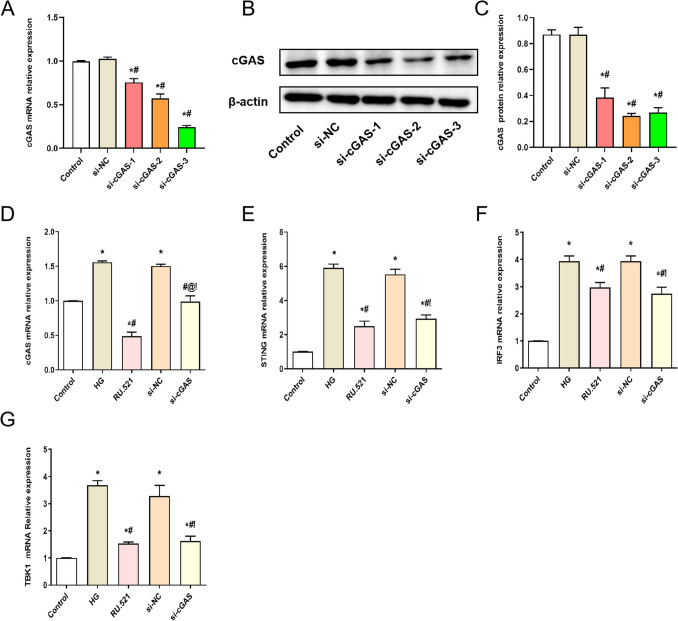 Figure 2
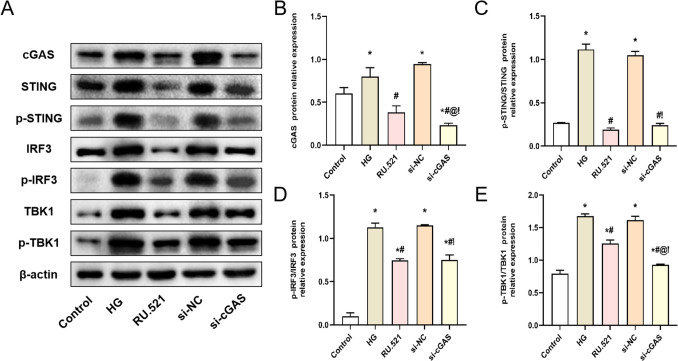 Figure 3
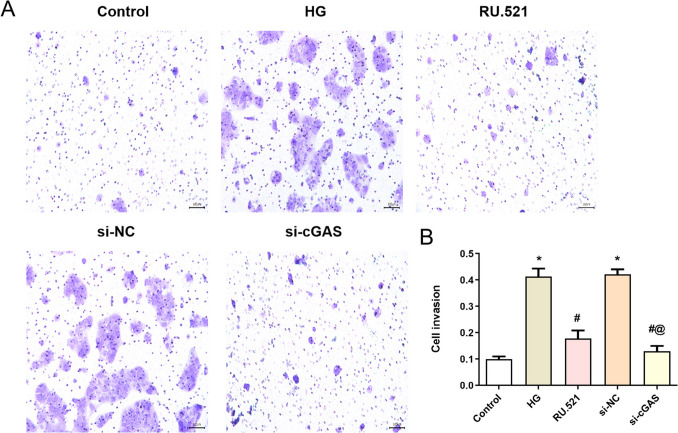 Figure 4
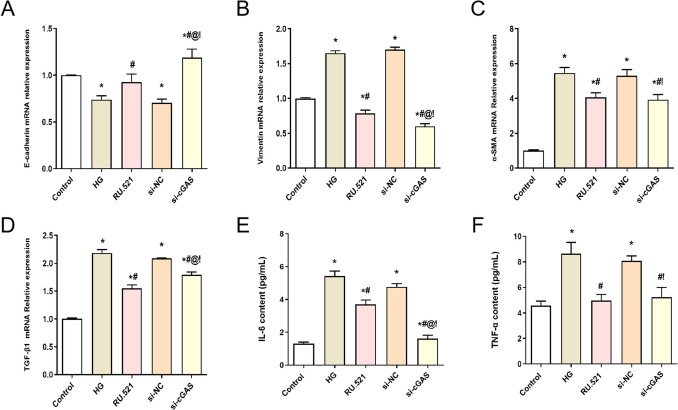 Figure 5
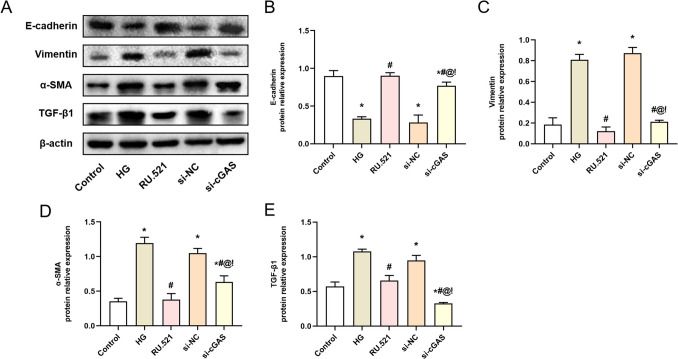 Figure 6
Peer Reviews
No public reviews on file for this paper yet. If you reviewed it on a platform where reviews are public (OpenReview, ICLR, NeurIPS, ICML), you can paste yours below so the community can read it here.
Videos
No videos yet. Explain this paper in a talk, walkthrough, or lecture? Add one.
Taxonomy
TopicsAmoebic Infections and Treatments · Galectins and Cancer Biology · Endoplasmic Reticulum Stress and Disease