Optical strategies for in vivo retinal ganglion cell imaging
Justin Chen, Raymond Fang, Xiaorong Liu, Hao F. Zhang

TL;DR
This paper reviews optical technologies for imaging retinal ganglion cells in living organisms to better understand and diagnose retinal diseases.
Contribution
The paper provides a comprehensive comparison of optical technologies and their clinical translation for in vivo retinal ganglion cell imaging.
Findings
Scanning laser ophthalmoscopy and optical coherence tomography are effective for quantifying retinal ganglion cell damage.
Functional vascular imaging and fluorophores like capQ and GCaMP offer insights into retinal ganglion cell physiology.
Miniaturized devices and AI-driven analysis are improving the efficiency and clinical adoption of retinal imaging.
Abstract
Retinal ganglion cells (RGCs) are essential in transmitting visual information from the retina to the brain, and their impairment has been linked to glaucoma and various neuro-ophthalmic diseases. In vivo imaging of RGC morphology and functionality is crucial for understanding the pathophysiology of retinal disease caused by RGC degeneration and their responses to treatments. This review provides a comprehensive overview of optical technologies suitable for in vivo RGC imaging. First, we compare scanning laser ophthalmoscopy, optical coherence tomography, and two-photon imaging and discuss their effectiveness in quantifying RGC damage in retinal disorders. Then, we discuss how functional vascular imaging techniques and specialized fluorophores, such as capQ and GCaMP, can be exploited to provide deeper insights into the physiology of RGCs. Lastly, we highlight the clinical translation…
Genes, proteins, chemicals, diseases, species, mutations and cell lines named across the full text — each resolved to its canonical identifier and authoritative record.
Click any figure to enlarge with its caption.
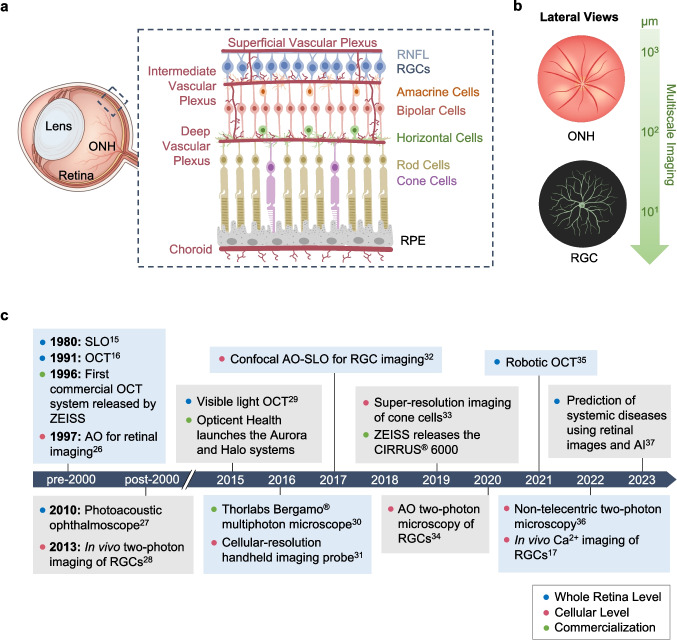 Figure 1
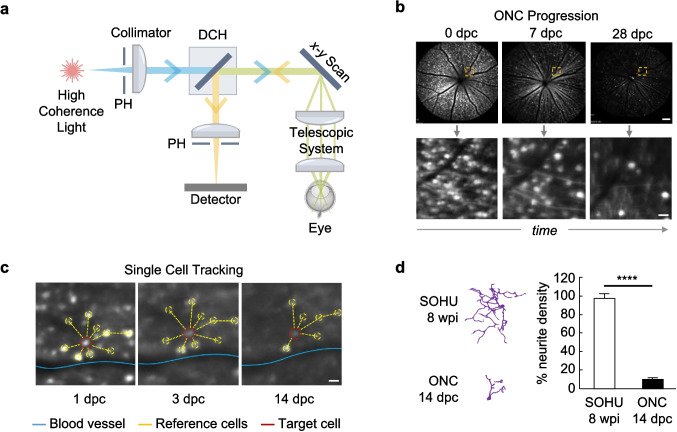 Figure 2
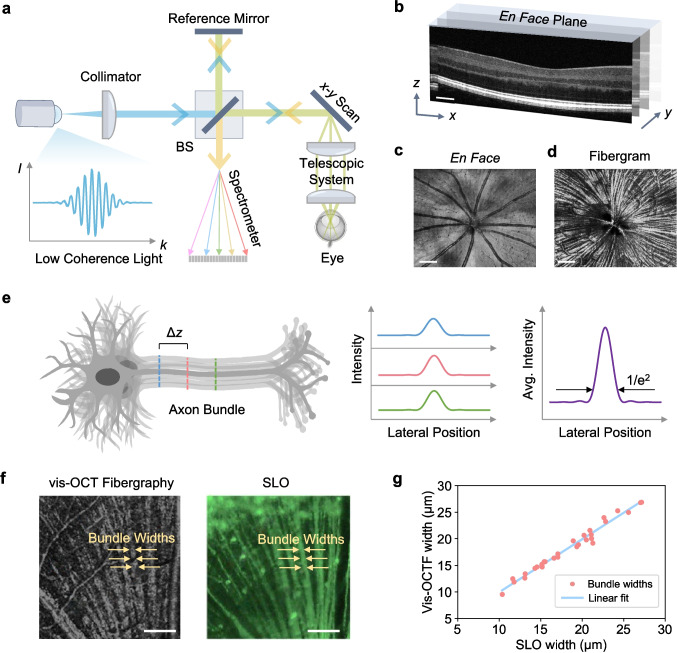 Figure 3
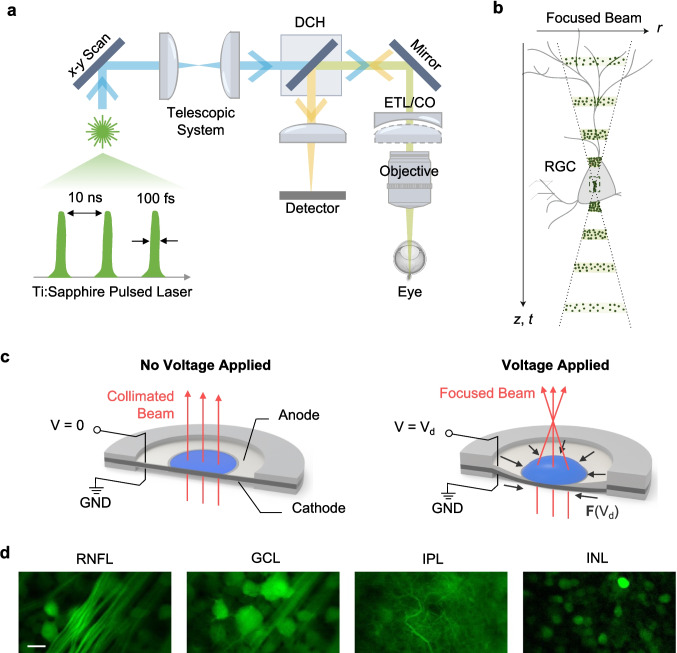 Figure 4
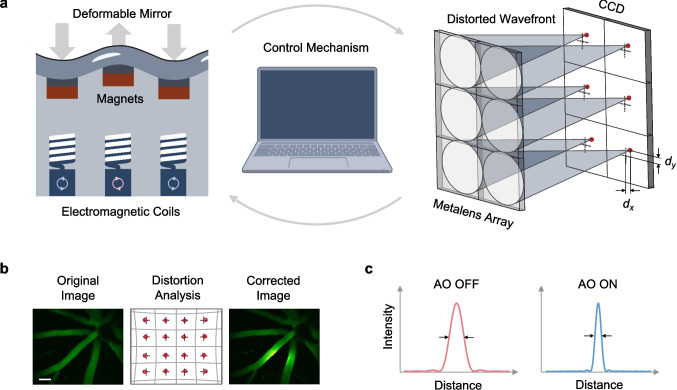 Figure 5
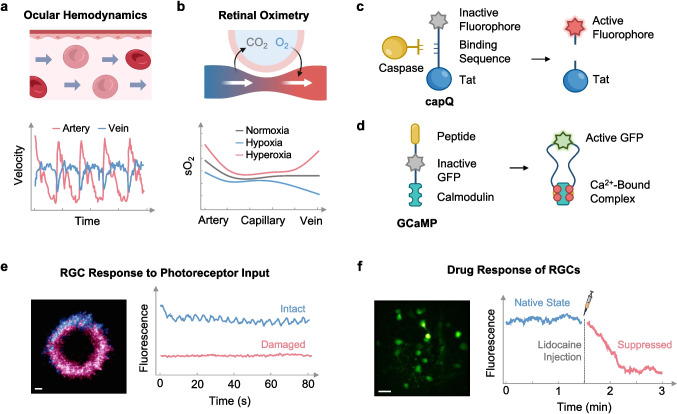 Figure 6
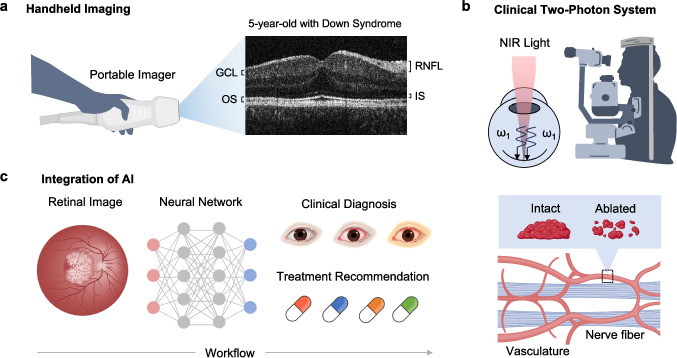 Figure 7
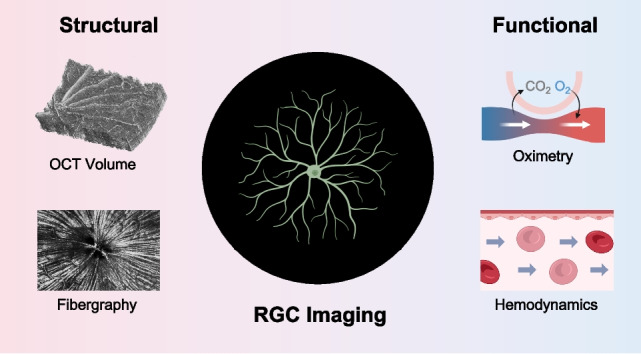 Figure 8
Peer Reviews
No public reviews on file for this paper yet. If you reviewed it on a platform where reviews are public (OpenReview, ICLR, NeurIPS, ICML), you can paste yours below so the community can read it here.
Videos
No videos yet. Explain this paper in a talk, walkthrough, or lecture? Add one.
Taxonomy
TopicsOptical Coherence Tomography Applications · Advanced Fluorescence Microscopy Techniques · Photoreceptor and optogenetics research