Association between epicardial adipose tissue and transfusion-dependent β-thalassemia
Michele Malagù, Federico Marchini, Filomena Longo, Marco Zuin, Giovanni Orazio, Andrea Capanni, Maria Letizia Berloni, Federica Frascaro, Elisabetta Tonet, Alberto Cossu, Martina Culcasi, Beatrice Bonsi, Cristina Balla, Francesco Vitali, Matteo Bertini

TL;DR
This study found that patients with transfusion-dependent β-thalassemia have increased epicardial adipose tissue compared to healthy controls, which may contribute to their higher risk of cardiovascular diseases.
Contribution
The study demonstrates an independent association between transfusion-dependent β-thalassemia and increased epicardial adipose tissue thickness.
Findings
Epicardial adipose tissue thickness was significantly higher in patients with TDβT at multiple cardiac regions.
Multivariable analysis confirmed an independent association between EAT and TDβT.
EAT distribution differed significantly between patients with and without cardiovascular comorbidities like atrial fibrillation and heart failure.
Abstract
Epicardial adipose tissue (EAT) is a fat depot with secretive and neuromodulative properties, involved in the pathogenesis of cardiovascular diseases. Transfusion-dependent β-thalassemia (TDβT) is an inherited disorder characterized by chronic anemia and at risk for the development of several comorbidities. Patients with TDβT have a higher incidence of cardiovascular diseases compared to the general population. The aim of this study was to evaluate EAT thickness in a cohort of patients with TDβT (study group), compared to age- and sex-balanced patients with no TDβT (control group). Secondary endpoint included evaluation of differences in the regional distribution of EAT between patients with or without cardiovascular disease (NCT05508932). Overall, 272 patients were enrolled, of whom 136 in study group and 136 in control group. EAT thickness was significantly higher in the study group…
Genes, proteins, chemicals, diseases, species, mutations and cell lines named across the full text — each resolved to its canonical identifier and authoritative record.
Click any figure to enlarge with its caption.
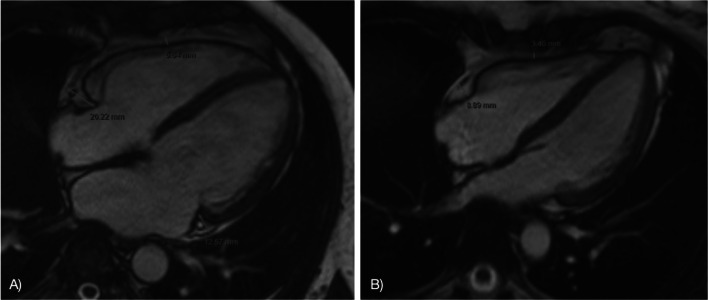 Figure 1
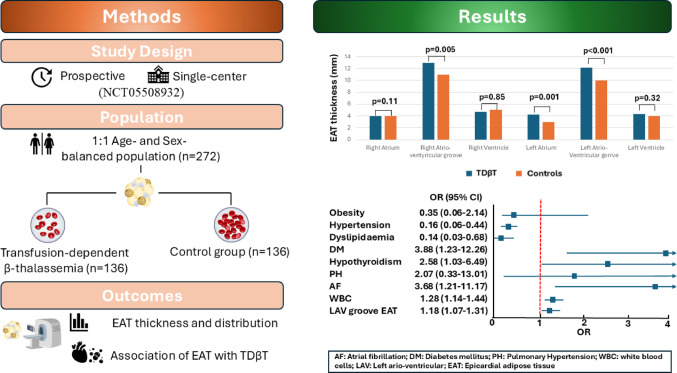 Figure 2
Peer Reviews
No public reviews on file for this paper yet. If you reviewed it on a platform where reviews are public (OpenReview, ICLR, NeurIPS, ICML), you can paste yours below so the community can read it here.
Videos
No videos yet. Explain this paper in a talk, walkthrough, or lecture? Add one.
Taxonomy
TopicsCardiovascular Disease and Adiposity · Cardiovascular Function and Risk Factors · Cardiovascular Effects of Exercise