Sonographic double patterns in hepatic alveolar echinococcosis according to the echinococcosis multilocularis ultrasound classification
Nele Hergesell, Dennis Skotnik, Wolfgang Kratzer

TL;DR
This study explores the occurrence and characteristics of double ultrasound patterns in hepatic alveolar echinococcosis, a rare liver disease caused by a parasitic worm.
Contribution
The study is the first to systematically analyze the prevalence and combinations of sonographic double patterns in AE using a national database.
Findings
Double ultrasound patterns were found in 4.8% of AE patients.
The most common combination was hailstorm and ossification patterns.
No significant correlation was found between pattern combinations and lesion activity.
Abstract
Alveolar echinococcosis (AE) is a rare but severe zoonosis caused byEchinococcus multilocularis that predominantly affects the liver. While previous studies have focused on single ultrasound patterns, the significance of hepatic double pattern lesions is not yet fully understood. The aim of this study is to investigate the prevalence, characteristics and combinations of sonographic double patterns in AE. Based on data from Germany’s national echinococcosis database (n=825),40 patients with AE and confirmed double pattern were analysed retrospectively. Inclusion criteria were patients with at least two hepatic lesions of different patterns on reference ultrasound (US). US images were evaluated using the Echinococcosis Multilocularis Ulm Classification (EMUC)-US classification, with the analysis conducted by independent, blinded sonographers. Overall, a double pattern was detected in 4.8…
Genes, proteins, chemicals, diseases, species, mutations and cell lines named across the full text — each resolved to its canonical identifier and authoritative record.
Click any figure to enlarge with its caption.
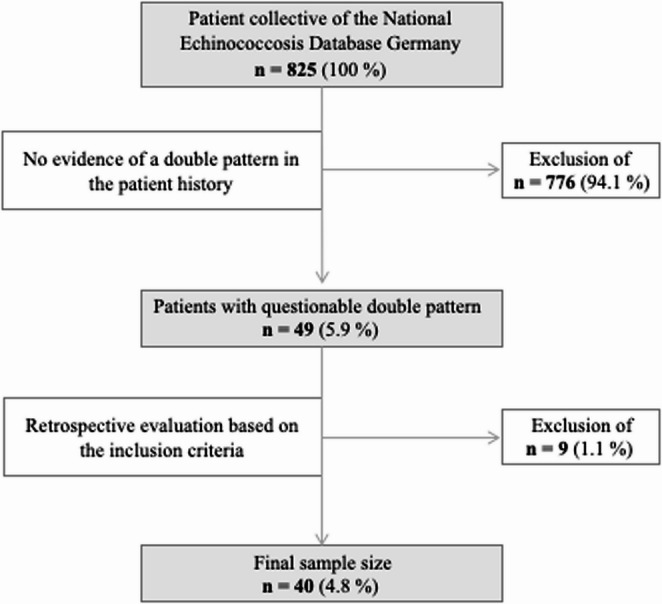 Figure 1
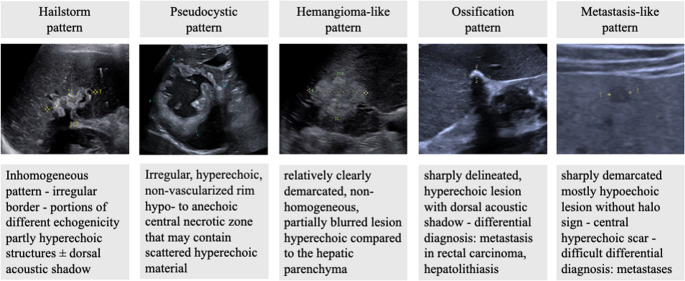 Figure 2
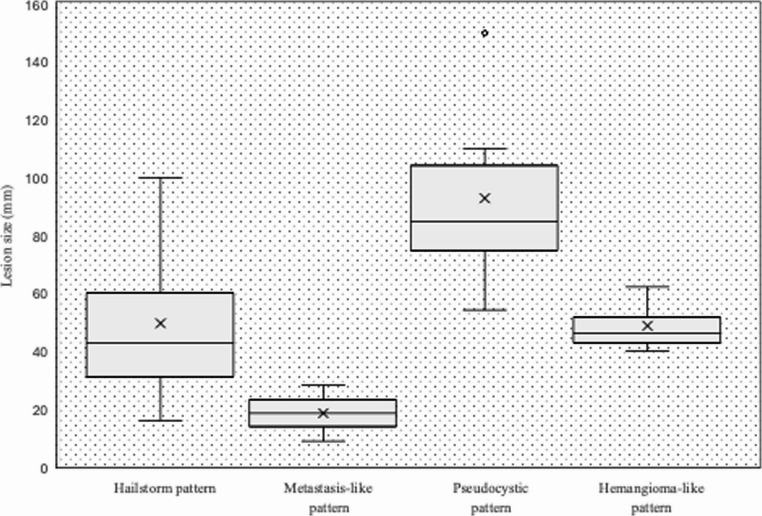 Figure 3
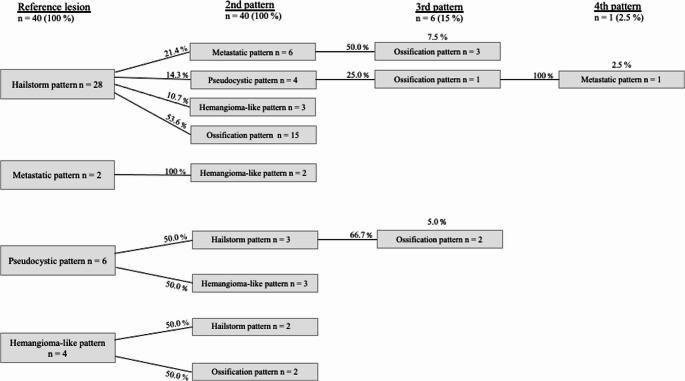 Figure 4
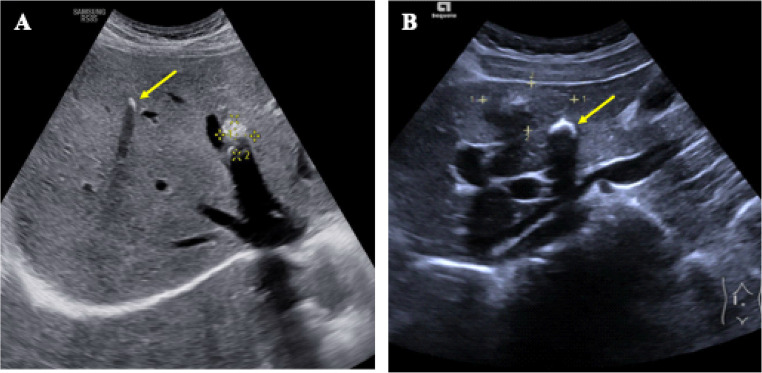 Figure 5
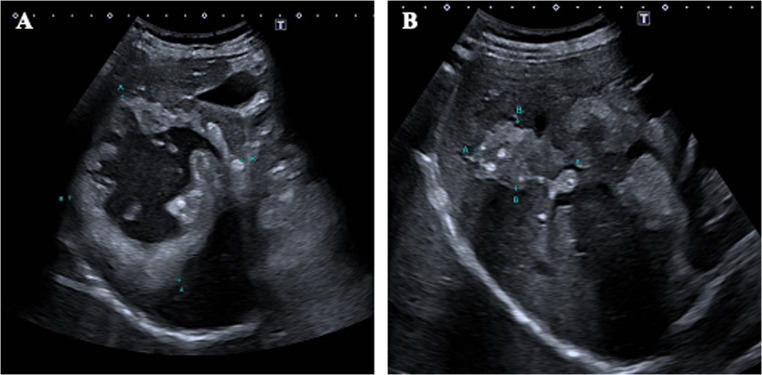 Figure 6
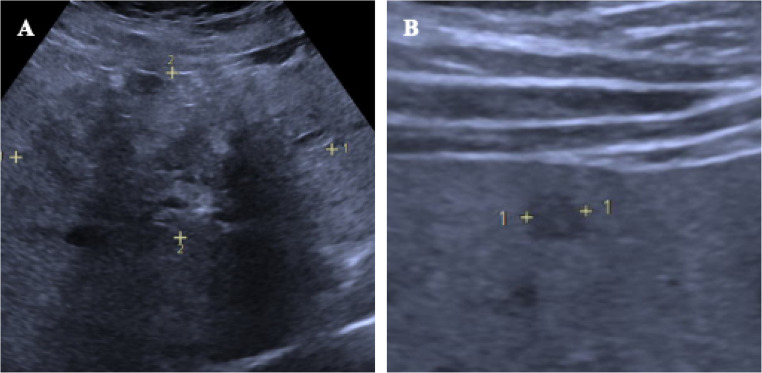 Figure 7
Peer Reviews
No public reviews on file for this paper yet. If you reviewed it on a platform where reviews are public (OpenReview, ICLR, NeurIPS, ICML), you can paste yours below so the community can read it here.
Videos
No videos yet. Explain this paper in a talk, walkthrough, or lecture? Add one.
Taxonomy
TopicsParasitic infections in humans and animals · Amoebic Infections and Treatments · Congenital Anomalies and Fetal Surgery