A Bayesian Two‐Step Multiple Imputation Approach Based on Mixed Models for Missing EMA Data
Yiheng Wei, Juned Siddique, Bonnie Spring, Donald Hedeker

TL;DR
This paper introduces a Bayesian two-step multiple imputation method using mixed models to handle missing data in Ecological Momentary Assessment (EMA) studies.
Contribution
The novel contribution is a Bayesian framework that compares three mixed models for imputing missing EMA data.
Findings
Multiple imputation outperforms single imputation in handling missing EMA data.
Modeling within-subject variance and linking missingness to the response improves imputation performance.
The MELS models show distinct imputation results compared to the Random Intercept Linear Mixed model in real-world data.
Abstract
Ecological Momentary Assessments (EMA) capture real‐time thoughts and behaviors in natural settings, producing rich longitudinal data for statistical analyses. However, the robustness of these analyses can be compromised by the large amount of missing data in EMA studies. To address this, multiple imputation, a method that replaces missing values with several plausible alternatives, has become increasingly popular. In this article, we introduce a two‐step Bayesian multiple imputation framework which leverages the configuration of mixed models. We adopt and compare: (1) the Random Intercept Linear Mixed model; (2) the Mixed‐effect Location Scale (MELS) model which accounts for subject variance influenced by covariates and random effects; and (3) the Shared Parameter MELS model which additionally links the missing data to the response variable through a random intercept logistic model.…
Genes, proteins, chemicals, diseases, species, mutations and cell lines named across the full text — each resolved to its canonical identifier and authoritative record.
Click any figure to enlarge with its caption.
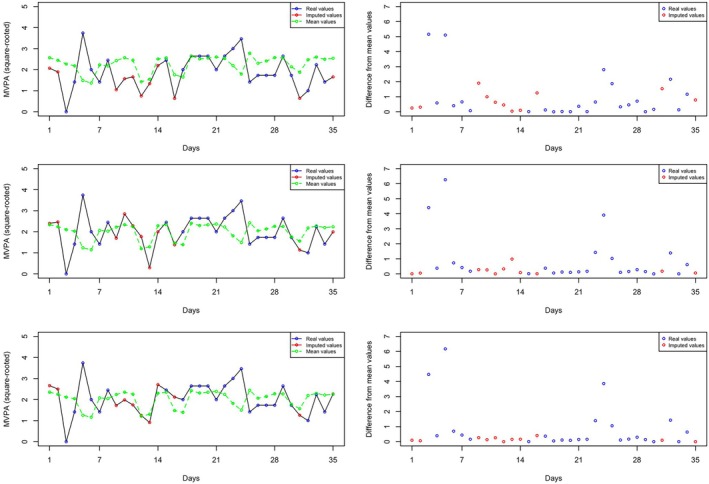 Figure 1
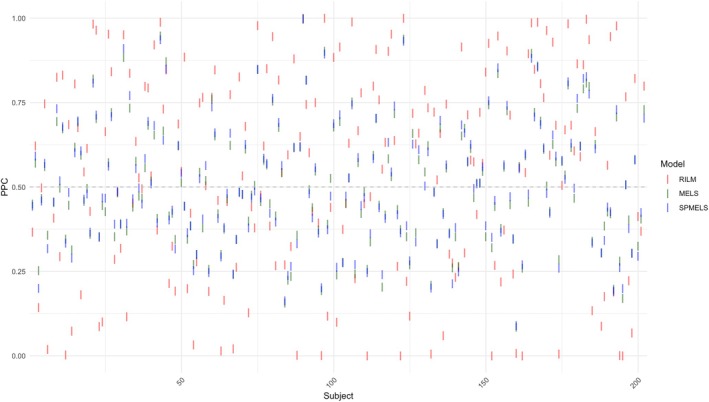 Figure 2
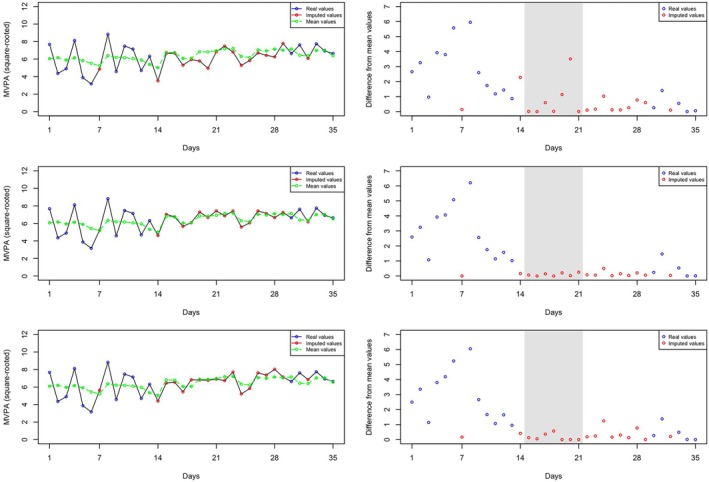 Figure 3
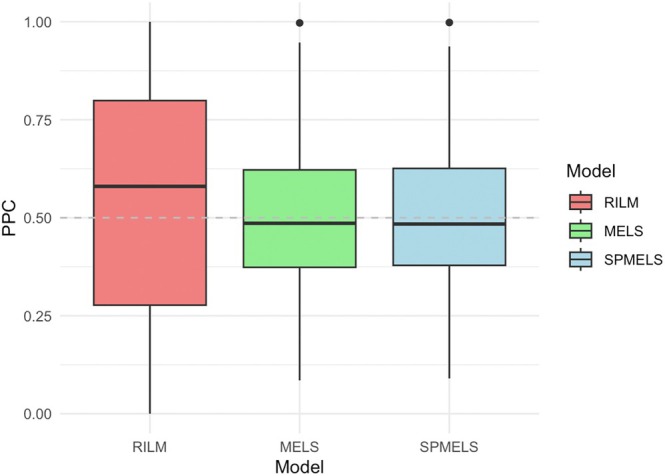 Figure 4
Peer Reviews
No public reviews on file for this paper yet. If you reviewed it on a platform where reviews are public (OpenReview, ICLR, NeurIPS, ICML), you can paste yours below so the community can read it here.
Videos
No videos yet. Explain this paper in a talk, walkthrough, or lecture? Add one.
Taxonomy
TopicsMental Health Research Topics · Statistical Methods and Bayesian Inference · Psychometric Methodologies and Testing