Macrocyclic geminal diols: synthesis, structures, stability and photophysical properties
Bo Zou, Xiaolin Chen, Haoran Liu, Sijie Wen, Jieqing Huang, Hengshan Wei, Jinqing Huang, Yucheng Gu, Bingjia Xu, Jun Fan, Hua-Wei Jiang

TL;DR
Scientists synthesized stable macrocyclic geminal diols and found their stability depends on ring size, with smaller rings favoring the diol form and larger rings favoring the diketone form.
Contribution
The synthesis of stable macrocyclic gem-diols and the discovery of a size-dependent stability trend between diol and diketone forms.
Findings
Smaller macrocyclic gem-diols are more stable due to angle strain relief via sp3 hybridization.
Larger rings favor the diketone form over the gem-diol form.
Hydrogen-bonding networks and O–C–O bond angles contribute to gem-diol stability.
Abstract
Geminal diols are generally unstable and prone to dehydration, yielding carbonyl compounds and making their isolation as discrete species highly challenging. Herein, we report the synthesis, structural characterization, and stability of a series of crystalline, stable, and rigid macrocyclic gem-diols obtained via acid hydrolysis of macrocyclic ketal precursors at −25 °C. Single-crystal X-ray diffraction analysis of these compounds reveals O–C–O bond angles of approximately 111°, along with extensive hydrogen-bonding networks that contribute to stabilizing the gem-diols. Thermogravimetric and hydrolytic analyses reveal a pronounced size-dependent stability trend. Theoretical calculations indicate that the enhanced stability of smaller gem-diol macrocycles stems from their ability to relieve substantial angle strain via sp3 hybridization at the methylene carbon, an effect that diminishes…
Genes, proteins, chemicals, diseases, species, mutations and cell lines named across the full text — each resolved to its canonical identifier and authoritative record.
Click any figure to enlarge with its caption.
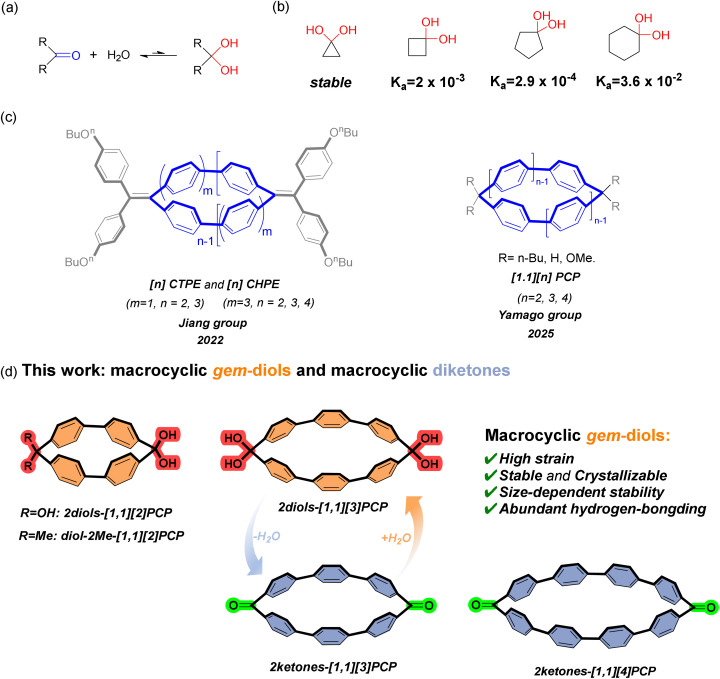 Figure 1
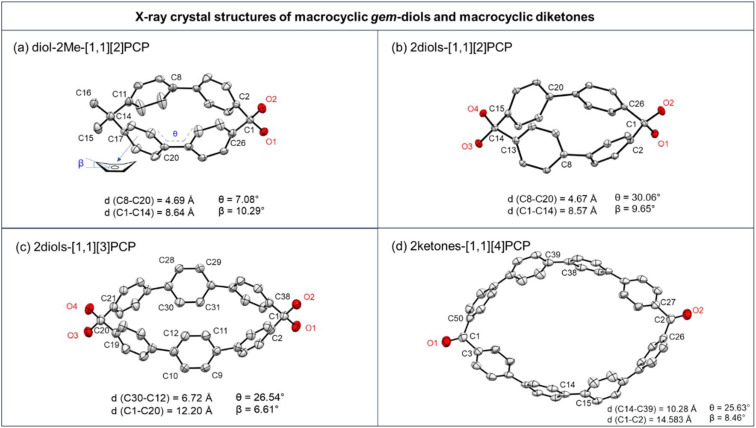 Figure 2
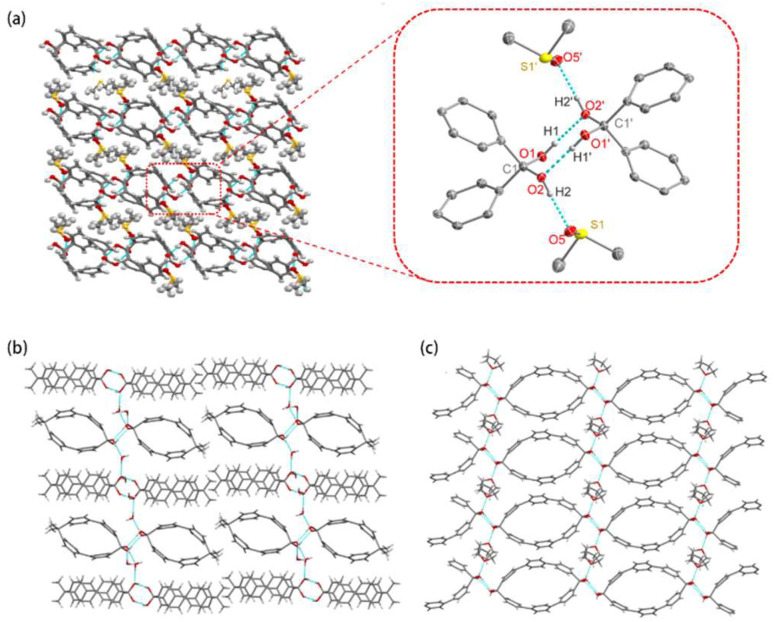 Figure 3
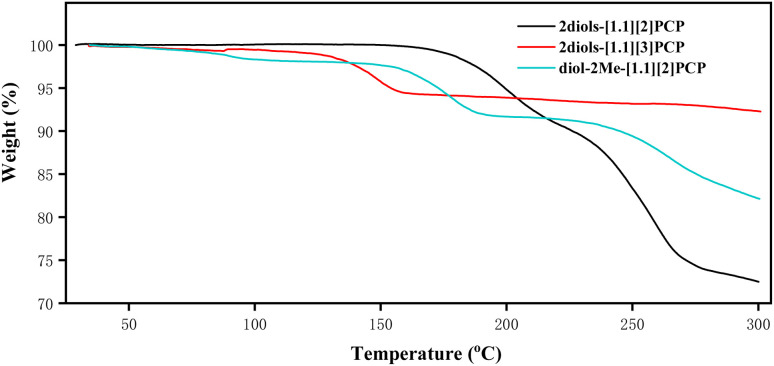 Figure 4
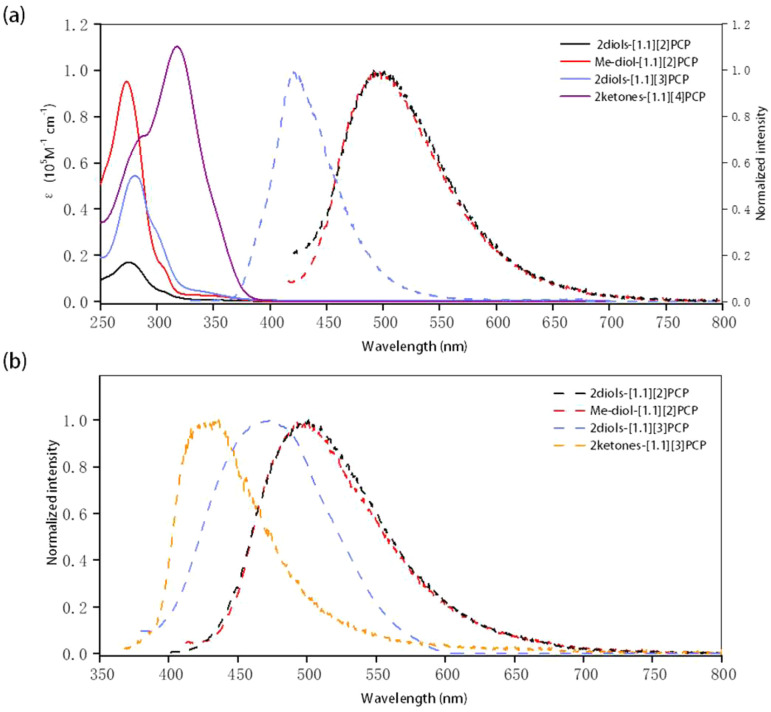 Figure 5
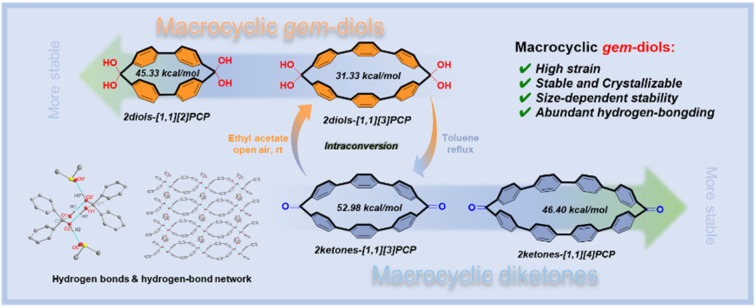 Figure 6
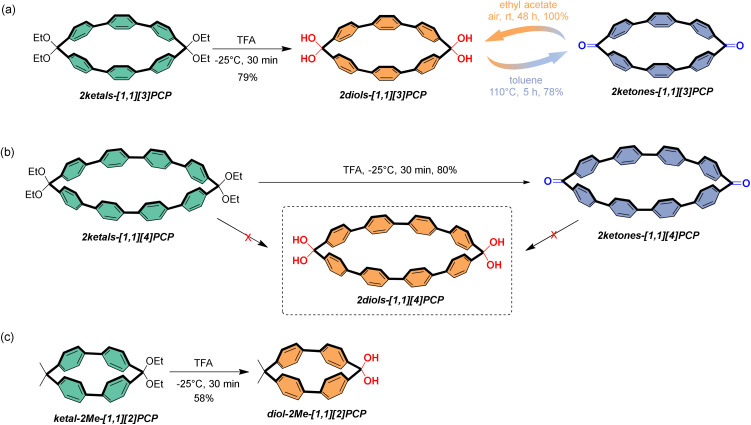 Figure 7
 Figure 8
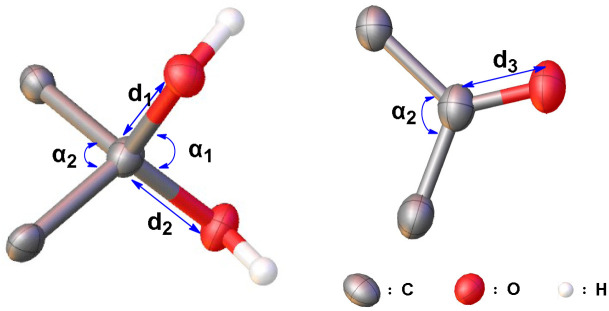 Figure 9
Peer Reviews
No public reviews on file for this paper yet. If you reviewed it on a platform where reviews are public (OpenReview, ICLR, NeurIPS, ICML), you can paste yours below so the community can read it here.
Videos
No videos yet. Explain this paper in a talk, walkthrough, or lecture? Add one.
Taxonomy
TopicsSynthesis and Properties of Aromatic Compounds · Crystallography and molecular interactions · Carbon dioxide utilization in catalysis