Cleavable Silyl Ether Monomers with Elevated Thermomechanical Properties for Bone Regeneration
Tina Gurmann, Judith Krauß, Theresa Ammann, Thomas Koch, Martin Frauenlob, Robert Liska, Stefan Baudis

TL;DR
This paper introduces new silyl ether monomers for 3D printing bone grafts that are strong, degrade safely, and avoid harmful byproducts.
Contribution
The novel monomers combine rigid norbornane structures with cleavable silyl ethers to achieve high thermomechanical properties and safe degradation.
Findings
The new monomers achieved a Tg of 62°C, significantly higher than previous thiol–ene networks.
The material showed a quasi-linear degradation rate of 6.5% per month with low cytotoxicity.
Proof-of-concept 3D printing was successfully demonstrated using a DLP setup.
Abstract
Over the last years, stereolithography has developed to be one of the most promising fabrication techniques in tissue engineering. Posing the possibility of fabricating patient-specific, porous implants, it became especially attractive for scaffold fabrication for the treatment of critical sized bone defects. State-of-the-art photopolymer systems mostly consist of potentially cytotoxic compounds, such as (meth)acrylates, that furthermore show insufficient degradation and lead to acidic degradation products that could induce adverse tissue reactions. Herein, we introduced trifunctional monomers comprising cleavable silyl ether groups for thiol–ene photopolymerization to enlarge the material platform for printed bone grafts. Polymer networks comprising a high number of silyl ether moieties typically tend to be mechanically weak and exhibit low T g values, especially when combined with…
Genes, proteins, chemicals, diseases, species, mutations and cell lines named across the full text — each resolved to its canonical identifier and authoritative record.
Click any figure to enlarge with its caption.
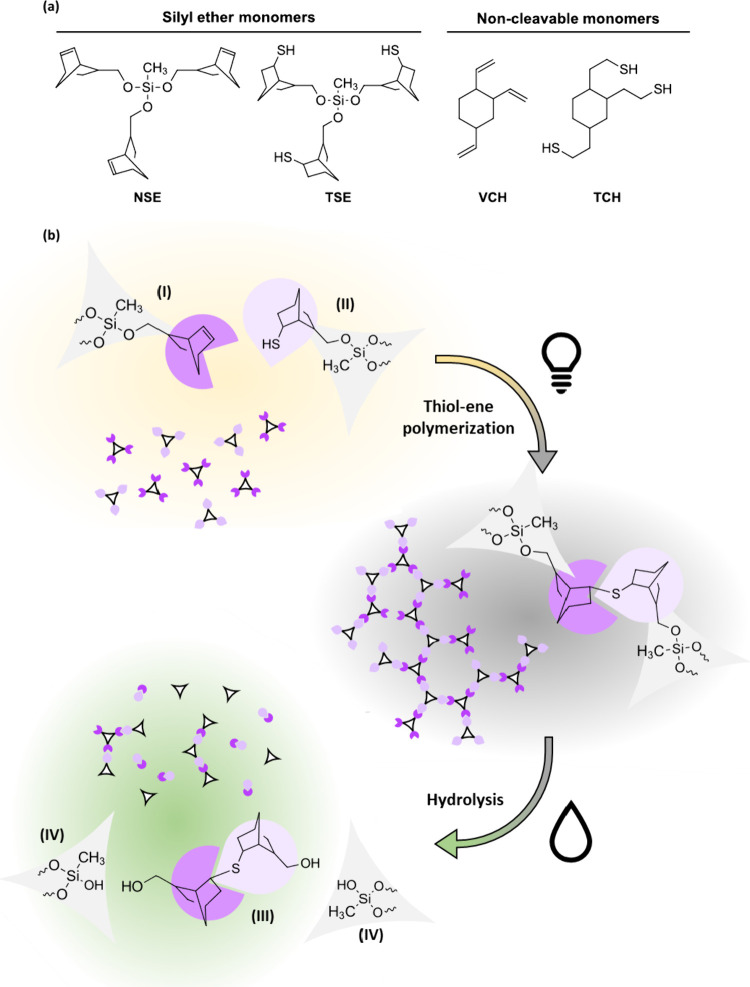 Figure 1
 Figure 2
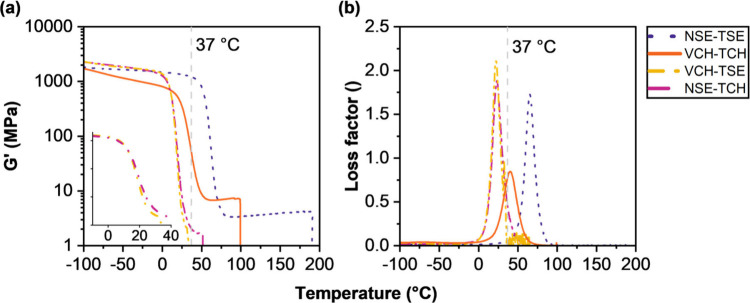 Figure 3
 Figure 4
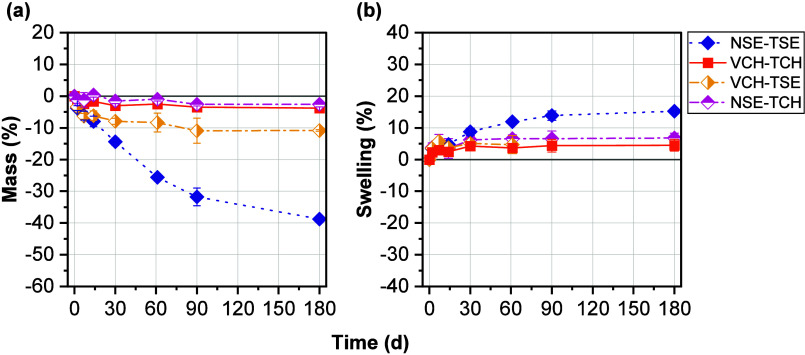 Figure 5
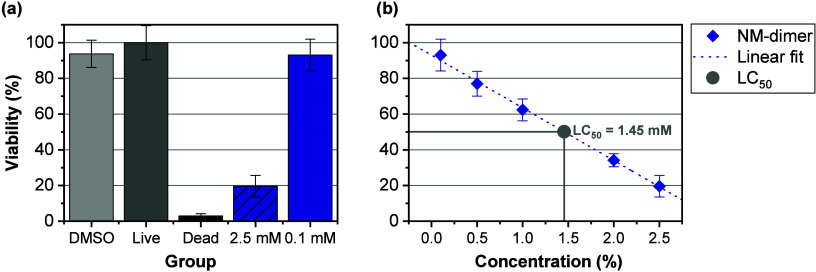 Figure 6
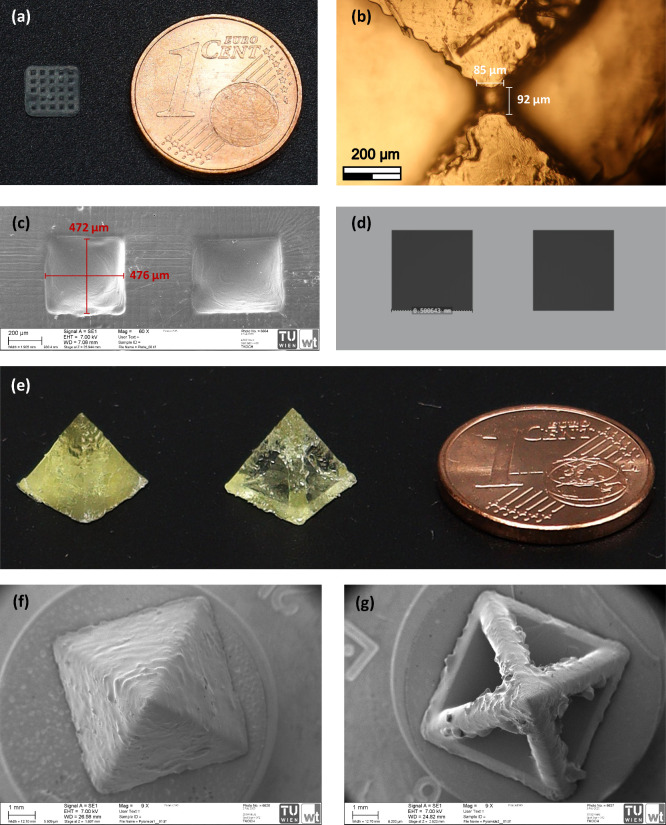 Figure 7
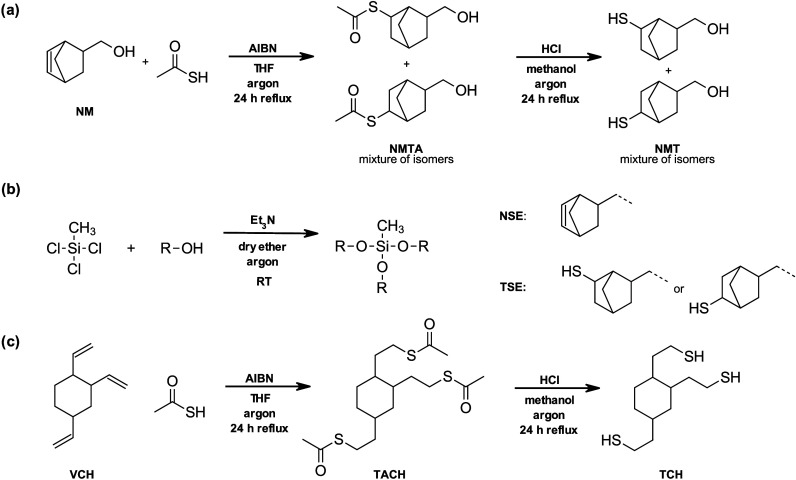 Figure 8
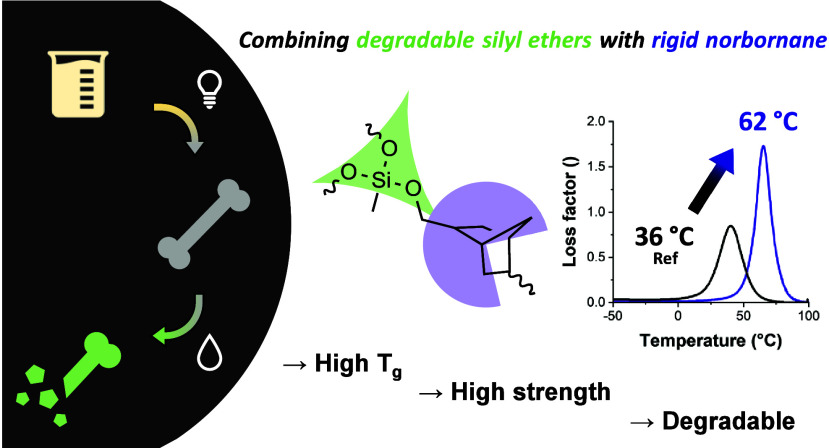 Figure 9
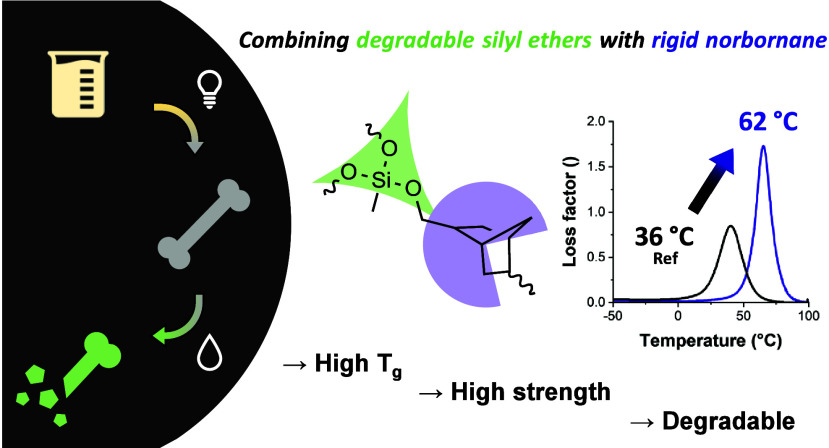 Figure 10
Peer Reviews
No public reviews on file for this paper yet. If you reviewed it on a platform where reviews are public (OpenReview, ICLR, NeurIPS, ICML), you can paste yours below so the community can read it here.
Videos
No videos yet. Explain this paper in a talk, walkthrough, or lecture? Add one.
Taxonomy
TopicsPhotopolymerization techniques and applications · Polymer composites and self-healing · Carbon dioxide utilization in catalysis