Programmed Cell Death via Type IV Photodynamic Therapy Using Internalized Two-Photon Activated Molecular Nanomachines
Thomas. S. Bradford, Dongdong Liu, James M. Tour, Robert Pal

TL;DR
This paper introduces a new type of photodynamic therapy that uses light-activated nanomachines to induce programmed cell death in cancer cells without damaging surrounding tissues.
Contribution
The novel use of light-activated molecular nanomachines to switch between necrotic and programmed cell death modes in cancer treatment.
Findings
PEG or TPP+ modified nanomachines can cross cell membranes and localize at mitochondria.
Activation from within cells induces programmed cell death without membrane rupture.
A single technology can switch between necrotic and non-necrotic cell death modes.
Abstract
Direct photodynamic therapy (PDT) is a growing research area currently being explored as an alternative treatment for various cancers. Compared to traditional, indirect PDT, which exploits the reaction of oxygen with the photosensitizer (PS) to damage specially targeted cells, direct PDT utilizes the PS itself to disrupt the target cell, meaning no reactive oxygen species (ROS) are generated. The activation of Type IV technologies specifically induces a structural change within the photosensitizer, resulting in the activation of its therapeutic effect. In contrast to traditional invasive surgeries, chemotherapy, or ROS-based methods, direct methods of PDT pose significantly less damaging off-target effects. Here, we propose an exciting extension of our prior reported, near-infrared light-activated, molecular nanomachines (MNMs), previously shown to promote cell-specific necrosis via…
Genes, proteins, chemicals, diseases, species, mutations and cell lines named across the full text — each resolved to its canonical identifier and authoritative record.
Click any figure to enlarge with its caption.
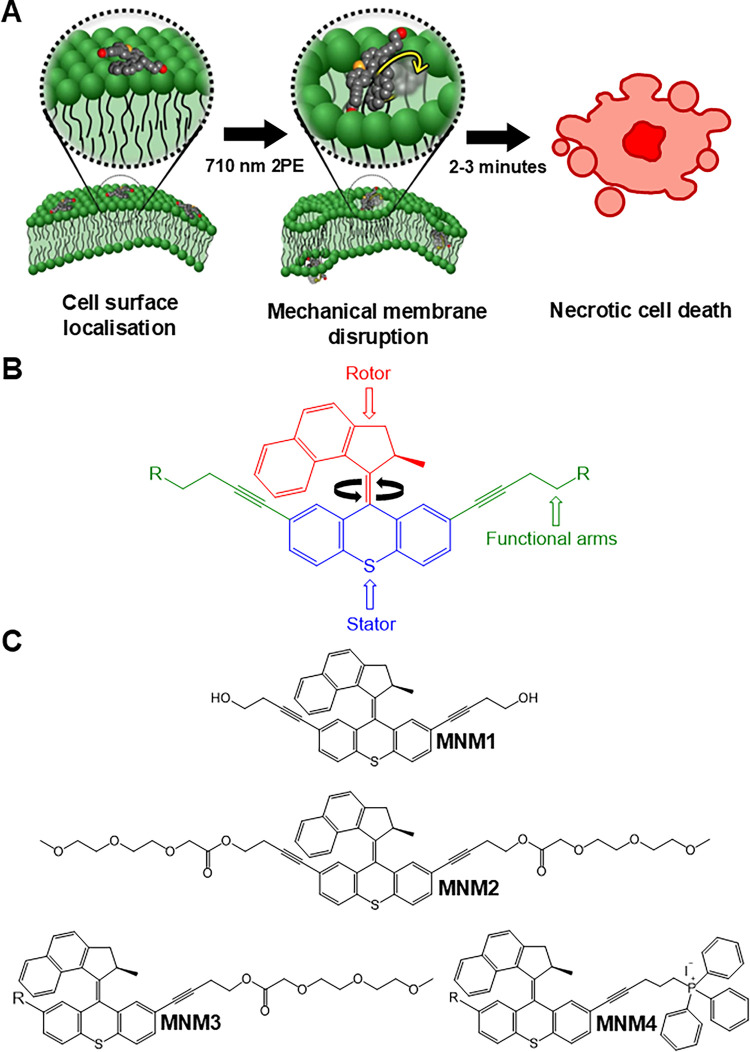 Figure 1
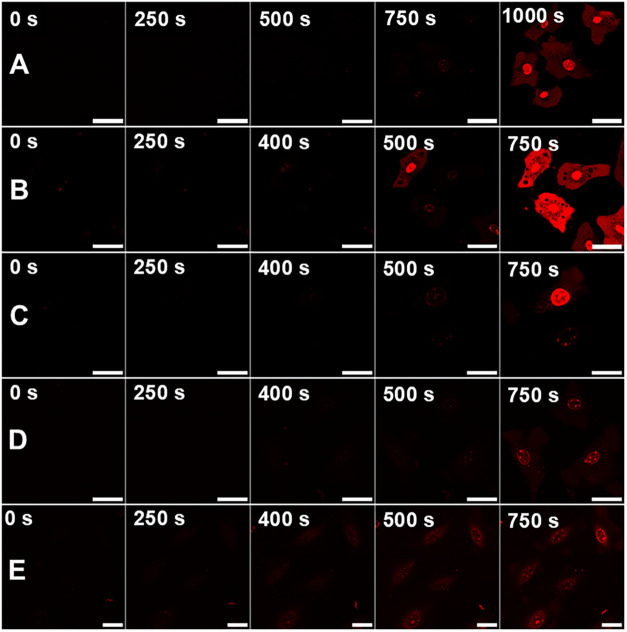 Figure 2
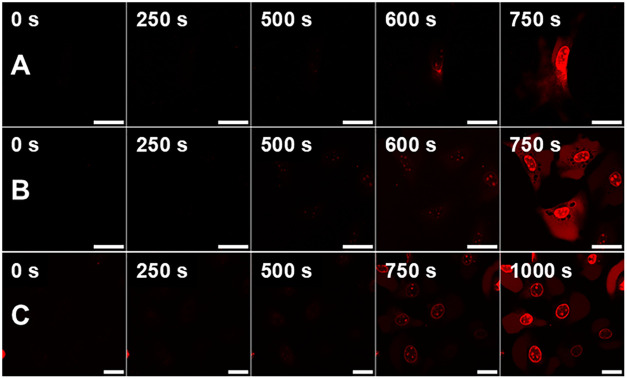 Figure 3
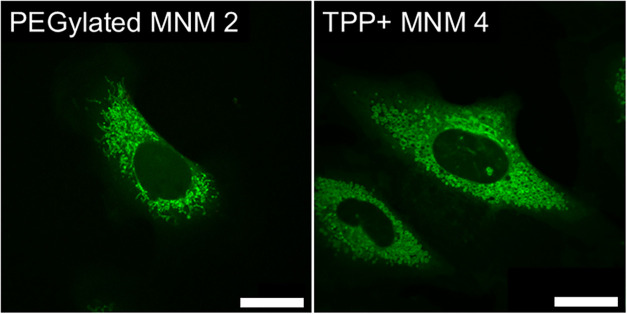 Figure 4
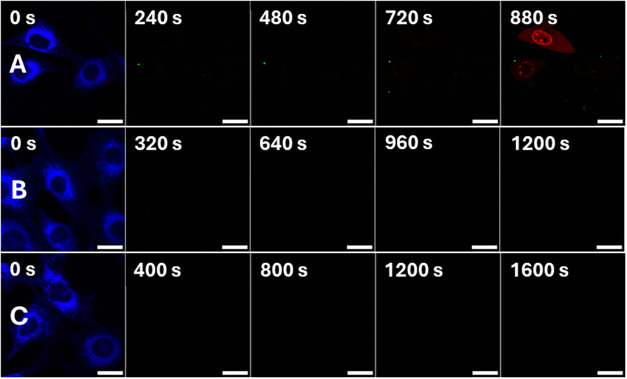 Figure 5
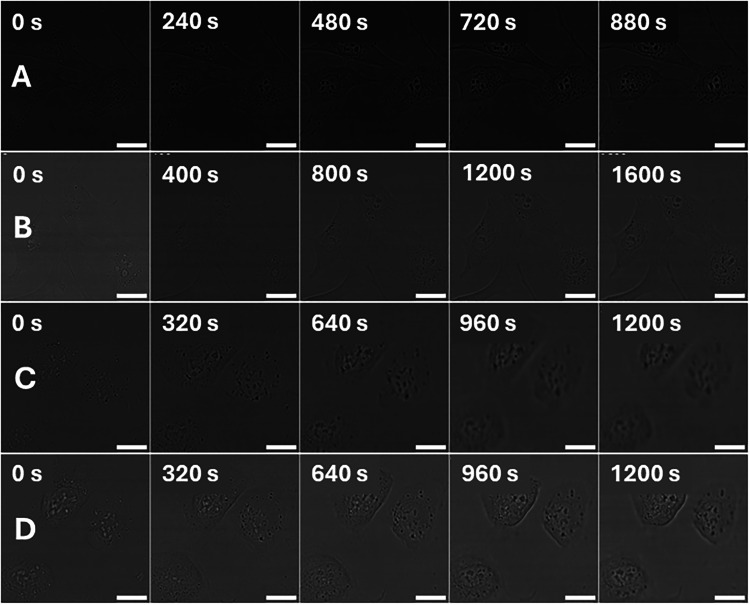 Figure 6
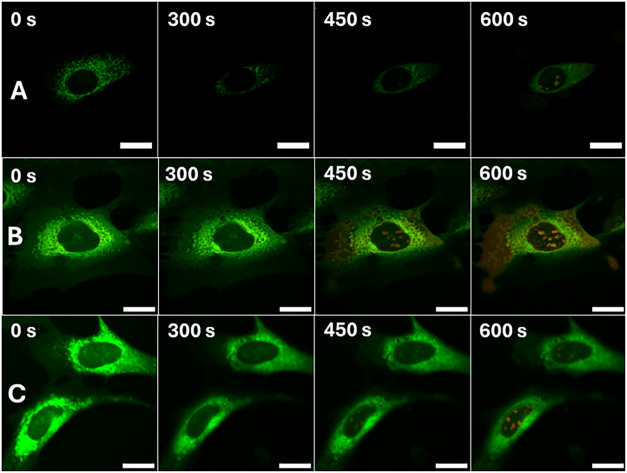 Figure 7
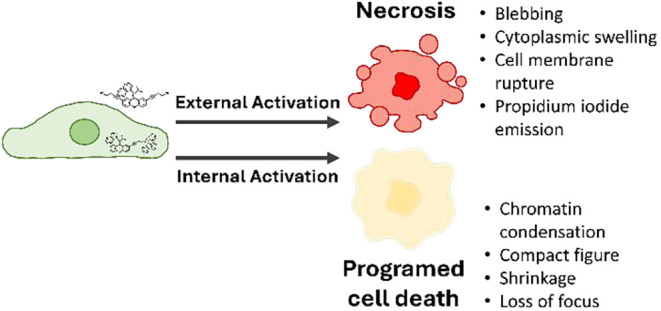 Figure 8
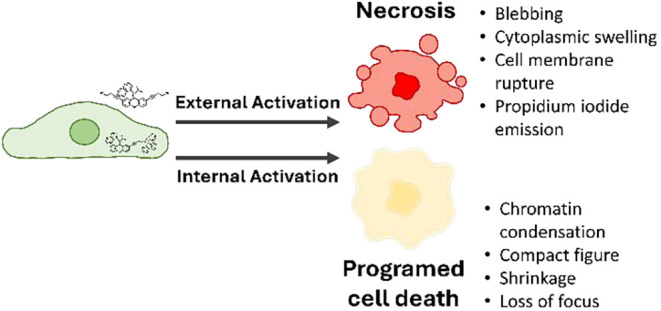 Figure 9
Peer Reviews
No public reviews on file for this paper yet. If you reviewed it on a platform where reviews are public (OpenReview, ICLR, NeurIPS, ICML), you can paste yours below so the community can read it here.
Videos
No videos yet. Explain this paper in a talk, walkthrough, or lecture? Add one.
Taxonomy
TopicsAdvanced Fluorescence Microscopy Techniques · Nanoplatforms for cancer theranostics · Photoreceptor and optogenetics research