Fertility preservation practices and gastrointestinal oncologist in Europe: a pan-European study
Irit Ben-Aharon, Tal Goshen-Lago, Alberto Puccini, Maria Alsina, Dirk Arnold, Hanneke van Laarhoven, Anneli Elme, Tineke Buffart, Nina Fokter-Dovnik, Tomas Sokop, Radka Obermanova, Florian Lordick, Demetris Papamichael, Francesco Sclafani, Elena Elez, Julien Taieb

TL;DR
This study examines how gastrointestinal oncologists across Europe discuss and handle fertility preservation with young cancer patients, revealing significant variation in practices.
Contribution
The study provides the first pan-European assessment of oncofertility practices among GI oncologists, highlighting gaps in adherence to guidelines.
Findings
Only 57% of oncologists routinely discuss fertility impacts with patients under 40, and 17% do not refer for fertility preservation due to time/resource constraints.
Referral rates for fertility preservation options differ significantly, with 59% referring female patients for embryo/oocyte preservation and 65% referring male patients for sperm preservation.
There is notable variation in the use of GnRHa and referral for ovarian transposition, indicating inconsistent adherence to guidelines across Europe.
Abstract
The rising incidence of early-onset gastrointestinal (GI) cancer has made the impact of treatments on fertility of high significance. While there is abundant evidence on oncofertility outcomes in breast cancer and hematological malignancies, data regarding these perspectives in GI cancers is lacking. We sought to evaluate current practices of fertility preservation (FP) among GI oncologists across Europe. A cross-sectional survey was distributed through the Gastrointestinal Tract Cancer Group (GITCG) of the EORTC network and affiliated cooperative groups and cancer centers using a 10-item electronic survey regarding oncofertility practices. The target population was oncologists who routinely treat GI cancers. A statistical analysis was performed based on country, patient volume, and tumor type. Two hundred and twenty-six GI oncologists from 27 countries completed the survey, the…
Genes, proteins, chemicals, diseases, species, mutations and cell lines named across the full text — each resolved to its canonical identifier and authoritative record.
Click any figure to enlarge with its caption.
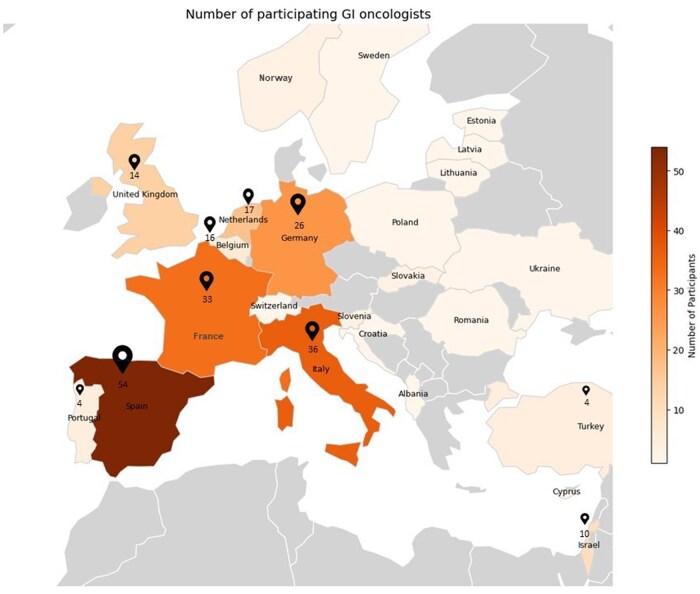 Figure 1
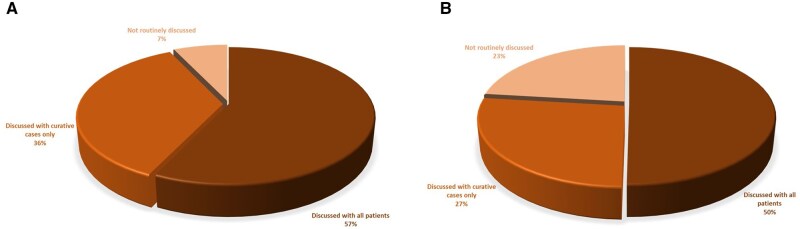 Figure 2
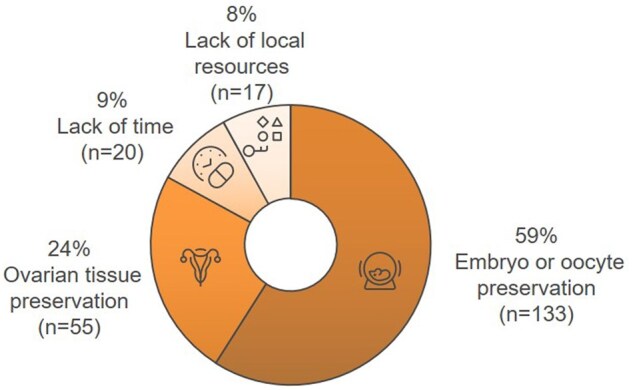 Figure 3
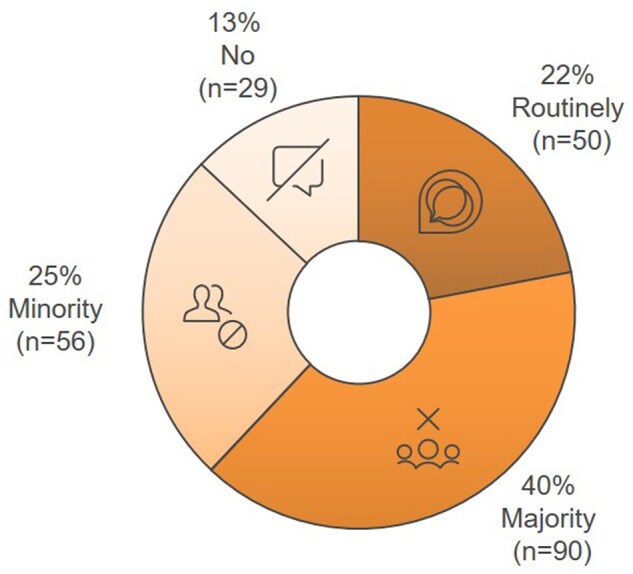 Figure 4
 Figure 5
 Figure 6
Peer Reviews
No public reviews on file for this paper yet. If you reviewed it on a platform where reviews are public (OpenReview, ICLR, NeurIPS, ICML), you can paste yours below so the community can read it here.
Videos
No videos yet. Explain this paper in a talk, walkthrough, or lecture? Add one.
Taxonomy
TopicsReproductive Biology and Fertility · Ovarian cancer diagnosis and treatment · Ovarian function and disorders