Contributing effects of sarcopenia on cancer occurrence: novel evidence based on NHANES 1999–2020 and two-sample mendelian randomization study
Zheng Xu, Xiaoru Luo, Wuliang Diao, Xinlinzi Tang, Yue Zhang, Jiahao Wang, Zichao Jiang, Ting Lei

TL;DR
This study finds that sarcopenia, or muscle loss, is linked to a higher risk of developing certain cancers and may play a causal role in cancer development.
Contribution
The study provides novel evidence using NHANES data and Mendelian randomization to show a causal link between sarcopenia and cancer occurrence.
Findings
Lower lean mass and sarcopenia were associated with increased cancer risk, especially in individuals over 40.
Mendelian randomization confirmed a causal negative effect of appendicular lean mass on overall cancer types.
Sarcopenia was specifically linked to higher risks of colon, ovarian, uterine, and certain blood cancers.
Abstract
Sarcopenia is associated with worse prognosis in patients with cancer, and patients with cancer usually have poor muscle condition. However, it is still not clear whether sarcopenia contributes to cancer occurrence. This study utilized data from the National Health and Nutrition Examination Survey (NHANES) 1999–2020 to assess the relationship between sarcopenia and cancer. Key sarcopenia indicators, including lean mass measurements and sarcopenia diagnosed by European Working Group on Sarcopenia in Older People (EWGSOP) or Foundation for the National Institutes of Health (FNIH) criteria, were analyzed using quantile logistic regression models. A two-sample Mendelian Randomization (MR) approach was employed to explore the causal link between sarcopenia and cancer, leveraging genetic variants as instrumental variables. We found that after adjusting covariates, left arm lean mass, left…
Genes, proteins, chemicals, diseases, species, mutations and cell lines named across the full text — each resolved to its canonical identifier and authoritative record.
Click any figure to enlarge with its caption.
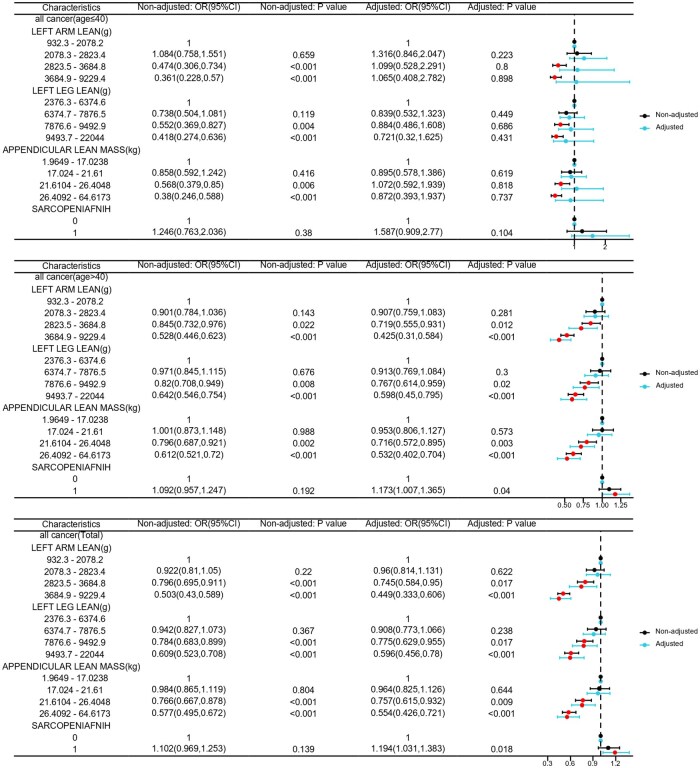 Figure 1
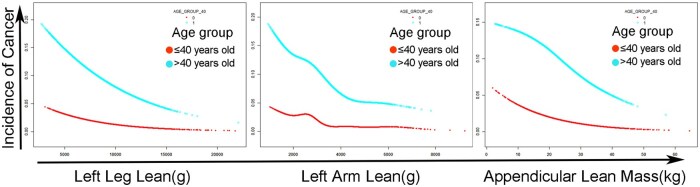 Figure 2
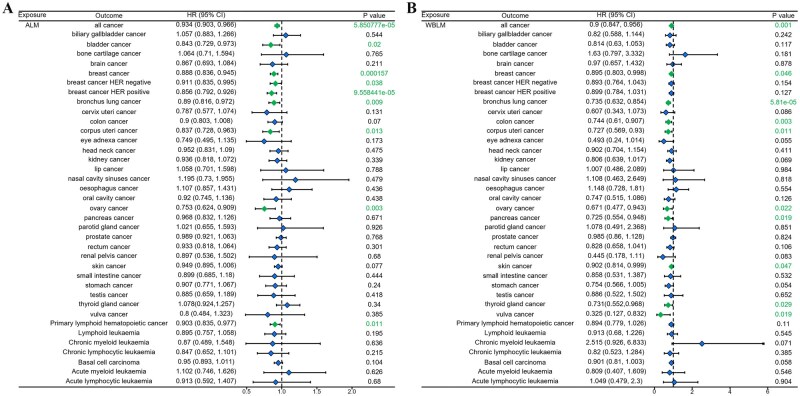 Figure 3
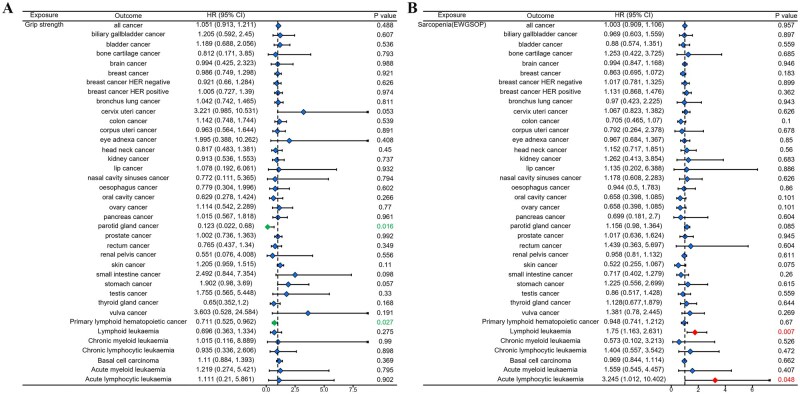 Figure 4
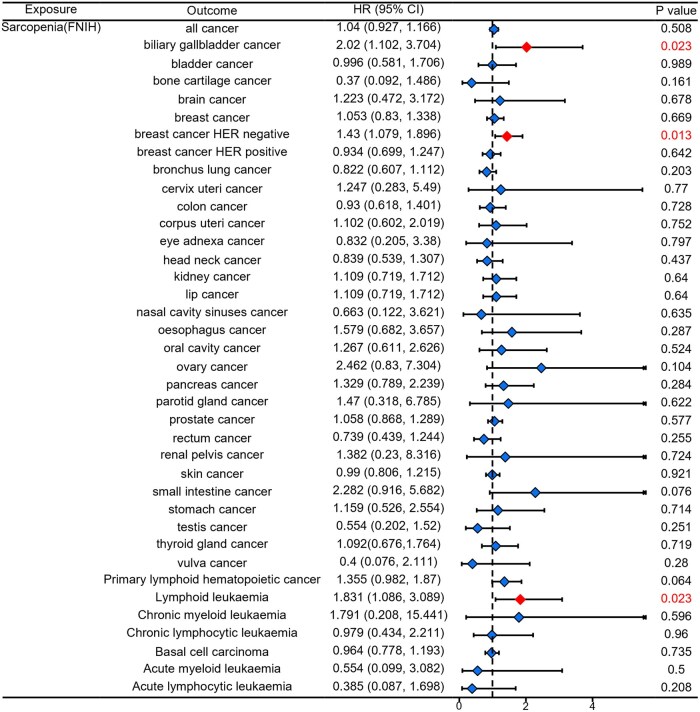 Figure 5
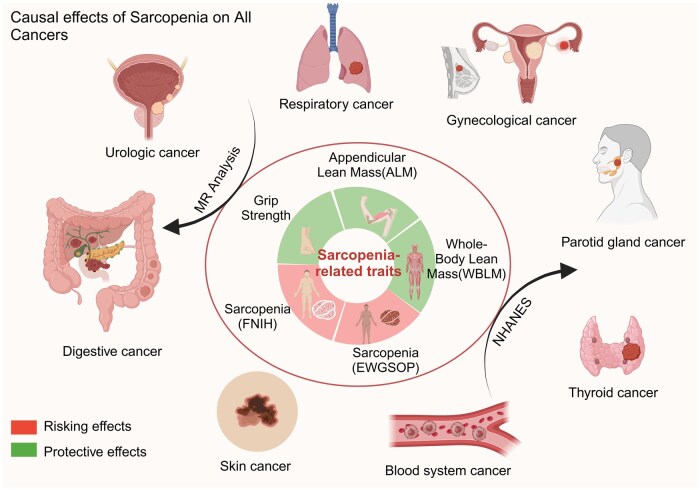 Figure 6
Peer Reviews
No public reviews on file for this paper yet. If you reviewed it on a platform where reviews are public (OpenReview, ICLR, NeurIPS, ICML), you can paste yours below so the community can read it here.
Videos
No videos yet. Explain this paper in a talk, walkthrough, or lecture? Add one.
Taxonomy
TopicsNutrition and Health in Aging · Body Composition Measurement Techniques · Nutrition, Genetics, and Disease