Efficacy and Safety of Stapokibart in Adults With Moderate‐to‐Severe Atopic Dermatitis With and Without Type 2 Comorbidities: A Post Hoc Analysis of a Phase 3 Trial
Yan Zhao, Litao Zhang, Liming Wu, Bin Yang, Jinyan Wang, Yumei Li, Qingchun Diao, Jingyi Li, Qing Sun, Xiaohong Zhu, Xiaoyong Man, Lihua Wang, Yanyan Feng, Tao Cai, Huiming Zeng, Linfeng Li, Jianyun Lu, Hong Ren, Fuqiu Li, Qianjin Lu, Xiaohua Tao, Rong Xiao, Chao Ji, Wenjie Zhao

TL;DR
A new drug called Stapokibart effectively treats moderate-to-severe eczema in adults, whether or not they have related health issues like asthma or allergies.
Contribution
This study shows Stapokibart's consistent effectiveness and safety in eczema patients with and without type 2 inflammatory comorbidities.
Findings
Stapokibart significantly improved eczema symptoms in patients with and without type 2 comorbidities during a 16-week trial.
Efficacy outcomes continued to improve over a 52-week treatment period for all patients.
The drug had a similar safety profile in patients with and without comorbidities, with conjunctivitis being the most common side effect.
Abstract
Atopic dermatitis (AD) often coexists with other type 2 inflammatory diseases. Stapokibart, a humanized IgG4 monoclonal antibody targeting interleukin‐4 receptor alpha subunit, showed high efficacy and favorable safety in a phase 3 trial. This post‐hoc analysis aimed to compare the efficacy and safety of stapokibart in AD patients with and without type 2 comorbidities. During 16‐week double‐blind period, participants were randomly assigned to stapokibart 600 (loading dose)‐300 mg (n = 251) or placebo (n = 249) treatment every other week (Q2W). All patients received stapokibart 300 mg Q2W during subsequent 36‐week maintenance period. Patients with ≥ 1 of the following conditions were classified into comorbid subgroup: allergic rhinitis, asthma, food allergies, chronic urticaria, or chronic obstructive pulmonary disease. Post‐hoc outcomes included response rates of ≥ 75%/90% improvement…
Genes, proteins, chemicals, diseases, species, mutations and cell lines named across the full text — each resolved to its canonical identifier and authoritative record.
Click any figure to enlarge with its caption.
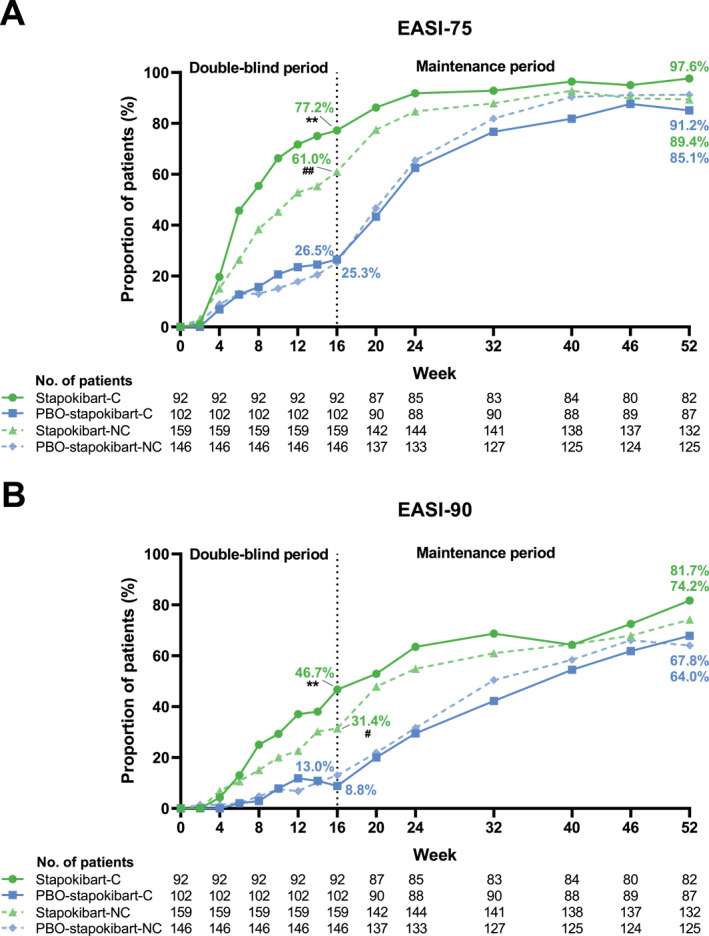 Figure 1
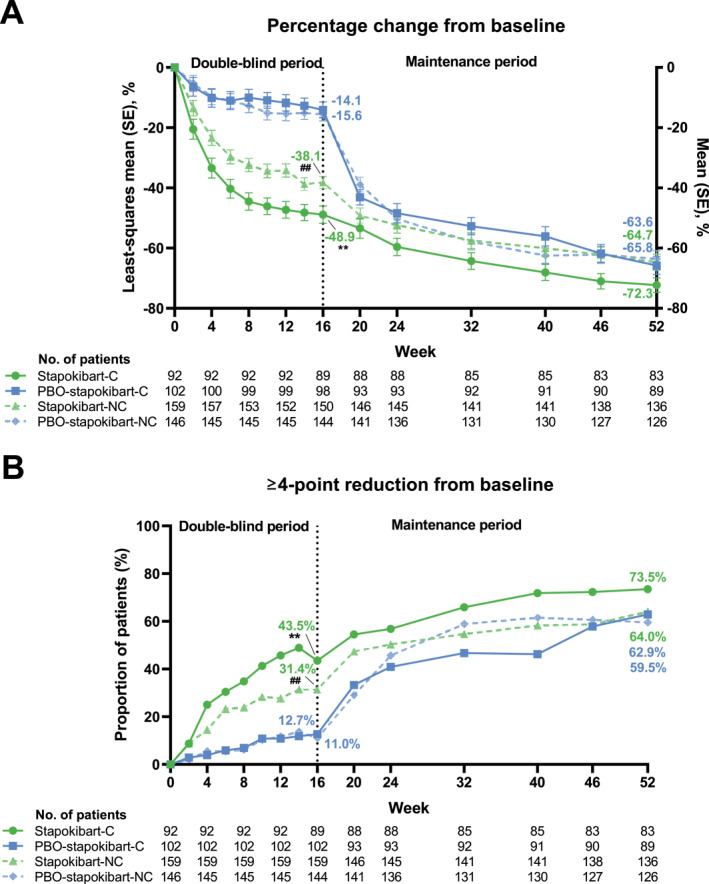 Figure 2
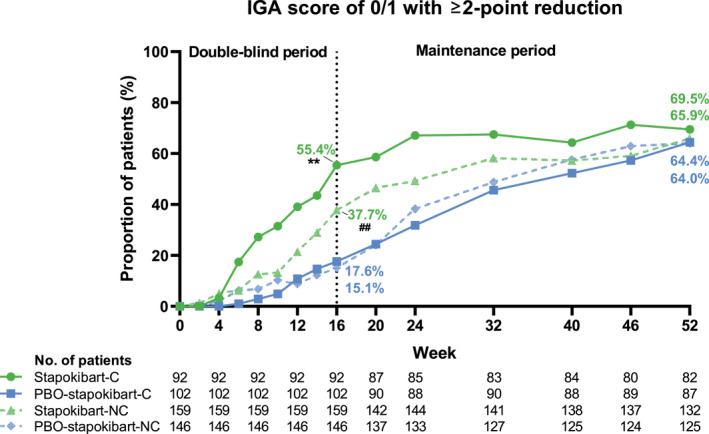 Figure 3
Peer Reviews
No public reviews on file for this paper yet. If you reviewed it on a platform where reviews are public (OpenReview, ICLR, NeurIPS, ICML), you can paste yours below so the community can read it here.
Videos
No videos yet. Explain this paper in a talk, walkthrough, or lecture? Add one.
Taxonomy
TopicsDermatology and Skin Diseases · Food Allergy and Anaphylaxis Research · Psoriasis: Treatment and Pathogenesis