Tuning of G-CSFR signaling by de novo-designed agonists
Timo Ullrich, Christoph Pollmann, Malte Ritter, Jérémy Haaf, Narges Aghaallaei, Ivan Tesakov, Valeriia Hatskovska, Maya El-Riz, Kateryna Maksymenko, Sergey Kandabarau, Maksim Klimiankou, Claudia Lengerke, Karl Welte, Birte Hernandez-Alvarez, Patrick Müller, Andrei Lupas

TL;DR
Researchers designed new agonists that fine-tune G-CSFR signaling to control stem cell differentiation and proliferation more effectively than natural cytokines.
Contribution
The study introduces de novo-designed agonists that selectively modulate G-CSFR signaling with enhanced stability and specificity.
Findings
Design agonists outcompete native G-CSF and bias cells toward granulopoietic differentiation.
The agonists modulate signal transduction kinetics and gene expression with minimal immunomodulatory effects.
Designed agonists show hyper-thermostability and selective activation of hematopoietic gene sets.
Abstract
Enhancing cytokine-based therapies by systematically tuning how an agonist associates its receptor is emerging as a powerful new concept in drug discovery. Here, we report the design and characterization of agonists that tune granulocyte-colony-stimulating factor receptor (G-CSFR) activity, which is central for the proliferation and granulocytic differentiation of hematopoietic stem cells. Using design agonists, we study the impact of varying the receptor-binding affinity and dimerization geometry on receptor association, downstream signaling, and cellular response. Hence, we achieved agonists with altered signaling specificities that are hyper-thermostable, can outcompete the native ligand (G-CSF), and bias cells toward granulopoietic differentiation over triggering proliferation. Furthermore, the design agonists differentially modulate the kinetics and amplitudes of signal…
Genes, proteins, chemicals, diseases, species, mutations and cell lines named across the full text — each resolved to its canonical identifier and authoritative record.
Click any figure to enlarge with its caption.
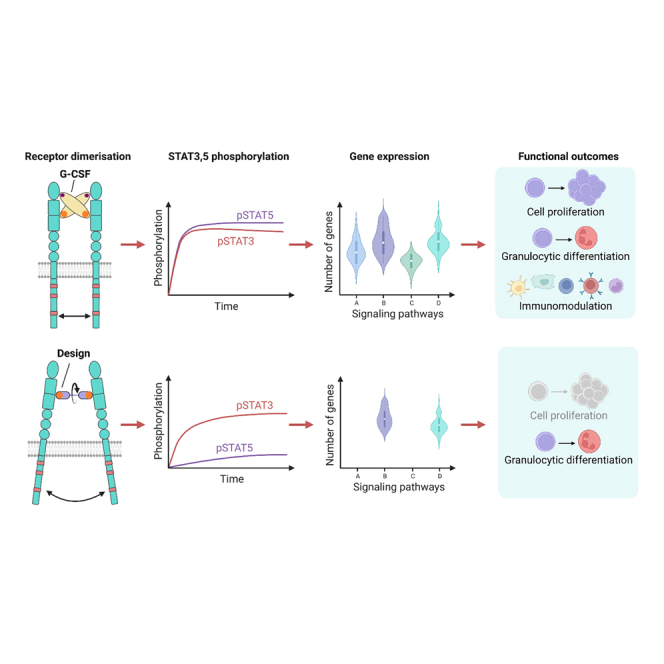 Figure 1
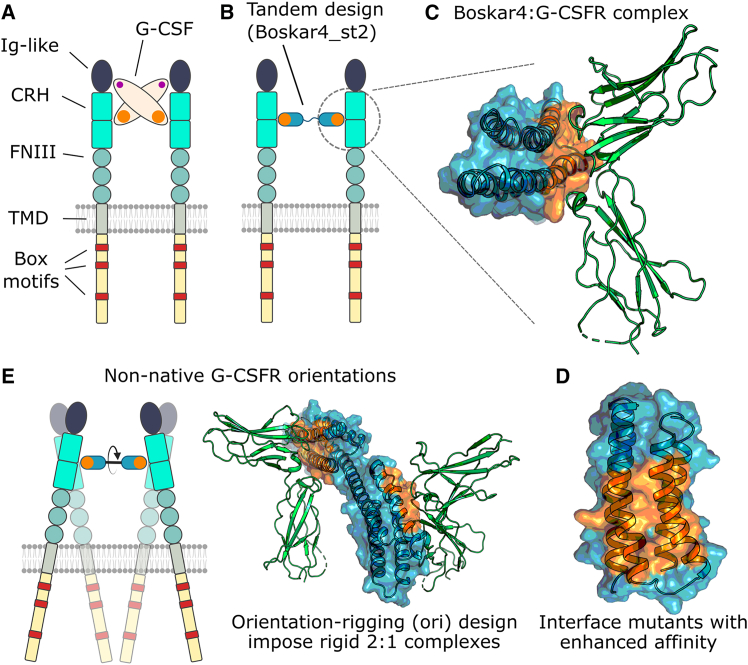 Figure 2
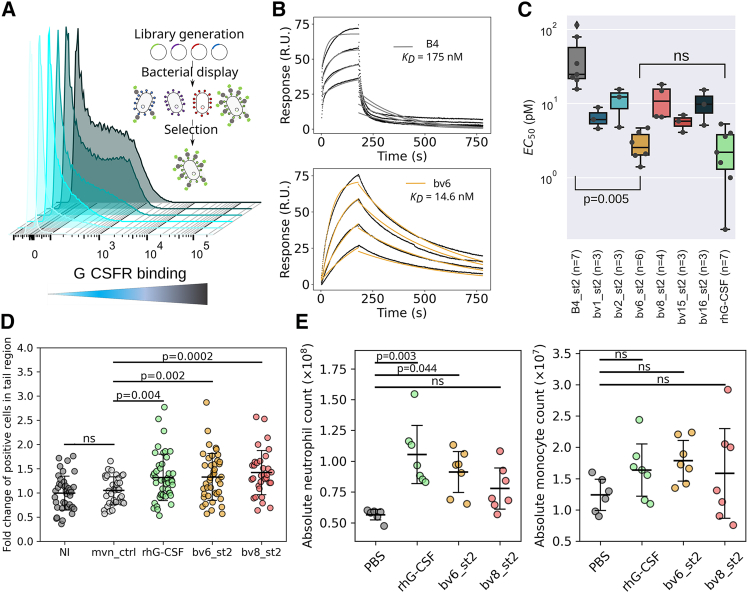 Figure 3
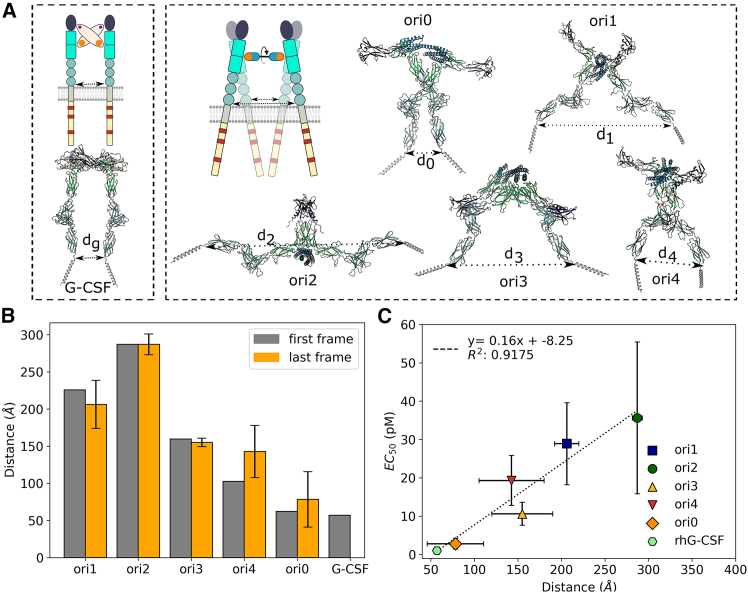 Figure 4
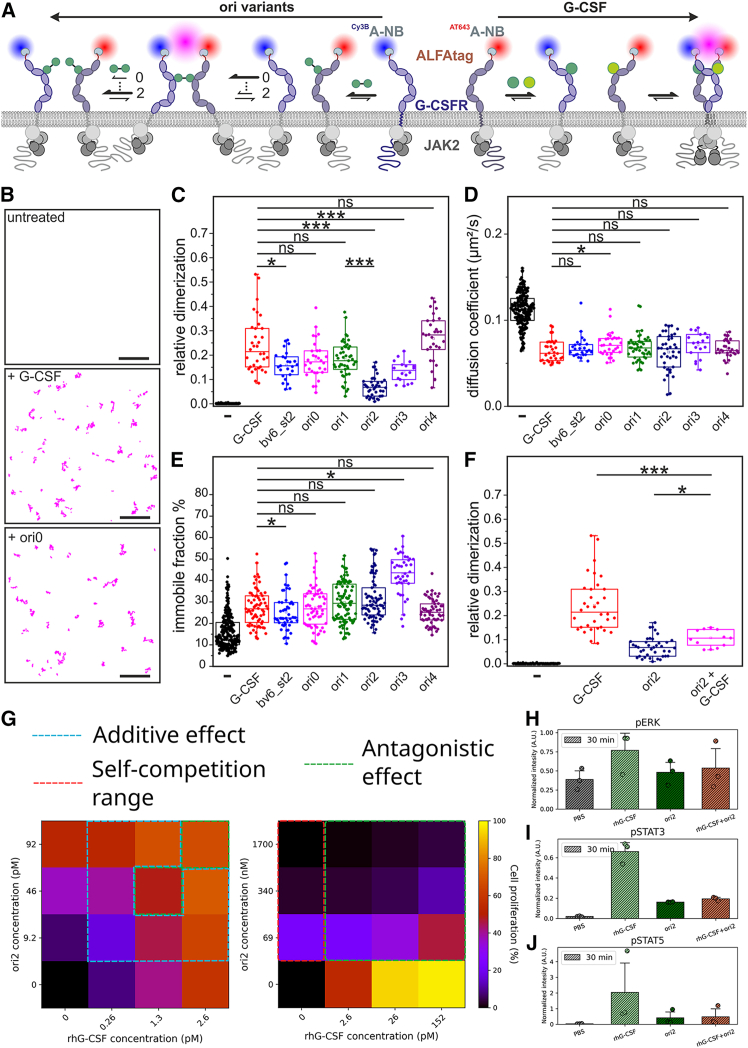 Figure 5
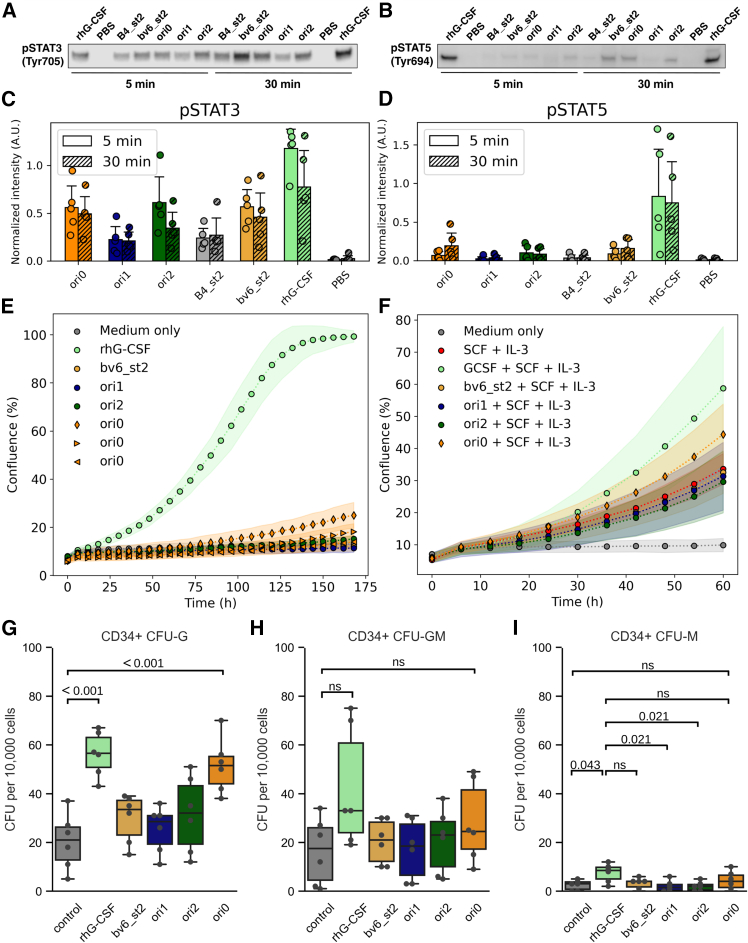 Figure 6
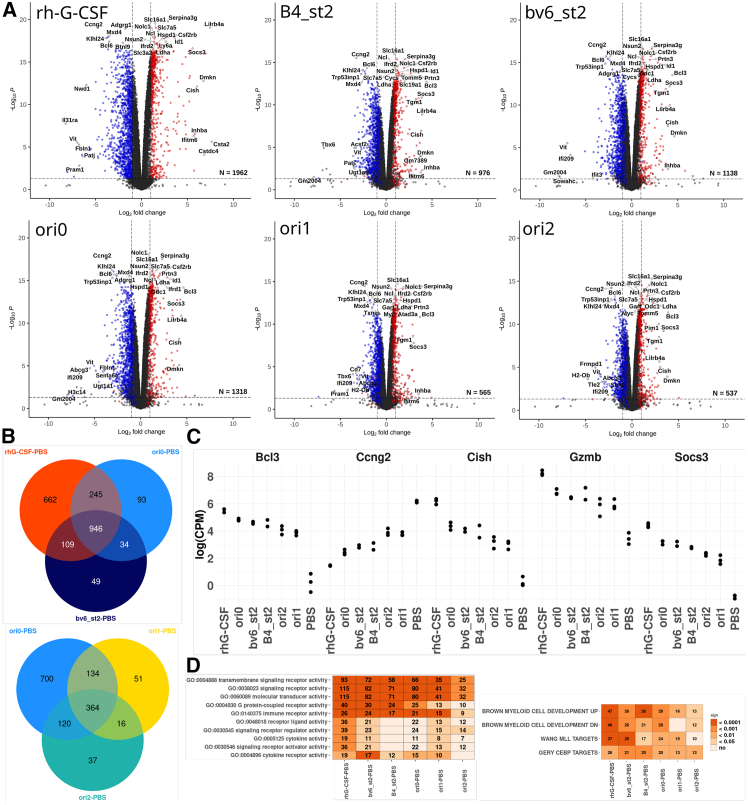 Figure 7
Peer Reviews
No public reviews on file for this paper yet. If you reviewed it on a platform where reviews are public (OpenReview, ICLR, NeurIPS, ICML), you can paste yours below so the community can read it here.
Videos
No videos yet. Explain this paper in a talk, walkthrough, or lecture? Add one.
Taxonomy
TopicsEicosanoids and Hypertension Pharmacology · Chemokine receptors and signaling