Weight Trajectories Among Youths Following Residential Relocation
Apolline Saucy, Sarah Warkentin, Carles Milà, Fabián Coloma, Zhebin Yu, Jeroen de Bont, Anna Bergström, Jolanda M.A. Boer, Payam Dadvand, Kees de Hoogh, Ulrike Gehring, Jana Klánová, Ondřej Mikeš, Erik Melén, Mark Nieuwenhuijsen, Youchen Shen, Daniel Szabó, Roel Vermeulen

TL;DR
Moving to greener, less polluted areas may help prevent unhealthy weight gain in children and adolescents, though effects vary by location.
Contribution
The study introduces a novel approach to understanding how residential relocation and environmental factors influence BMI trajectories in children across different countries.
Findings
Moving to areas with higher environmental hazards, like more pollution or less green space, was linked to increased z-BMI in Dutch and Swedish cohorts.
Exposure to more gray space (urbanized areas) was consistently associated with higher z-BMI across multiple cohorts.
The Czech cohort showed no clear associations between environmental changes and BMI, highlighting variability across regions.
Abstract
Is moving to a different environment associated with body mass index (BMI) trajectories in young people through changes in the external exposome? In this cohort study of 4359 children and young adults (aged 2-24 years) in the Netherlands, Sweden, and the Czech Republic with more than 30 000 age- and sex-standardized BMI (z-BMI) observations, moving to areas with higher environmental hazards (ie, more air pollution or less green space) was associated with increases in z-BMI, particularly in the Dutch cohort, with similar associations seen with gray space in the Swedish cohort; the Czech cohort showed no clear associations. These findings suggest that greener, less polluted environments may help prevent unhealthy BMI trajectories in children and adolescents, with potential benefits differing across exposome domains and cohorts. This cohort study investigates the associations of changes…
Genes, proteins, chemicals, diseases, species, mutations and cell lines named across the full text — each resolved to its canonical identifier and authoritative record.
Click any figure to enlarge with its caption.
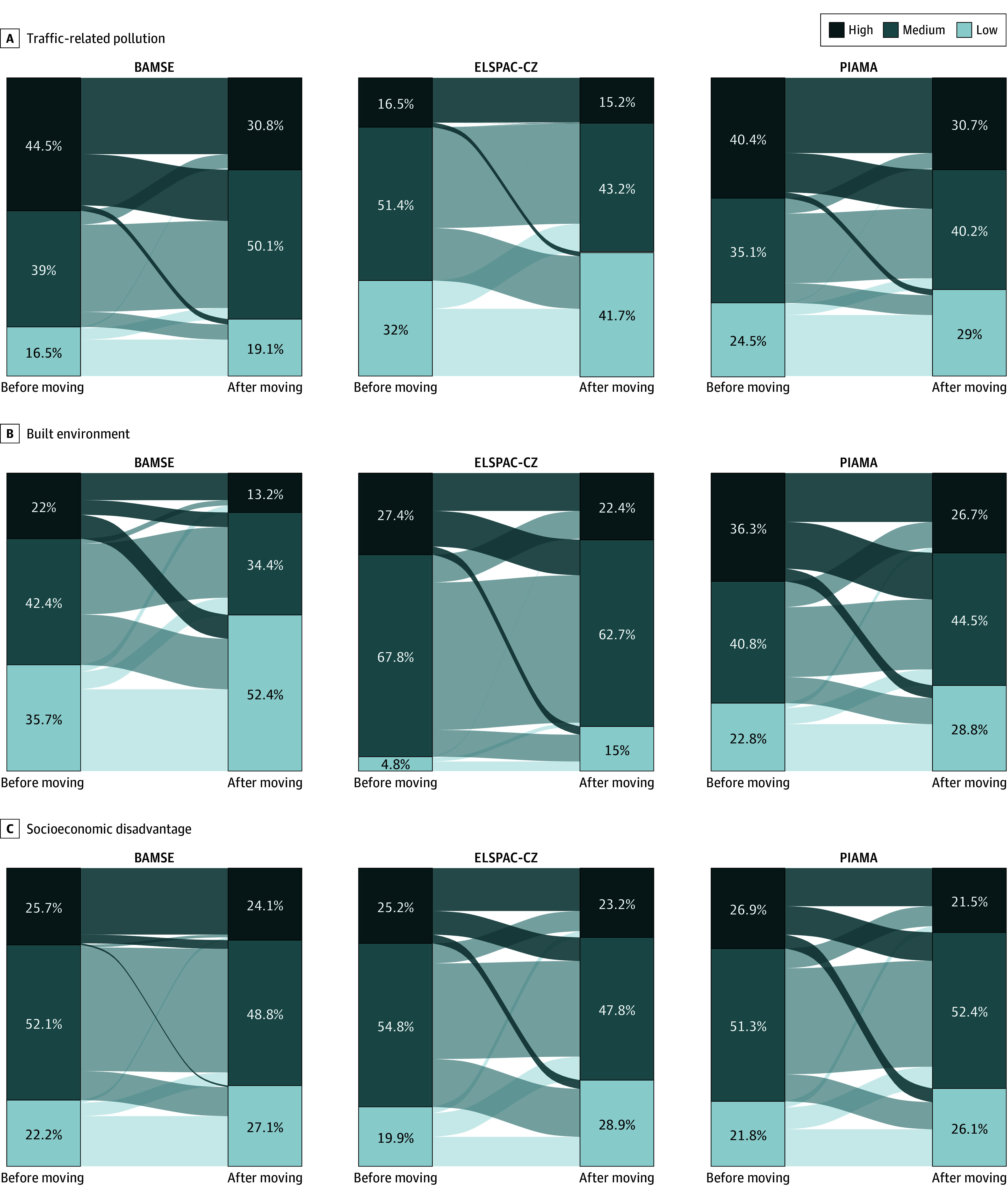 Figure 1
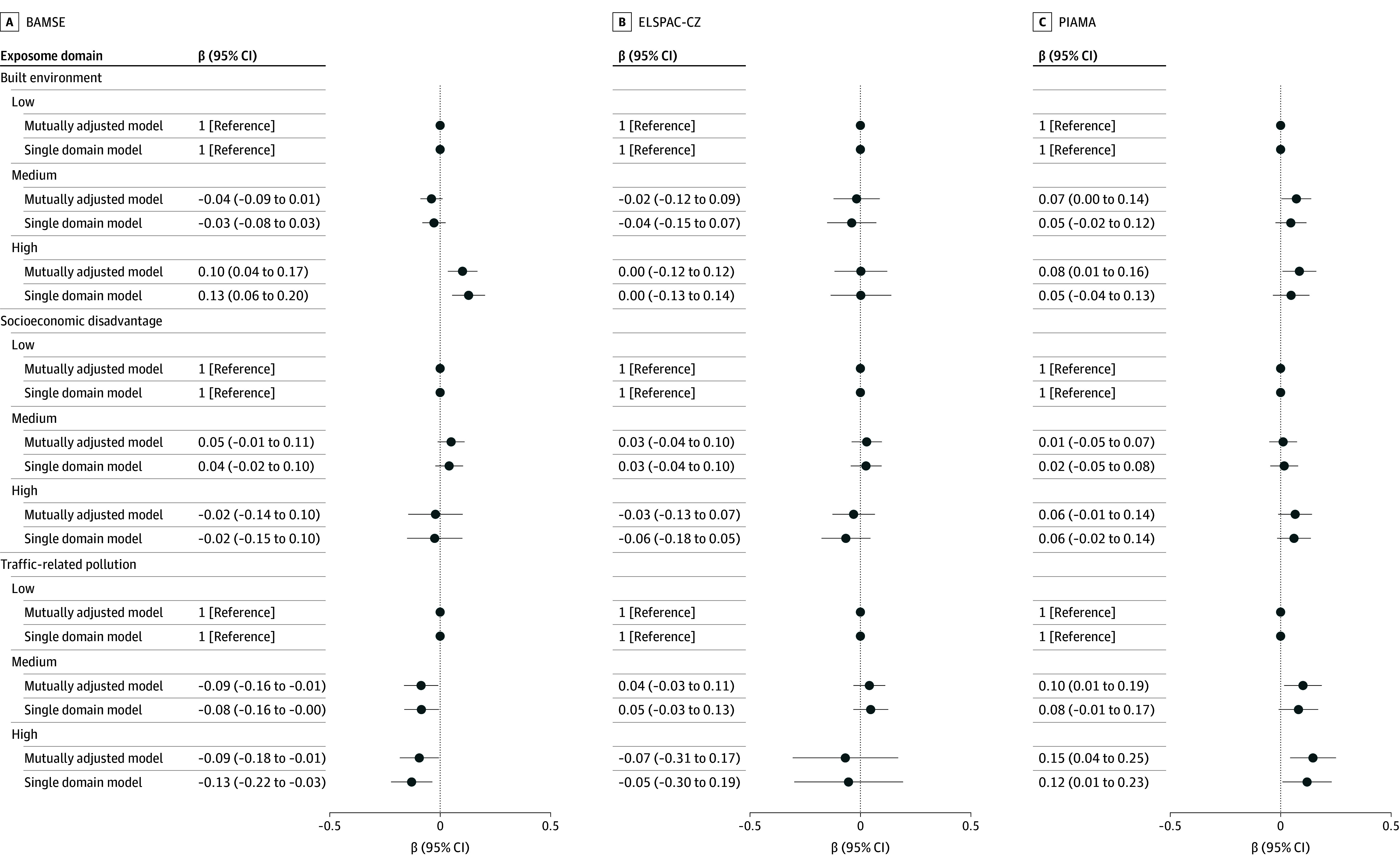 Figure 2
Peer Reviews
No public reviews on file for this paper yet. If you reviewed it on a platform where reviews are public (OpenReview, ICLR, NeurIPS, ICML), you can paste yours below so the community can read it here.
Videos
No videos yet. Explain this paper in a talk, walkthrough, or lecture? Add one.
Taxonomy
TopicsHealth, Environment, Cognitive Aging · Urban Transport and Accessibility · Obesity, Physical Activity, Diet