Physiological and biomechanical aspects of the first female finisher in the longest triathlon in the world – Triple Deca in Ultra Triathlon Italy 2024
Sasa Duric, Luciano Bernardes Leite, Pedro Forte, Marilia Santos Andrade, Ivan Cuk, Pantelis T. Nikolaidis, Katja Weiss, Thomas Rosemann, Beat Knechtle

TL;DR
This study examines the physiological and biomechanical performance of the first female finisher in a 30-day ultra triathlon, focusing on pacing and energy changes.
Contribution
The paper provides novel insights into pacing and physiological adaptations in a female ultra triathlete over 30 consecutive races.
Findings
Running pace significantly improved during the race, while cycling pace slowed down.
Energy expenditure increased progressively in cycling and running but slightly decreased in swimming.
Biomechanical parameters in swimming showed increasing trends, while running showed significant changes in intensity distribution.
Abstract
Pacing in multi-day long-distance triathlons has been investigated mainly in male athletes. We analyze physiological aspects such as energy expenditure and heart rate changes as well as biomechanical aspects in swimming (e.g. strokes per lane) and running (e.g. stride frequency, stride length, vertical ratio, vertical movement, ground contact time) in the first and only female triathlete to finish 30 IRONMAN®-distance triathlons in 30 days. The split times, lap times for swimming, cycling and running and variables were recorded with Fenix 7 Sapphire Solar with Normalized Power® (NP®), Intensity Factor® (IF®) and Training Stress Score® (TSS®), and were analyzed. The models' estimations for pacing were assessed with R2. Variance (ANOVA) and associative (Pearson and Spearmen) analysis were conducted at a level of significance of 5 %. Swimming pace remained stable throughout the race…
Genes, proteins, chemicals, diseases, species, mutations and cell lines named across the full text — each resolved to its canonical identifier and authoritative record.
Click any figure to enlarge with its caption.
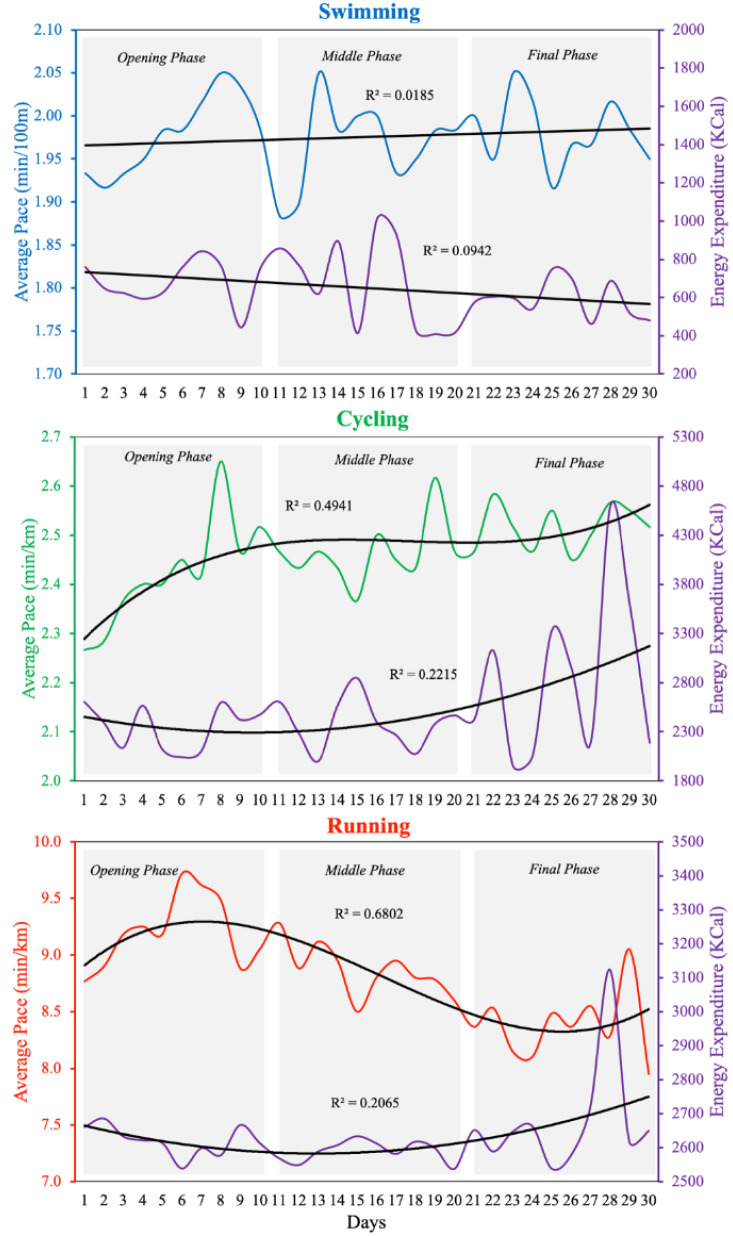 Figure 1
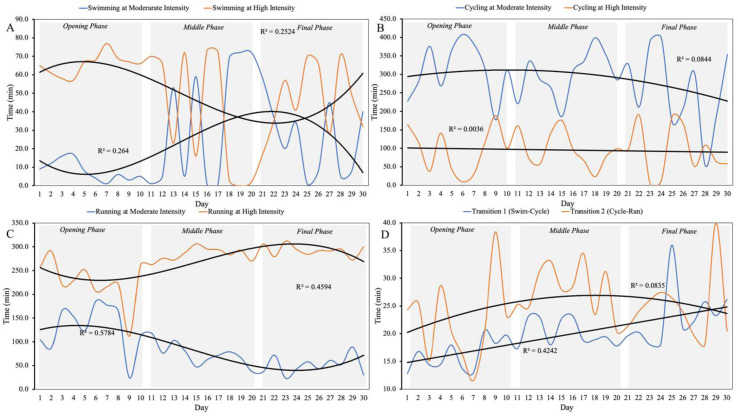 Figure 2
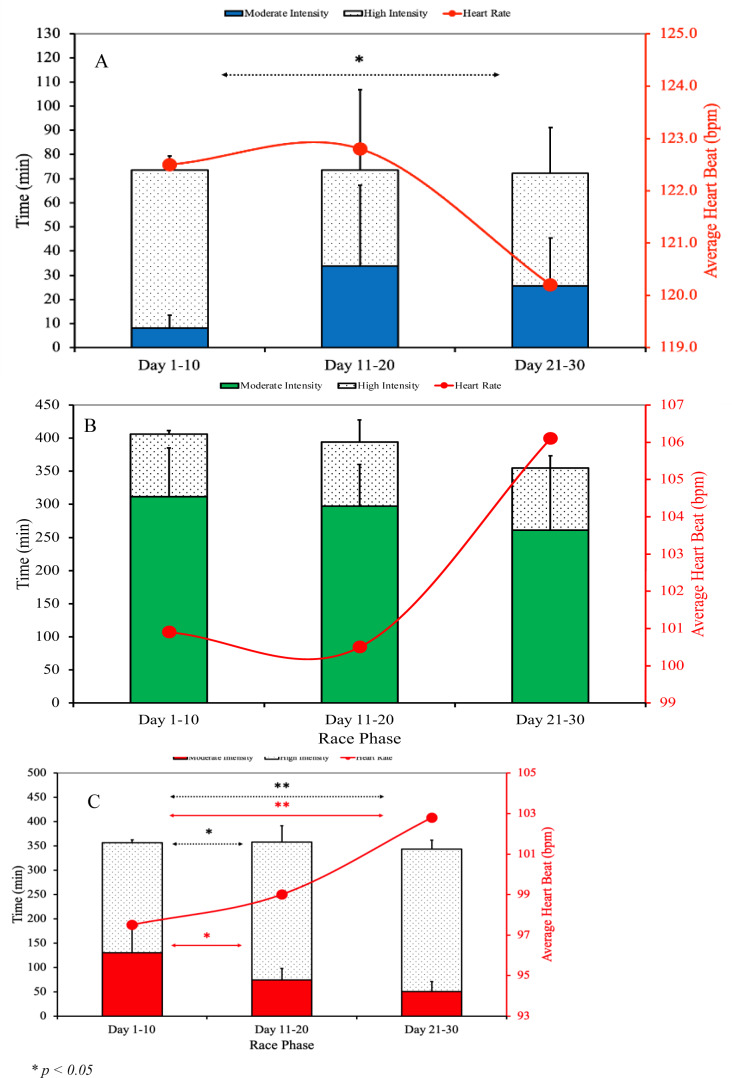 Figure 3
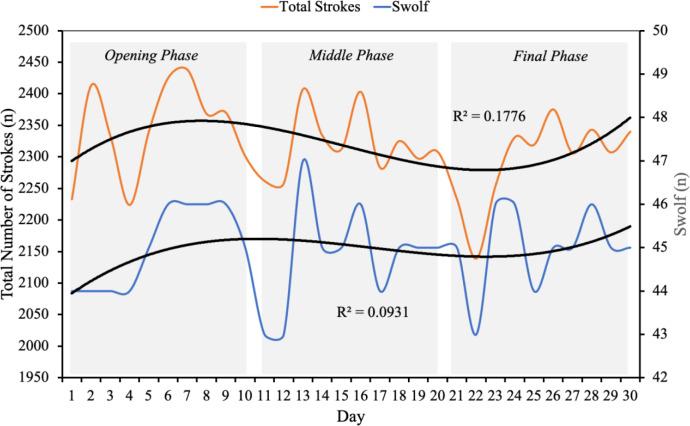 Figure 4
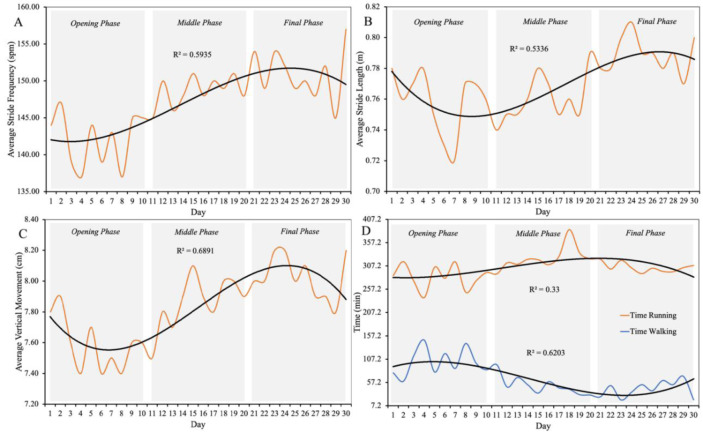 Figure 5
 Figure 6
 Figure 7
 Figure 8
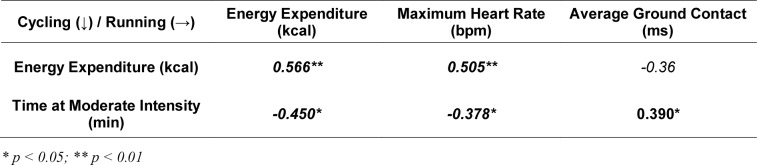 Figure 9
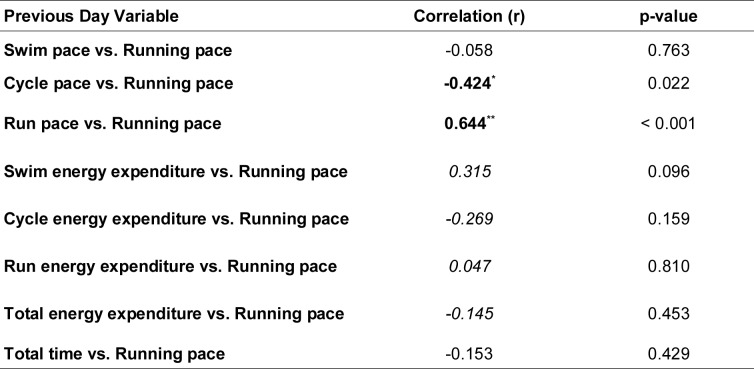 Figure 10
Peer Reviews
No public reviews on file for this paper yet. If you reviewed it on a platform where reviews are public (OpenReview, ICLR, NeurIPS, ICML), you can paste yours below so the community can read it here.
Videos
No videos yet. Explain this paper in a talk, walkthrough, or lecture? Add one.
Taxonomy
TopicsSports Performance and Training · Cardiovascular and exercise physiology · Cardiovascular Effects of Exercise