Physical Activity in the Management of Diabetic Neuropathic Pain: A Narrative Review of Mechanisms, Evidence, and Clinical Perspectives
Jaouher Dhouibi, Houda Migaou, Amr Chaabeni, Amine Kalai, Sana Salah, Soumaya Boudokhane, Zohra Ben Salah Frih, Anis Jellad

TL;DR
This paper reviews how physical activity can help manage diabetic neuropathic pain by improving insulin sensitivity, reducing inflammation, and enhancing nerve function.
Contribution
The paper provides a narrative review of the mechanisms and clinical evidence supporting physical activity as an adjunct therapy for diabetic neuropathic pain.
Findings
Physical activity improves insulin sensitivity and reduces oxidative stress in diabetic neuropathy.
Exercise promotes nerve regeneration and modulates neuroinflammation in preclinical and clinical studies.
Aerobic and resistance exercises reduce pain severity and improve functional outcomes in patients with DNP.
Abstract
Diabetic neuropathic pain (DNP) is a common and debilitating complication of diabetes mellitus, resulting from complex metabolic, vascular, and neuroinflammatory mechanisms. Pharmacological treatments provide limited relief, highlighting the need for adjunctive therapies. This review aimed to summarize current understanding of the pathophysiology of DNP and to evaluate the efficacy and mechanisms of physical activity (PA) in its management. A narrative synthesis of recent preclinical and clinical studies investigating the impact of exercise on DNP was conducted. Studies suggested that PA may improve insulin sensitivity, reduce oxidative stress, enhance microvascular blood flow, modulate neuroinflammation, and promote nerve regeneration. Clinical evidence demonstrates that aerobic, resistance, and multimodal exercise programs reduce pain severity, improve nerve conduction, and enhance…
Genes, proteins, chemicals, diseases, species, mutations and cell lines named across the full text — each resolved to its canonical identifier and authoritative record.
Click any figure to enlarge with its caption.
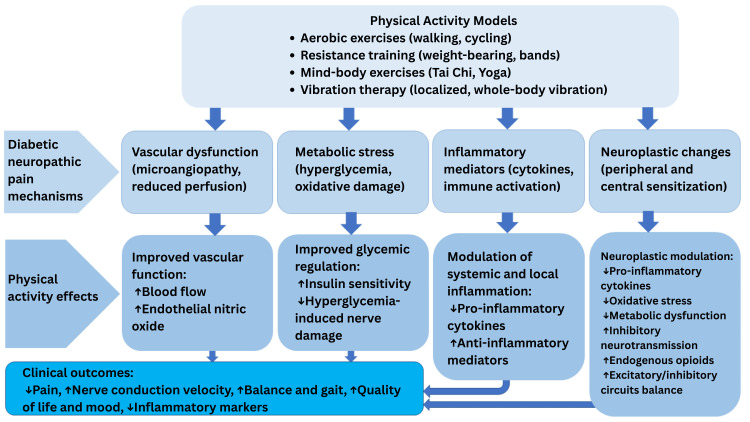 Figure 1
Peer Reviews
No public reviews on file for this paper yet. If you reviewed it on a platform where reviews are public (OpenReview, ICLR, NeurIPS, ICML), you can paste yours below so the community can read it here.
Videos
No videos yet. Explain this paper in a talk, walkthrough, or lecture? Add one.
Taxonomy
TopicsPain Mechanisms and Treatments · Botulinum Toxin and Related Neurological Disorders · Musculoskeletal pain and rehabilitation