Extended In Vitro Maturation Enhances Oocyte Developmental Competence but Alters Gene Expression in Bovine Embryos Derived From Oocytes With Slow‐Predicted Nuclear Maturation Speed
Thomas Chia‐Tang Ho, Takashi Tanida, Takashi Fujii, Keisuke Koyama

TL;DR
Extending in vitro maturation improves the development of slow-maturing bovine oocytes but changes gene expression in embryos.
Contribution
Noninvasive machine learning predicts nuclear maturation speed to optimize in vitro maturation duration for bovine embryos.
Findings
Extending IVM to 28 h improved cleavage rates and first cleavage timing in slow-predicted NMS oocytes.
Extended IVM increased blastocyst formation rates in slow-predicted NMS oocytes to match fast-predicted NMS oocytes.
Prolonged IVM reduced expression of pluripotency-related genes like NANOG and OCT4 in all embryos.
Abstract
To identify the optimal in vitro maturation (IVM) duration for bovine oocytes with different nuclear maturation speeds (NMS), this study assessed how varying IVM durations (24, 28, and 32 h) affect developmental competence and embryo quality in oocytes with fast‐ or slow‐predicted NMS classified via machine learning. Developmental competence was evaluated through cleavage rates, first cleavage timing and patterns, and blastocyst formation under individual culture. Embryo quality was assessed via differential staining of inner cell mass and trophectoderm and expression analysis of quality‐related genes in formed blastocysts. For oocytes with slow‐predicted NMS, extending IVM to 28 h increased cleavage rates and accelerated first cleavage timing (p < 0.01). The lower blastocyst formation rates of oocytes with slow‐predicted NMS matured for 24 h improved when IVM reached 28 h, becoming…
Genes, proteins, chemicals, diseases, species, mutations and cell lines named across the full text — each resolved to its canonical identifier and authoritative record.
Click any figure to enlarge with its caption.
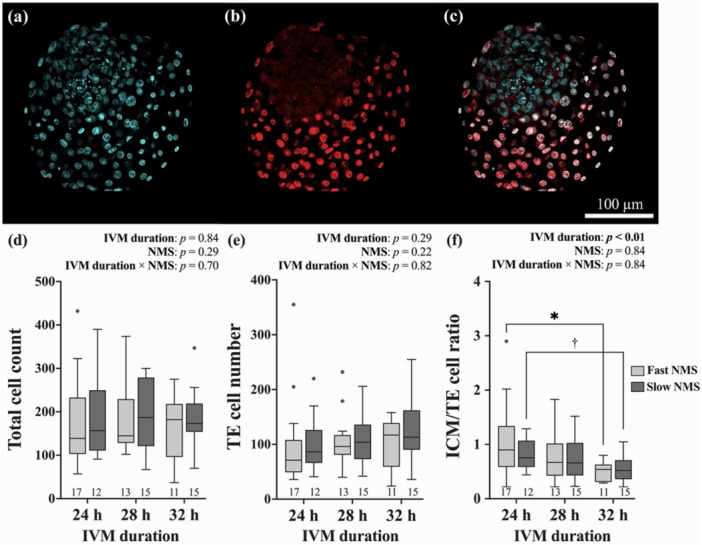 Figure 1
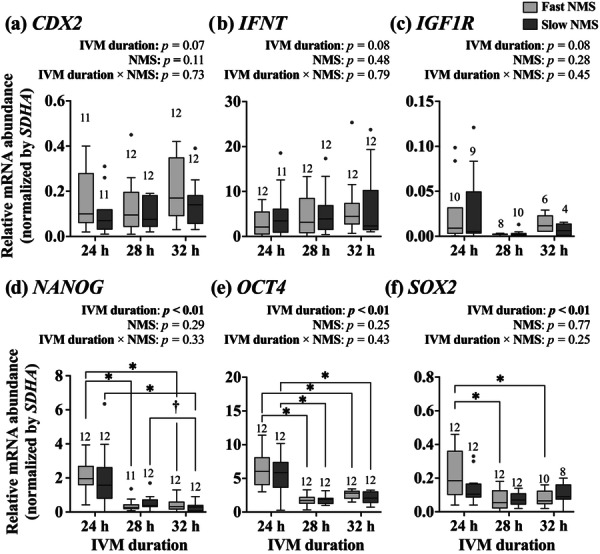 Figure 2
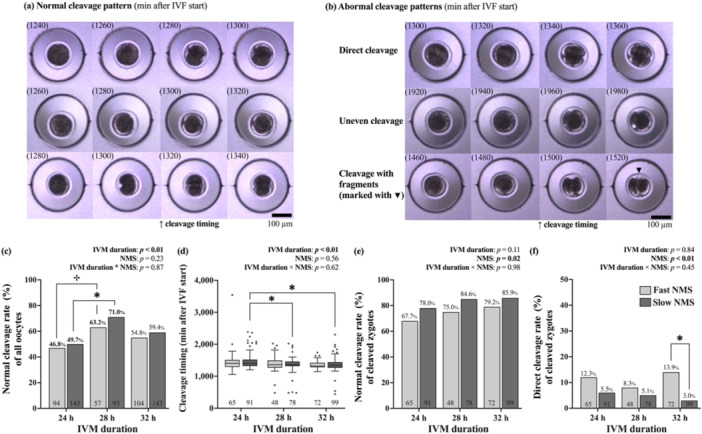 Figure 3
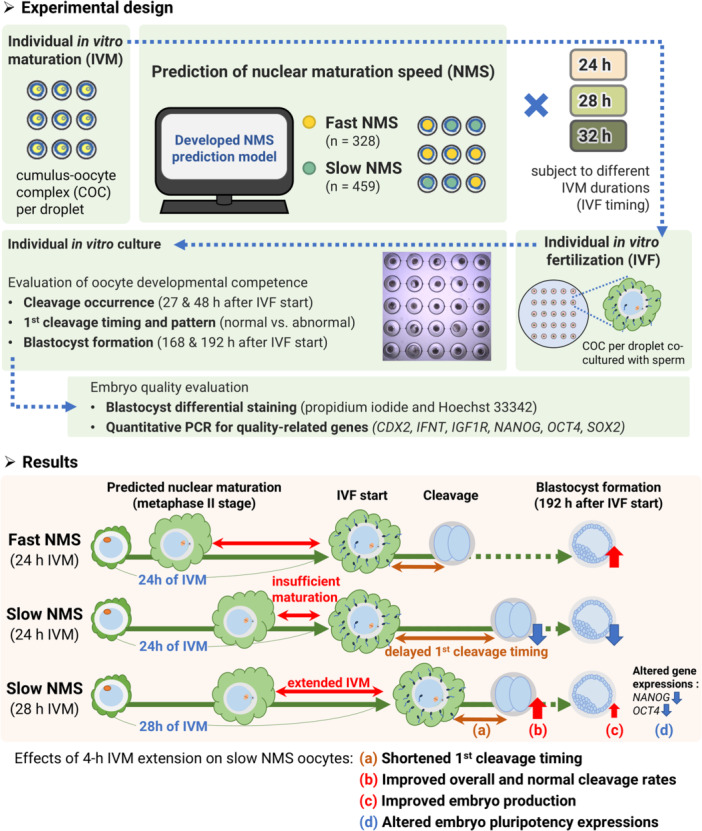 Figure 4
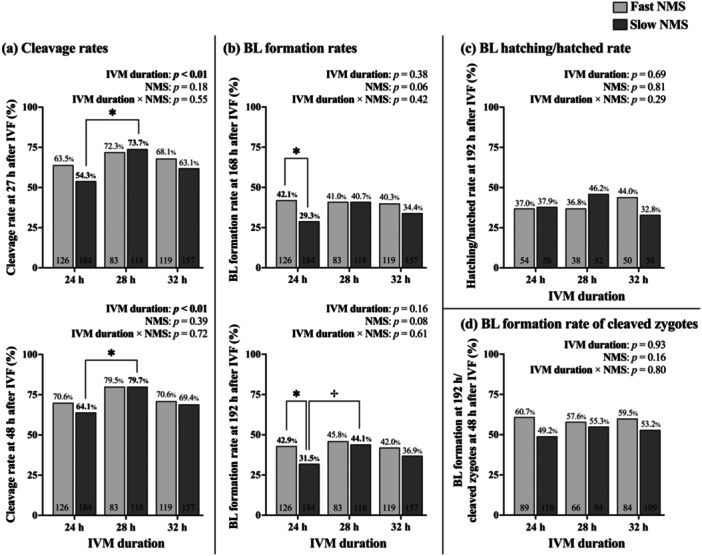 Figure 5
Peer Reviews
No public reviews on file for this paper yet. If you reviewed it on a platform where reviews are public (OpenReview, ICLR, NeurIPS, ICML), you can paste yours below so the community can read it here.
Videos
No videos yet. Explain this paper in a talk, walkthrough, or lecture? Add one.
Taxonomy
TopicsReproductive Biology and Fertility · Sperm and Testicular Function · Pluripotent Stem Cells Research