Development of a High‐Resolution MNP Marker System for Aquatic Biodiversity Monitoring: A Case Study With Schizothorax prenanti in the Yangtze River
Baolong Zhang, Wei Jiang, Zhiwei Fang, Hao Chen, Nan Jiang, Junfei Zhou, Renjing Wan, Sha Li, Tiantian Li, Lu Cai, Huiyin Song, Lun Li, Lifen Gao, Lihong Chen, Hai Peng

TL;DR
A new MNP marker system was developed to improve biodiversity monitoring in aquatic environments, specifically tested on an endangered fish species in the Yangtze River.
Contribution
The novel MNP marker system offers higher sensitivity and specificity than traditional methods for detecting low-abundance DNA in aquatic biodiversity monitoring.
Findings
The MNP markers detected DNA at ~1 copy per reaction with high specificity (mean discriminative power = 0.77).
The system revealed 84% average differentiation rate among 86 Yangtze River samples and identified 567 shared alleles between stocked and wild fish populations.
The MNP framework outperforms traditional methods in analyzing fragmented DNA and enables high-throughput biodiversity monitoring.
Abstract
Effective monitoring of aquatic biodiversity is critical for conservation, yet current approaches such as mitochondrial COI barcoding and microsatellite markers exhibit limitations in resolution, sensitivity, and scalability, particularly for detecting low‐abundance or degraded DNA in mixed aquatic samples. To address these challenges, we developed a novel Multiple Nucleotide Polymorphism (MNP) marker system tailored to S. prenanti , an endangered endemic fish species emblematic of biodiversity crises in the Yangtze River. Through restriction‐site associated DNA sequencing, we identified 115 genome‐wide MNP markers. These markers demonstrated ultrasensitive detection (~1 DNA copy/reaction) and high specificity (mean discriminative power = 0.77, calculated as the probability that two random samples differ at a locus). When applied to environmental DNA from the Yangtze River, the MNP…
Genes, proteins, chemicals, diseases, species, mutations and cell lines named across the full text — each resolved to its canonical identifier and authoritative record.
Click any figure to enlarge with its caption.
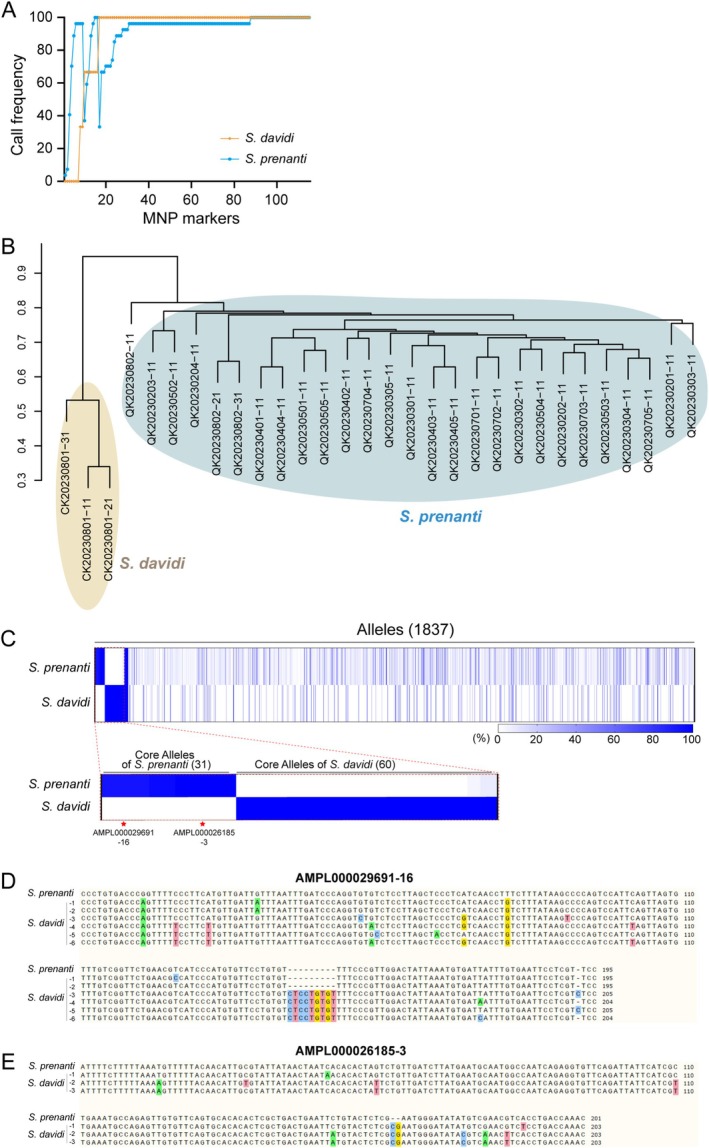 Figure 1
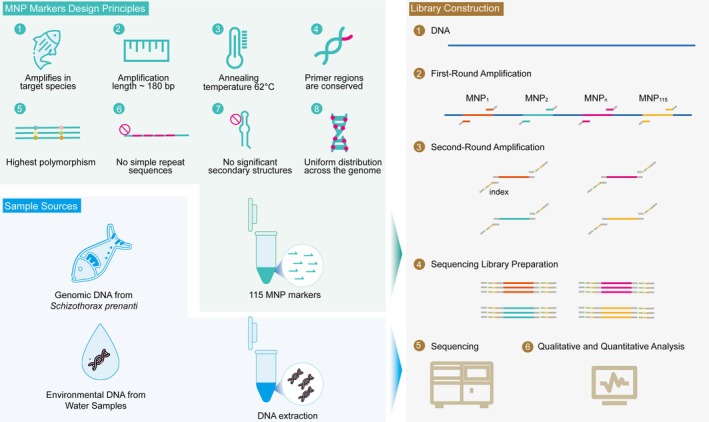 Figure 2
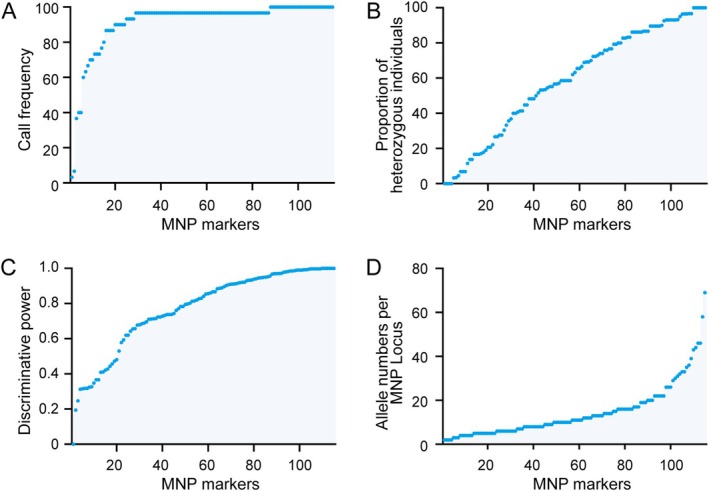 Figure 3
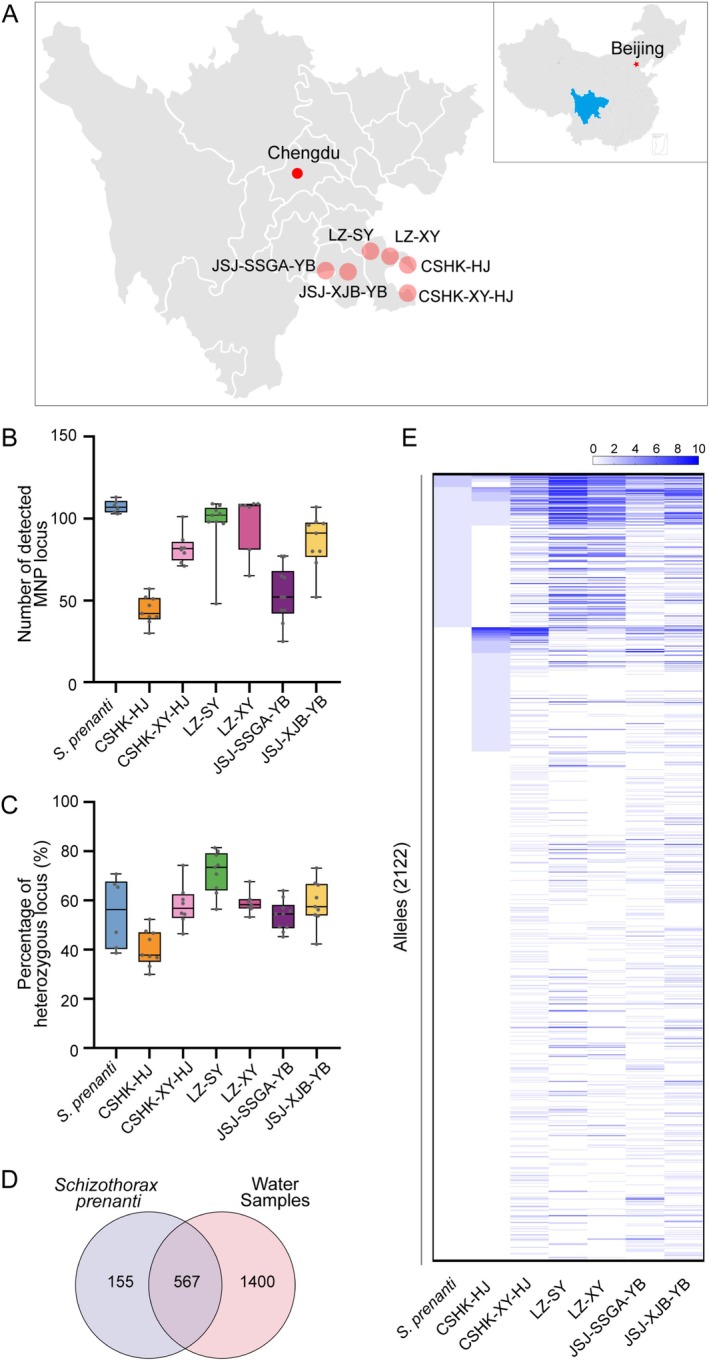 Figure 4
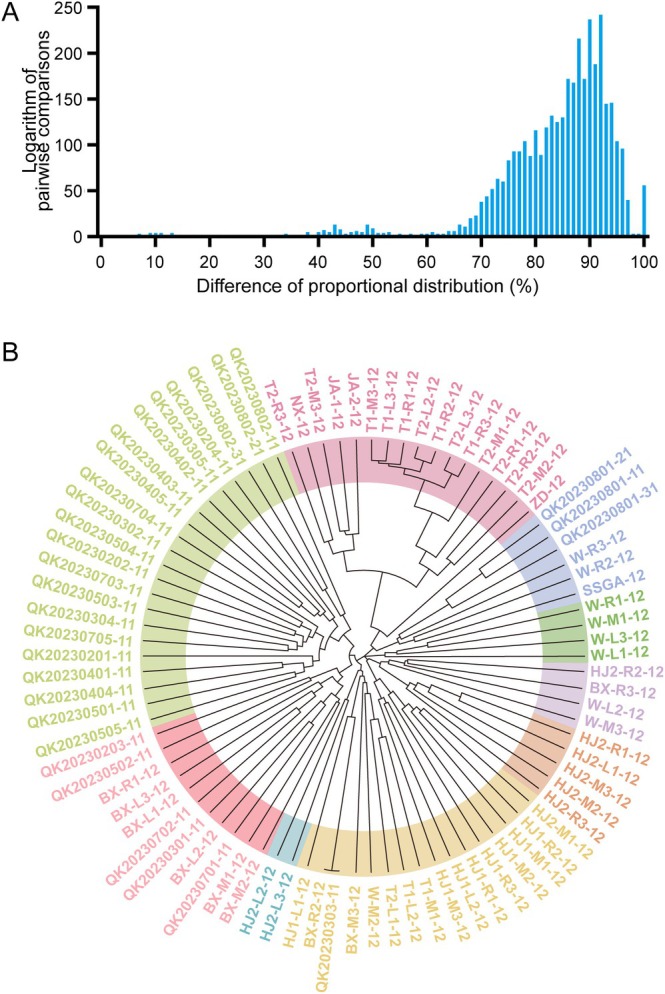 Figure 5
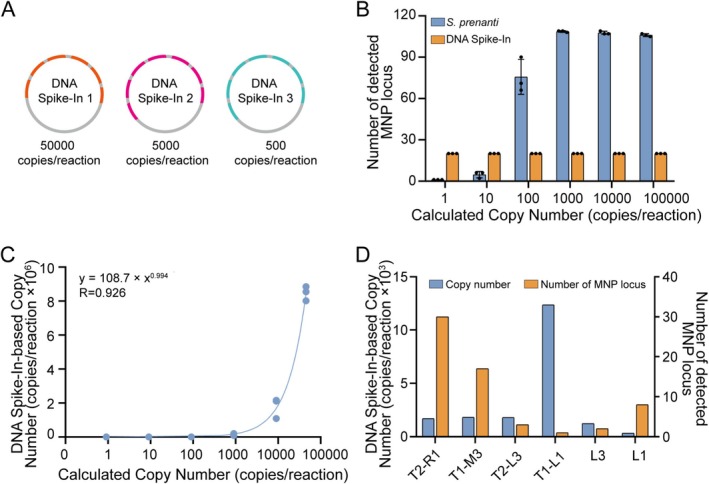 Figure 6
Peer Reviews
No public reviews on file for this paper yet. If you reviewed it on a platform where reviews are public (OpenReview, ICLR, NeurIPS, ICML), you can paste yours below so the community can read it here.
Videos
No videos yet. Explain this paper in a talk, walkthrough, or lecture? Add one.
Taxonomy
TopicsEnvironmental DNA in Biodiversity Studies · Identification and Quantification in Food · Fish Ecology and Management Studies