Positional programs in early murine facial development and their role in human facial shape variability
Andrea P. Murillo-Rincón, Louk W. G. Seton, Elio Escamilla-Vega, Amor Damatac, Janina Fuß, Carsten Fortmann-Grote, Markéta Kaucká

TL;DR
This study explores how facial features develop in mice and how these processes relate to human facial diversity and birth defects.
Contribution
The study links spatially defined mouse facial cell populations to human genetic variants affecting facial shape.
Findings
Facial mesenchyme in mice shows molecular heterogeneity driven by positional programs.
Genetic variants associated with human facial features are linked to specific cell populations and transcriptional signatures.
The research provides a framework for understanding evolutionary and developmental mechanisms of facial variation.
Abstract
The face is a complex, variable structure shaped by environmental and functional adaptations. In humans, the remarkable diversity of facial shapes underpins identity and mutual recognition. The developmental process from cranial neural crest cell migration to facial prominence fusion is conserved and essential for determining facial shape. However, the molecular and cellular underpinnings are not fully understood. We reconstruct facial development in the mouse model at the single-cell level, and show that the facial mesenchyme exhibits a remarkable molecular heterogeneity predominantly driven by positional programs. We then explore the role of these spatially defined murine mesenchymal populations in the extraordinary diversity of human facial shapes. By integrating molecular and spatial coordinates with human genome-wide association studies and genes linked to abnormal human facial…
Genes, proteins, chemicals, diseases, species, mutations and cell lines named across the full text — each resolved to its canonical identifier and authoritative record.
Click any figure to enlarge with its caption.
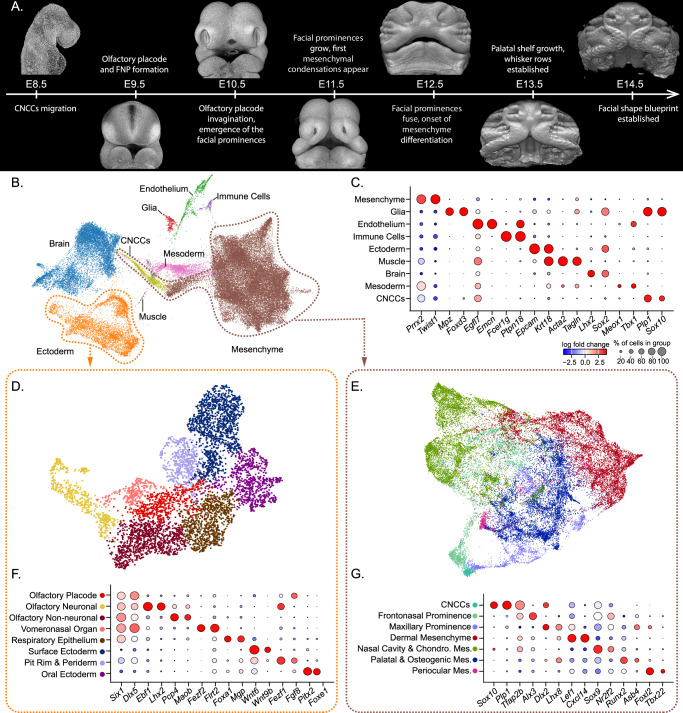 Figure 1
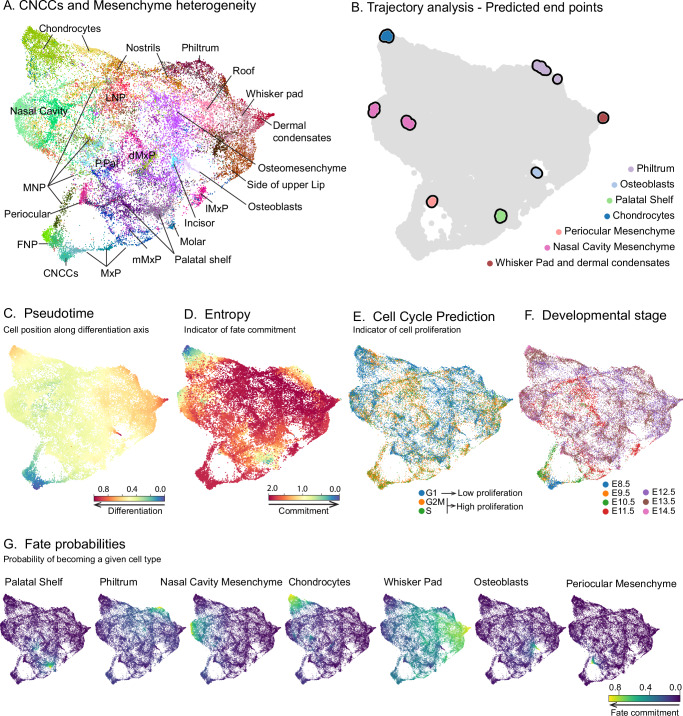 Figure 2
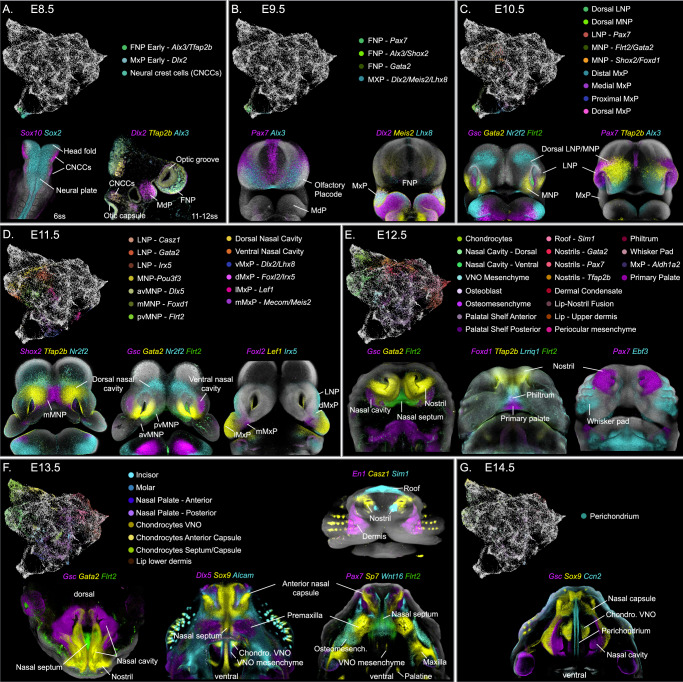 Figure 3
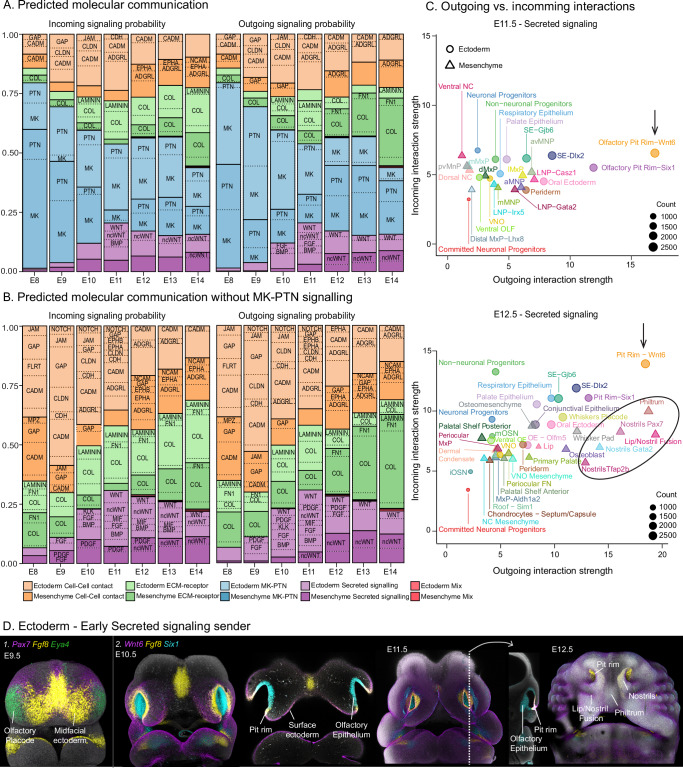 Figure 4
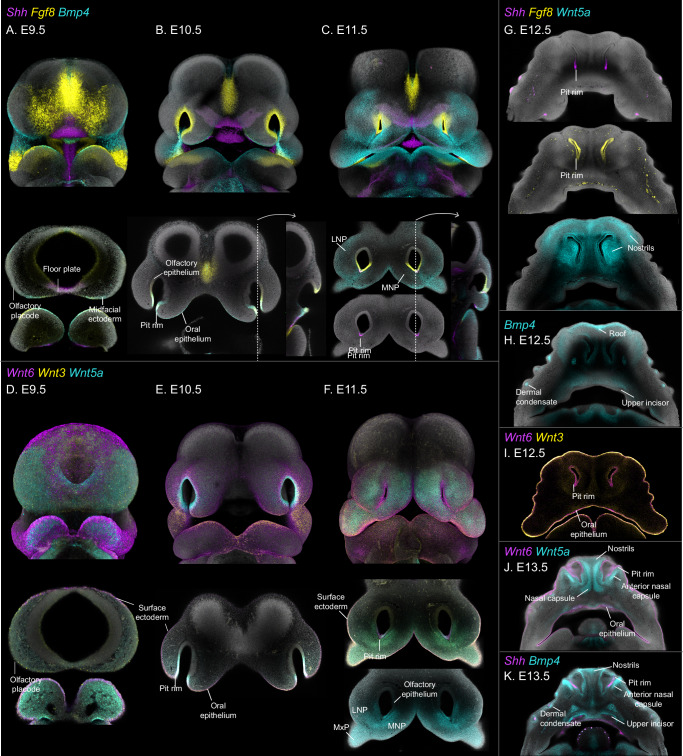 Figure 5
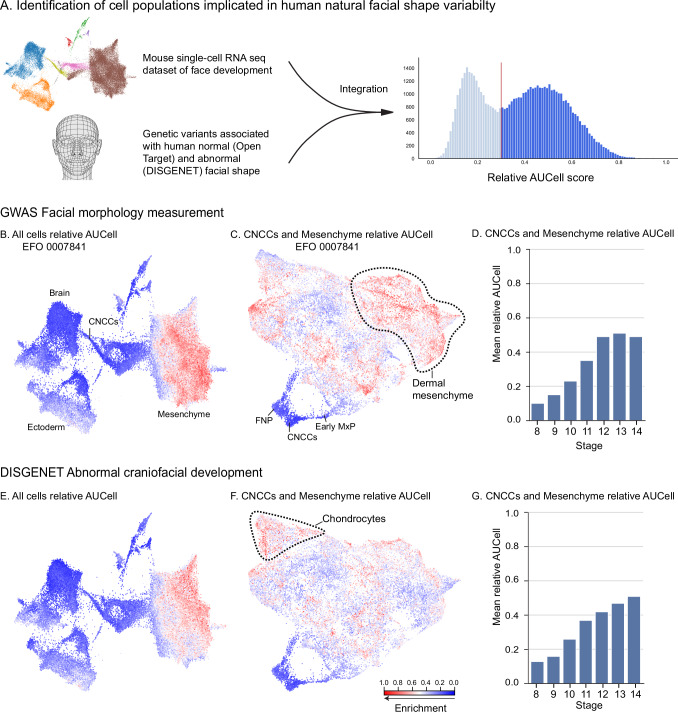 Figure 6
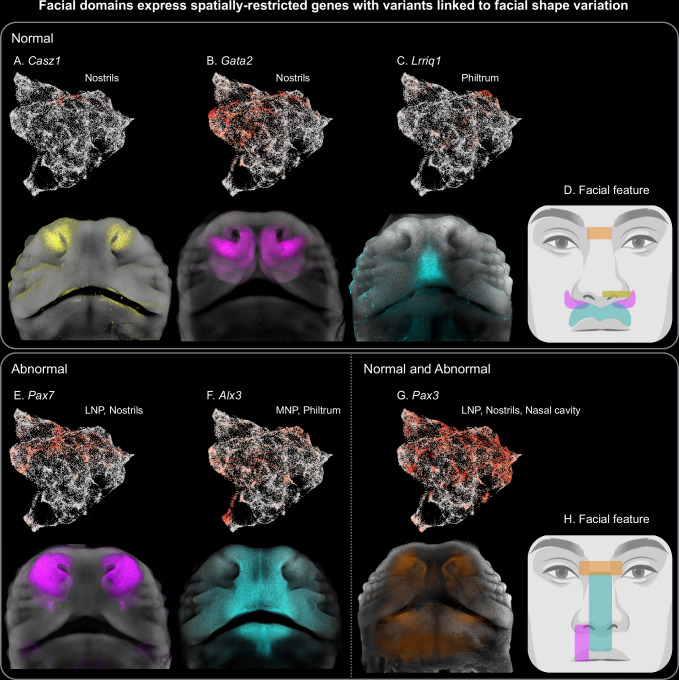 Figure 7
Peer Reviews
No public reviews on file for this paper yet. If you reviewed it on a platform where reviews are public (OpenReview, ICLR, NeurIPS, ICML), you can paste yours below so the community can read it here.
Videos
No videos yet. Explain this paper in a talk, walkthrough, or lecture? Add one.
Taxonomy
TopicsMorphological variations and asymmetry · Face recognition and analysis · Developmental Biology and Gene Regulation