Stepwise π-extension of double [5]helicene diimides to planar nanographene diimides
Vikas Sharma, Jacob Isaac, Anmol Thanai, Kieran Richards, Daniel T. W. Toolan, George F. S. Whitehead, Emrys W. Evans, Ashok Keerthi

TL;DR
Scientists developed a new way to make helical and planar nanographene diimides with tunable light-emitting properties for use in optoelectronics.
Contribution
A stepwise synthetic route to produce double [5]helicene and planar nanographene diimides with high photoluminescence quantum yields.
Findings
The planar nanographene diimide achieved a photoluminescence quantum yield of 63% in solution.
The solid-state photoluminescence efficiency reached up to 32% for helical rylene diimides.
Molecular structure influences exciton dynamics and emission behavior, as shown by photophysical studies.
Abstract
A facile, stepwise synthetic route has been developed to access symmetric double [5]helicene diimides and their planar nanographene diimide counterparts via a C-shaped asymmetric [5]helicene. The synthetic strategy employs benzannulation and Scholl reaction methodologies to achieve progressive π-extension, yielding a new class of n-type rylene diimides with reversible redox characteristics. These helical and planar diimides exhibit variable crosswise π-conjugation and structural tunability, resulting in emission wavelengths that can be tailored alongside enhanced photoluminescence quantum yields—from 12% for the S-shaped diimide, to 57% for the C-shaped intermediate, and up to 63% for the fully planar nanographene diimide. Such properties make them promising candidates for quantum photonics, particularly as single-photon emitters. Photophysical properties, including time-resolved…
Genes, proteins, chemicals, diseases, species, mutations and cell lines named across the full text — each resolved to its canonical identifier and authoritative record.
Click any figure to enlarge with its caption.
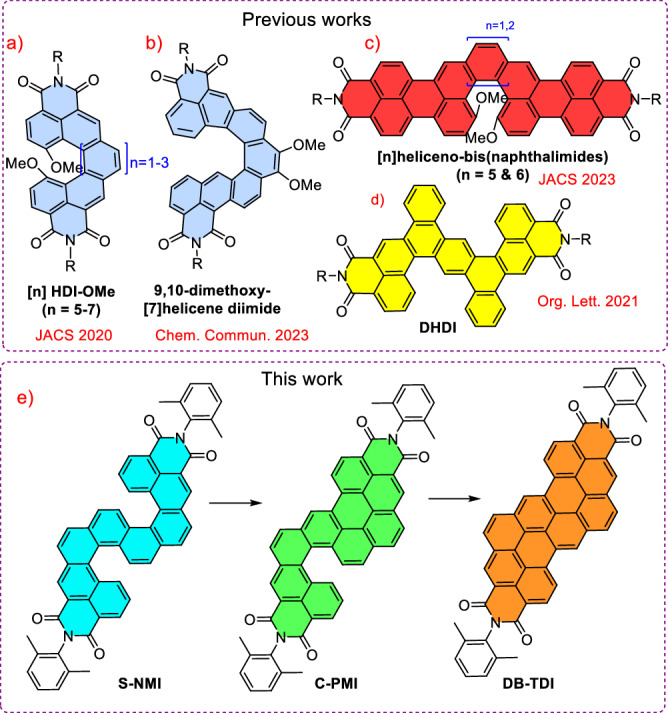 Figure 1
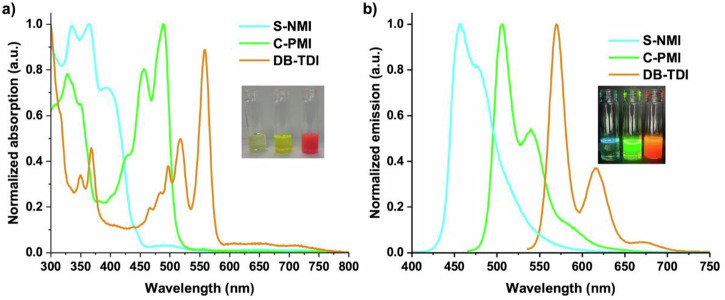 Figure 2
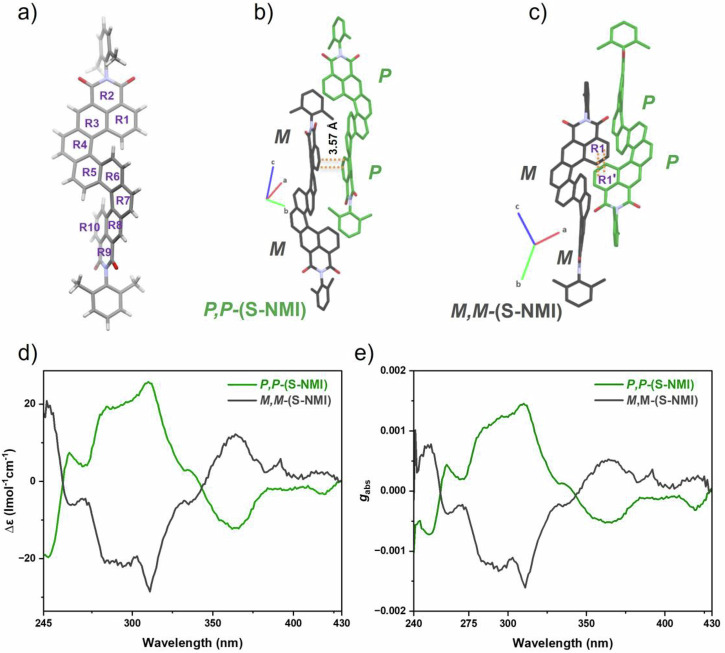 Figure 3
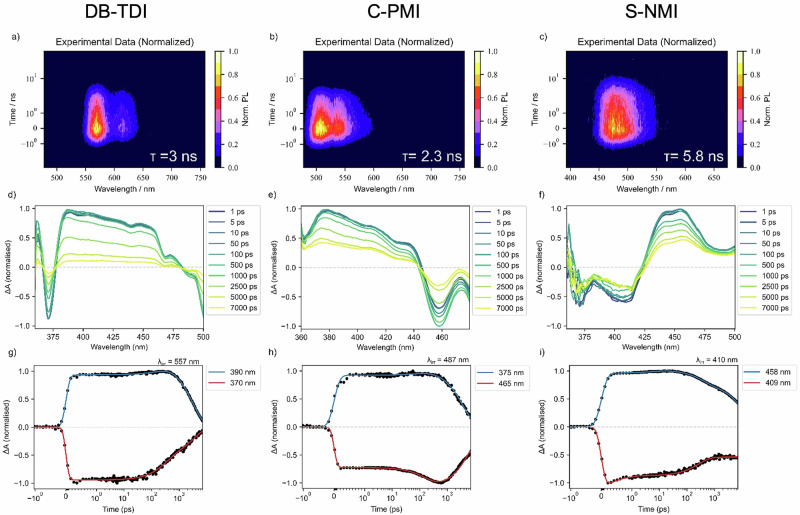 Figure 4
 Figure 5
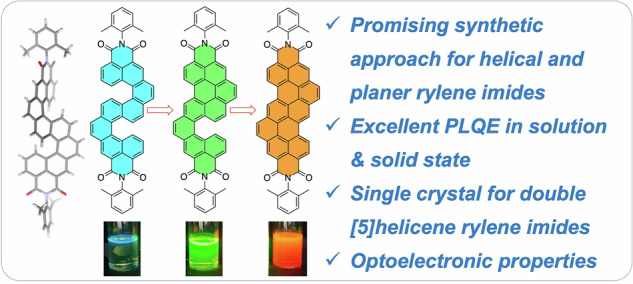 Figure 6
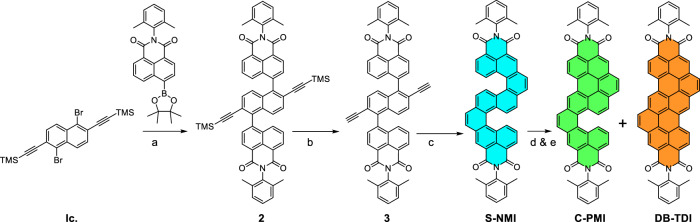 Figure 7
Peer Reviews
No public reviews on file for this paper yet. If you reviewed it on a platform where reviews are public (OpenReview, ICLR, NeurIPS, ICML), you can paste yours below so the community can read it here.
Videos
No videos yet. Explain this paper in a talk, walkthrough, or lecture? Add one.
Taxonomy
TopicsSynthesis and Properties of Aromatic Compounds · Graphene research and applications · Polydiacetylene-based materials and applications