SCOBY-based, innovative, and sustainable production of gallic acid from sucrose towards multipurpose applications
Sonia Medina, Concepción Medrano-Padial, Silvia Guillén, Laura Pérez-Través, Irene Pérez-Novas, Paula Periago, Cristina García-Viguera, Raúl Domínguez-Perles

TL;DR
This study shows that SCOBY, the microbial culture used to make kombucha, can produce gallic acid from sugar without needing plant materials, offering a sustainable way to make this valuable compound.
Contribution
The study demonstrates that SCOBY can synthesize gallic acid de novo from sucrose, without plant-derived precursors.
Findings
Gallic acid production in SCOBY increases linearly under standard fermentation conditions.
SCOBY can generate gallic acid without the need for tea or other plant materials.
The microbial community in SCOBY naturally produces gallic acid through sugar metabolism.
Abstract
Kombucha is a traditional beverage obtained from the fermentation of sugared tea by a symbiotic culture of bacteria and yeast (SCOBY), whose metabolism contributes significantly to the phytochemical composition and health-promoting properties of the final product. Among the phenolics present, gallic acid stands out as a multifunctional molecule with antioxidant, anti-inflammatory, and cardio-protective activities, making it a compound of growing interest for the development of functional foods, nutraceuticals and cosmetics. While gallic acid in kombucha has typically been attributed to plant-derived precursors, its potential de novo microbial origin has remained largely unexplored. In this work, robust evidence supports that SCOBY can synthesise gallic acid directly from sugars, without the contribution of tea or other plant materials. Metabolomic analyses combined with physicochemical…
Genes, proteins, chemicals, diseases, species, mutations and cell lines named across the full text — each resolved to its canonical identifier and authoritative record.
Click any figure to enlarge with its caption.
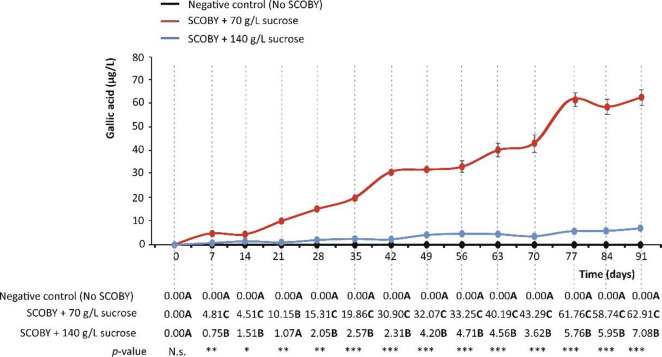 Figure 1
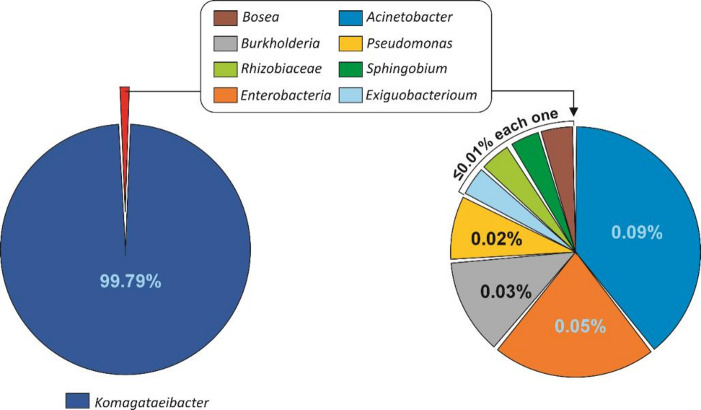 Figure 2
 Figure 3
 Figure 4
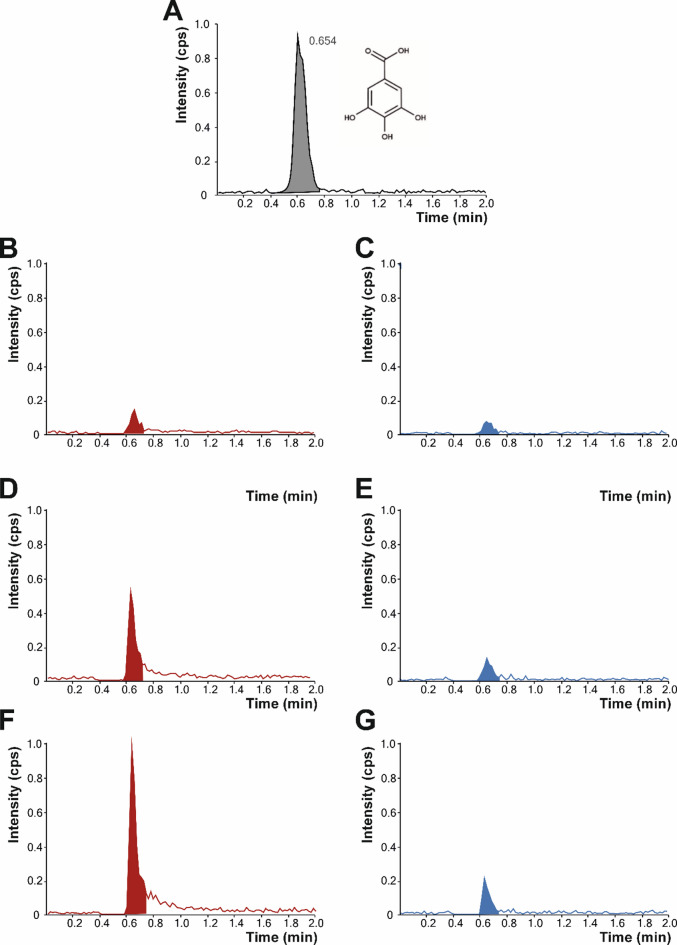 Figure 5
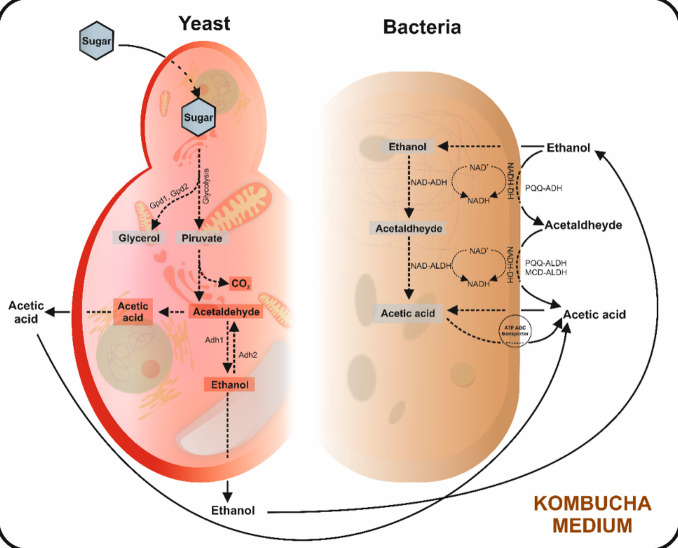 Figure 6
Peer Reviews
No public reviews on file for this paper yet. If you reviewed it on a platform where reviews are public (OpenReview, ICLR, NeurIPS, ICML), you can paste yours below so the community can read it here.
Videos
No videos yet. Explain this paper in a talk, walkthrough, or lecture? Add one.
Taxonomy
TopicsTannin, Tannase and Anticancer Activities · Tea Polyphenols and Effects · Microbial Metabolic Engineering and Bioproduction