Influence of infant fucosyltransferase polymorphisms on the association of maternal secretor status with child outcomes: the Ulm birth cohort studies
Linda P. Siziba, Marko Mank, Bernd Stahl, Hermann Brenner, John Gonsalves, Bernadet Blijenberg, Katrin Horn, Markus Scholz, Parastoo Kheiroddin, Michael Kabesch, Deborah Wernecke, Dietrich Rothenbacher, Jon Genuneit

TL;DR
This study explores how differences in secretor status between mothers and infants may affect child health outcomes like infections and growth.
Contribution
The study investigates the impact of discordant maternal and infant secretor status on child outcomes, a previously underexplored area.
Findings
About 45-46% of infants were heterozygous secretors in both cohorts.
Non-secretor infants receiving secretor milk showed a significant increase in BMI early in life, though not after adjusting for confounders.
The study highlights the need for further research on the health implications of discordant secretor status.
Abstract
The influence of maternal secretor status and child fucosyltransferase (FUT2) polymorphisms on respiratory and ear infections, and growth, is an emerging research area. But, the impact of discordant secretor status between mother and infant, where their secretor status differs, remains underexplored. This study investigated how infant FUT2 single nucleotide polymorphisms (SNPs) modify the association between maternal secretor/non-secretor milk phenotypes and child outcomes such as infections, and growth during the first two years of life in discordant mother-infant pairs. Data from n = 539 mother-infant pairs in the Ulm SPATZ Health Study (SPATZ) and n = 488 pairs in the Ulm Birth Cohort Study (UBCS) were analysed using logistic, modified Poisson, and linear regression models. A significant proportion of infants in both cohorts were heterozygous secretors (46% in SPATZ and 45% in UBCS),…
Genes, proteins, chemicals, diseases, species, mutations and cell lines named across the full text — each resolved to its canonical identifier and authoritative record.
Click any figure to enlarge with its caption.
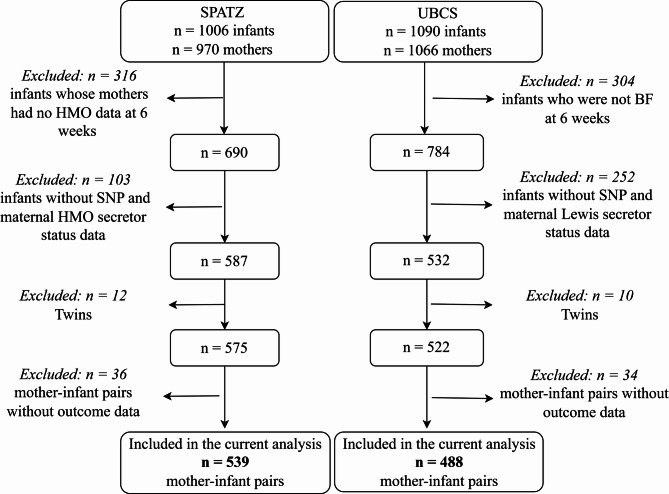 Figure 1
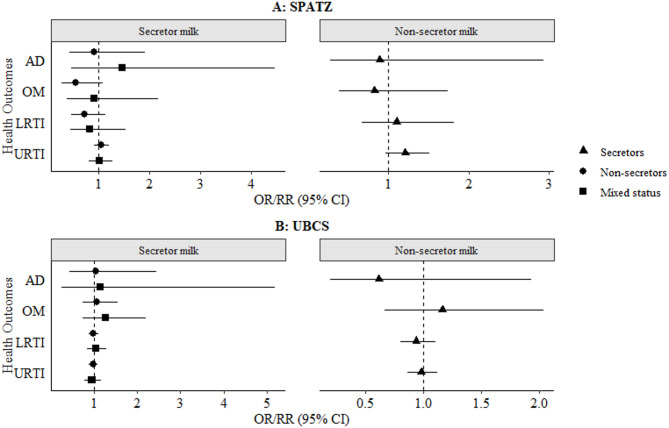 Figure 2
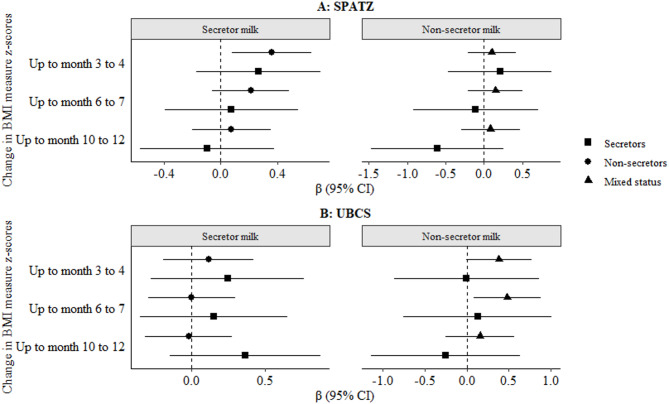 Figure 3
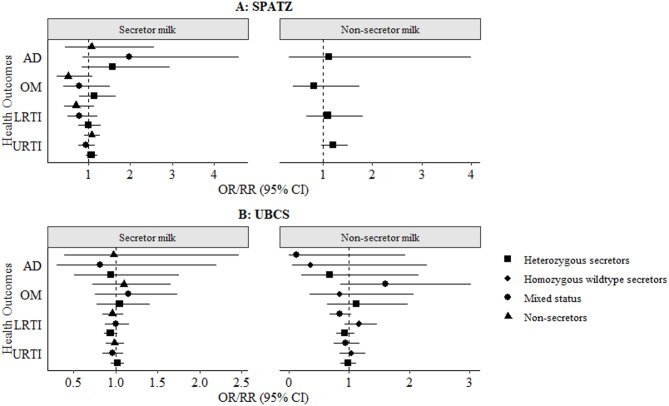 Figure 4
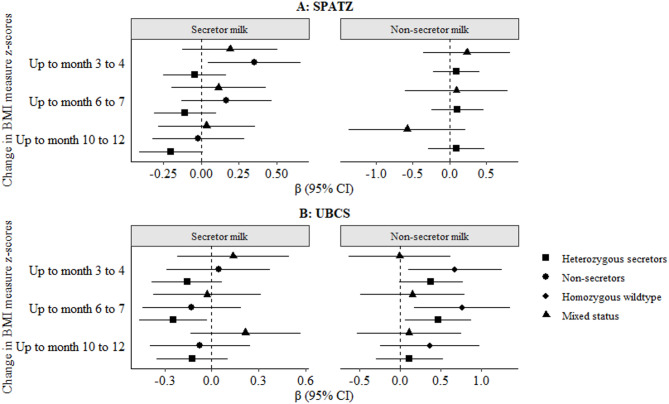 Figure 5
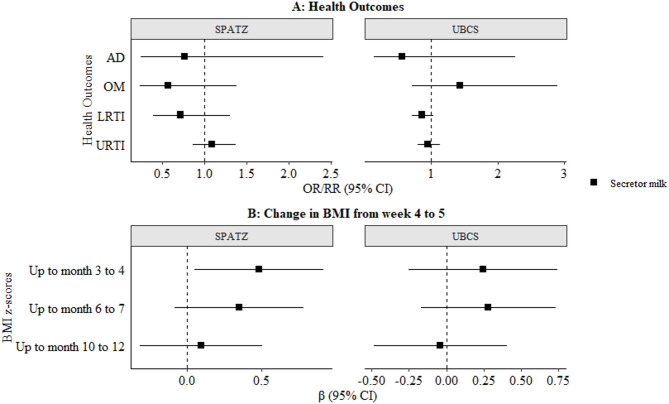 Figure 6
Peer Reviews
No public reviews on file for this paper yet. If you reviewed it on a platform where reviews are public (OpenReview, ICLR, NeurIPS, ICML), you can paste yours below so the community can read it here.
Videos
No videos yet. Explain this paper in a talk, walkthrough, or lecture? Add one.
Taxonomy
TopicsInfant Nutrition and Health · Glycosylation and Glycoproteins Research · Breastfeeding Practices and Influences