Gli1-expressing stromal cells are highly reparative precursors of long-lived chondroprogenitors in the fetal murine limb
Xinli Qu, Ehsan Razmara, Ashiq Khader C, Chee Ho H’ng, Kailash K. Vinu, Luciano G. Martelotto, Maia Zethoven, Fernando J. Rossello, Shanika L. Amarasinghe, David R. Powell, Alberto Rosello-Diez

TL;DR
This study identifies Gli1+ fetal cells as precursors to long-lived cartilage progenitors in long bones, which can compensate for growth disruptions.
Contribution
The paper reveals that Gli1+ cells originate from Pdgfra+ cells and act as reparative precursors in cartilage development.
Findings
Gli1+ cells are fetal precursors of postnatal long-lived cartilage progenitors.
Gli1+ cells remain dormant until postnatal stages but expand in response to developmental perturbations.
Reparative Gli1+ cells originate from Pdgfra+ cells outside the cartilage.
Abstract
The growth-plate cartilage of the developing long bones is a well-known system of spatially segregated stem/progenitor, transient amplifying and terminally differentiated cells. However, the regulation of the number and activity of long-lived cartilage progenitors (LLCPs) is poorly understood, despite its relevance for understanding human-height variation, the evolution of limb size and proportions and the aetiology of skeletal growth disorders. Moreover, whether their behaviour can adapt to developmental perturbations, generating robustness, has not been explored. Here, we show that Gli1+ cells are the fetal precursors of postnatal LLCPs, and that Gli1+ LLCP precursors remain mostly dormant until postnatal stages. However, in response to genetically-induced cell-cycle arrest targeted to the fetal cartilage, they expand in the cartilage, enabling normal growth. We further show that…
Genes, proteins, chemicals, diseases, species, mutations and cell lines named across the full text — each resolved to its canonical identifier and authoritative record.
Click any figure to enlarge with its caption.
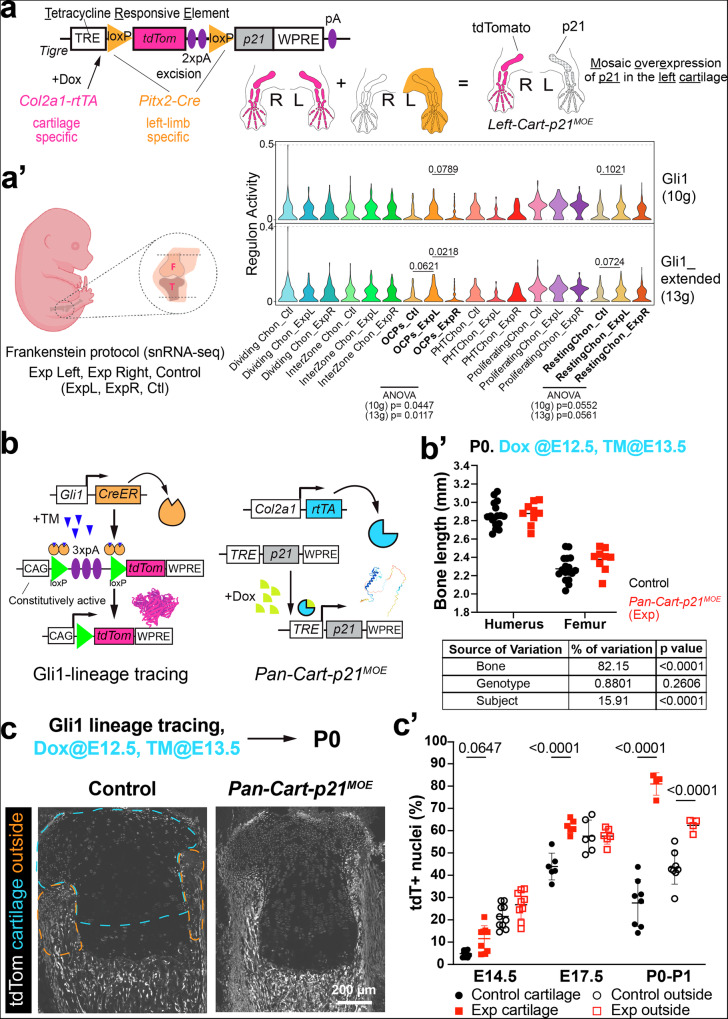 Figure 1
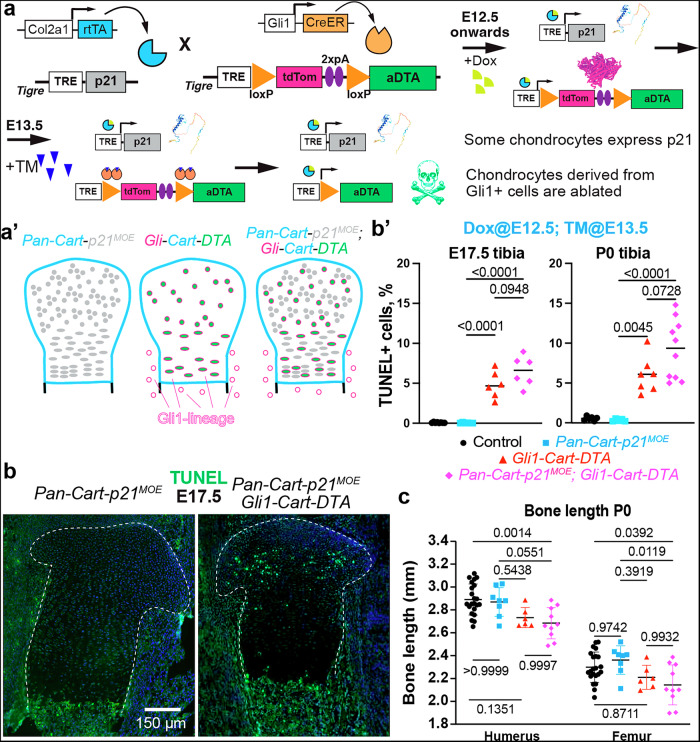 Figure 2
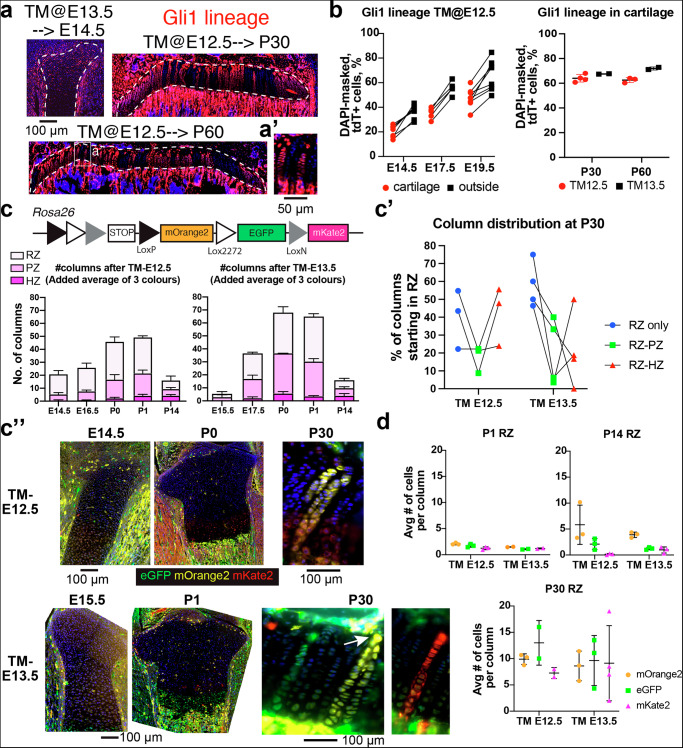 Figure 3
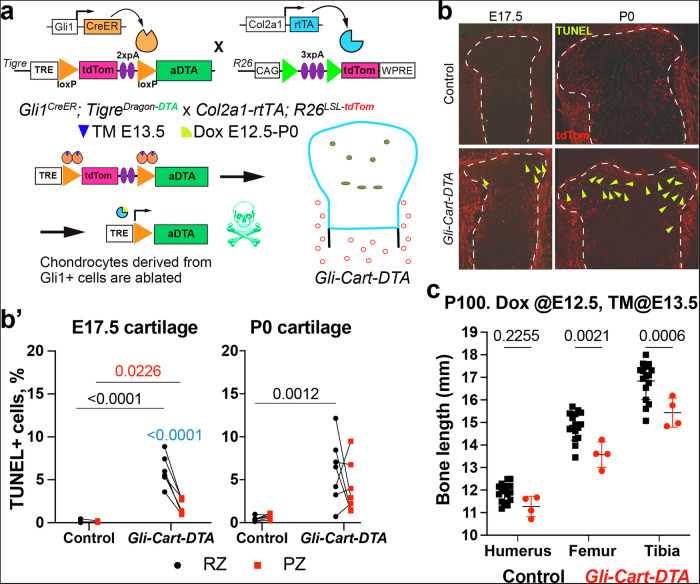 Figure 4
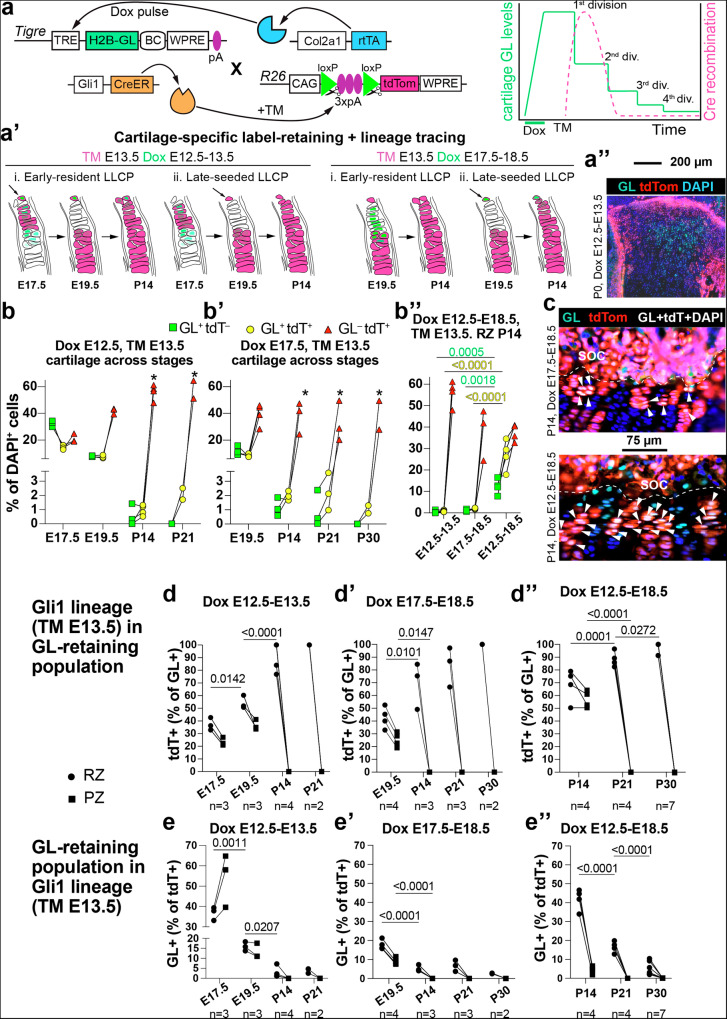 Figure 5
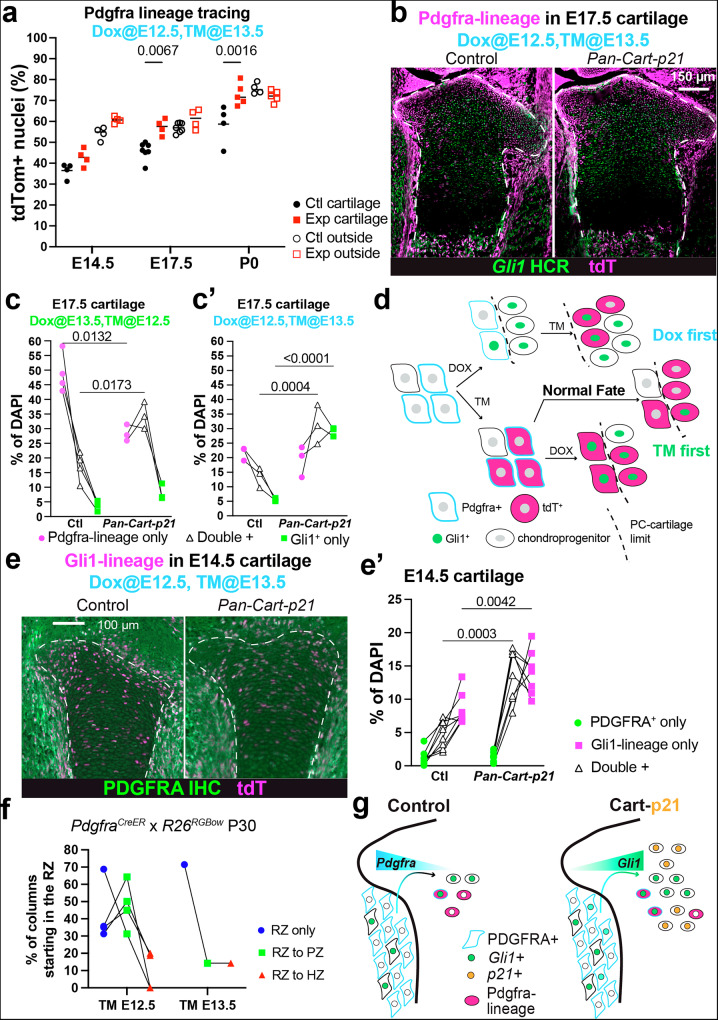 Figure 6
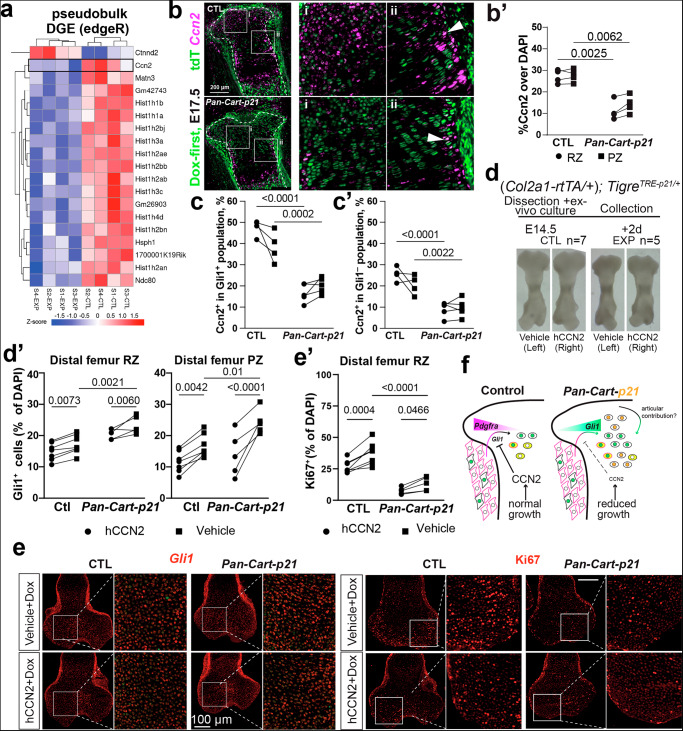 Figure 7
Peer Reviews
No public reviews on file for this paper yet. If you reviewed it on a platform where reviews are public (OpenReview, ICLR, NeurIPS, ICML), you can paste yours below so the community can read it here.
Videos
No videos yet. Explain this paper in a talk, walkthrough, or lecture? Add one.
Taxonomy
TopicsOsteoarthritis Treatment and Mechanisms · Mesenchymal stem cell research · TGF-β signaling in diseases