Pyruvate kinase M2-mediated histone lactylation alters three-dimensional genomic architecture in polycystic ovary syndrome
Chuanjin Yu, Tingting Liu, Yishu Wang, Xinghui Guo, Yujie Chen, Yifan Zhao, Xia Liu, Weiwei Huang, Shuoyang Zhao, Jiaying Mo, Hongtao Hu, Pingping Lv, Xiaotao Wang, Zuwei Yang, Jiexue Pan, Guolian Ding, Jianzhong Sheng, Xinmei Liu, Hongbo Yang, He-Feng Huang

TL;DR
This study shows that pyruvate kinase M2 in the nucleus alters chromatin structure, contributing to PCOS, and suggests it as a potential treatment target.
Contribution
The novel finding is that nuclear PKM2 causes histone lactylation, which changes chromatin architecture and drives PCOS-related gene expression.
Findings
Nuclear PKM2 increases histone lactylation at H3K9 and H3K18, altering genomic architecture.
PKM2-mediated changes enhance expression of PCOS-related genes like CYP17A1 and CYP11A1.
Pharmacological inhibition of nuclear PKM2 reduces PCOS-like symptoms in mice.
Abstract
Polycystic ovary syndrome (PCOS) is a frequent endocrine and metabolic imbalance that typically occurs in women of reproductive age. Its molecular pathophysiology is yet unknown, especially the ovarian cellular metabolic inefficiency that causes the transcriptional dysregulation of key genes linked to PCOS. Here, we discovered that one transcriptional-like regulator that causes PCOS is nuclear pyruvate kinase M2 (nPKM2). Using multiomics techniques, we show that enhanced lactylation of histone 3 on lysine residues 9 and 18 is linked to nPKM2 binding to the genome, changing the three-dimensional architecture of the genome. Genomic compartment switching, topologically associated domain fusion, and novel enhancer–promoter interactions subsequently enhance the expression of PCOS-related genes, including CYP17A1 and CYP11A1. In mice, ectopic expression of Pkm2 in female GCs consistently…
Genes, proteins, chemicals, diseases, species, mutations and cell lines named across the full text — each resolved to its canonical identifier and authoritative record.
Click any figure to enlarge with its caption.
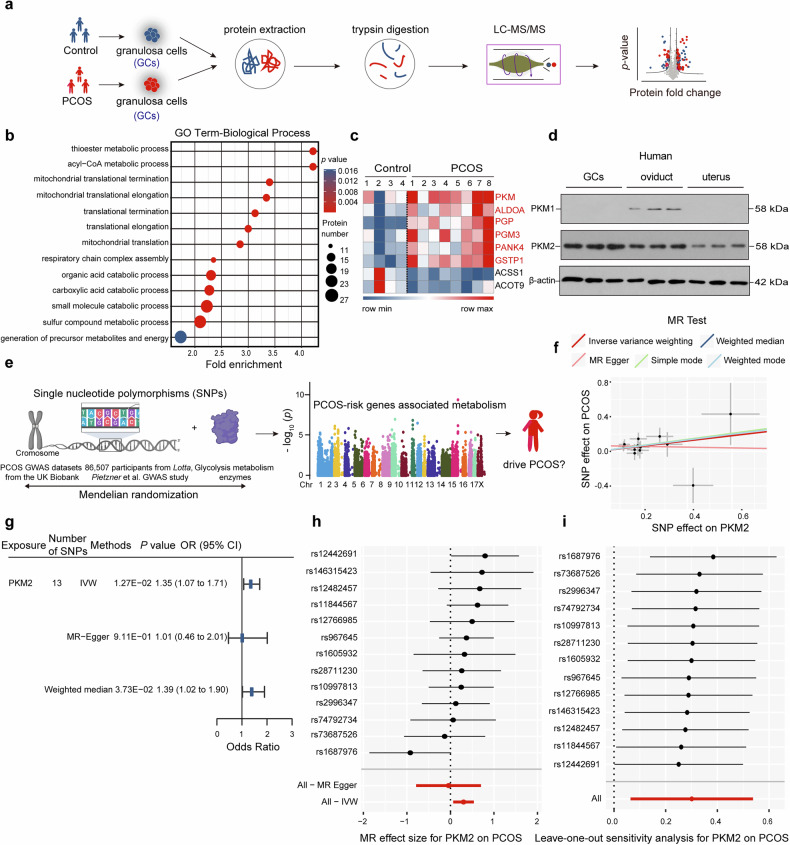 Figure 1
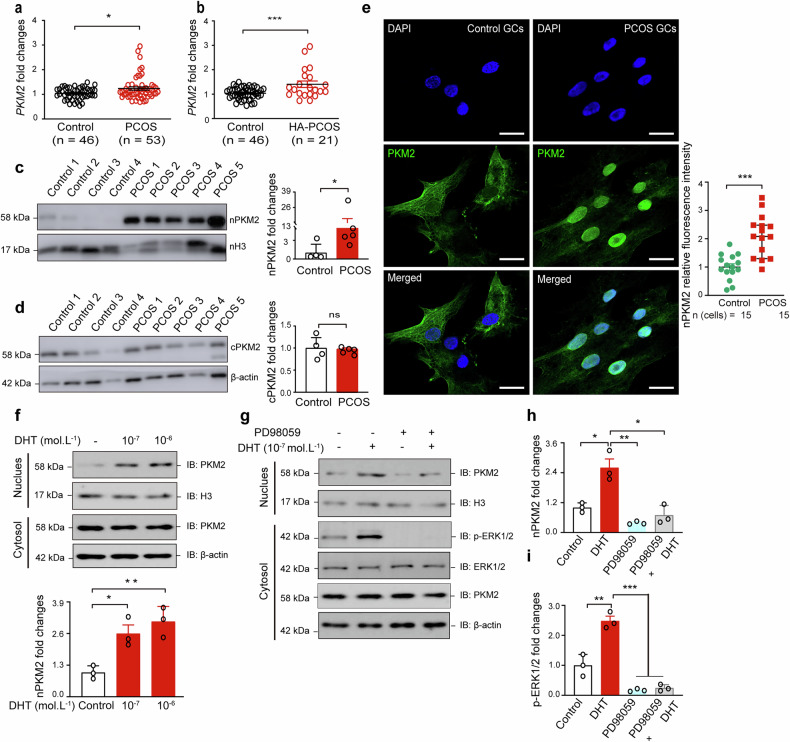 Figure 2
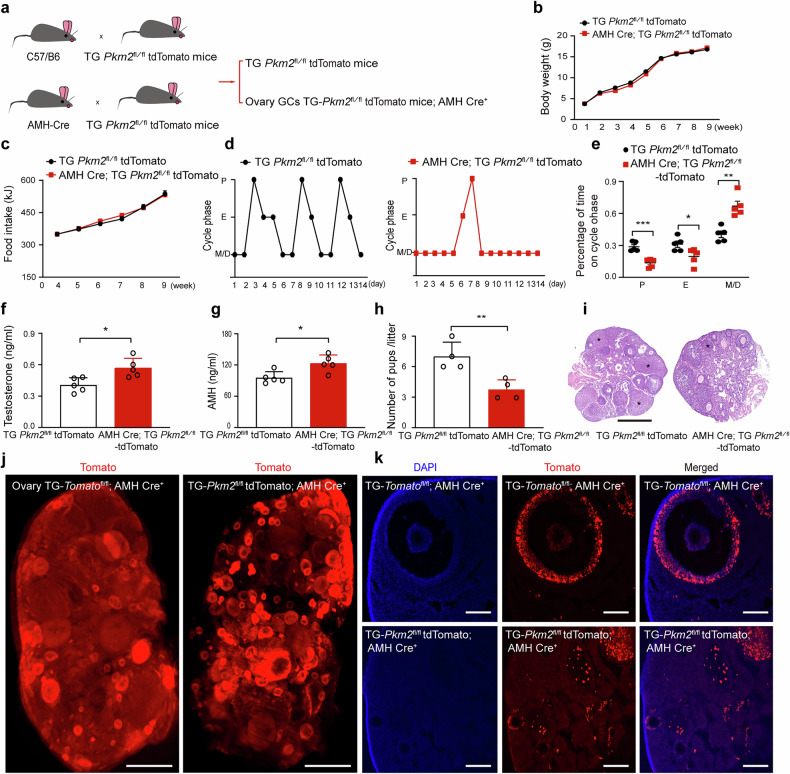 Figure 3
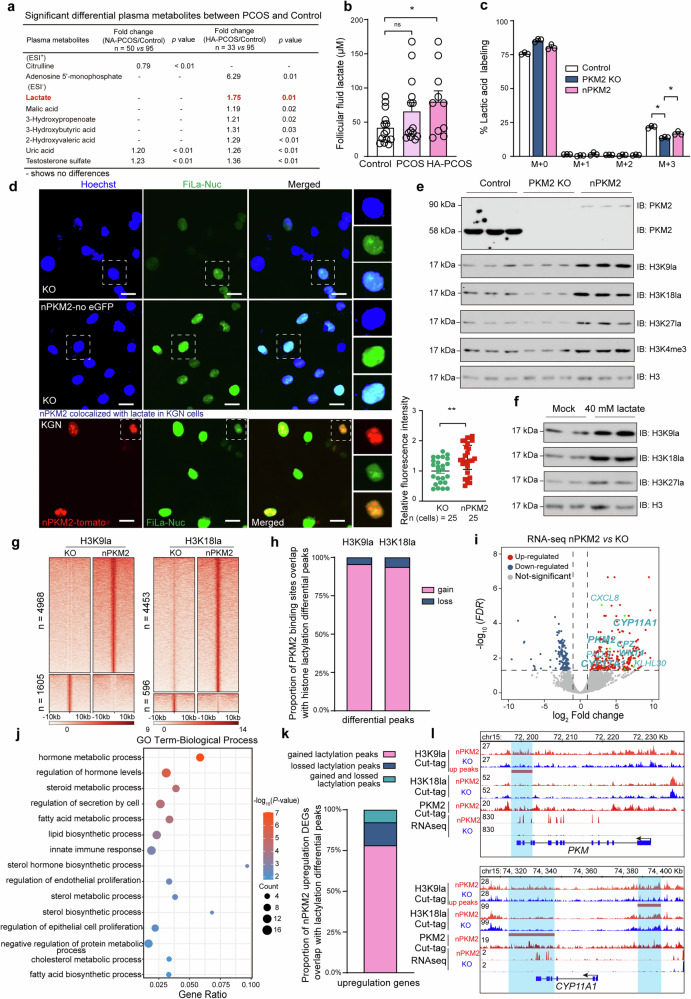 Figure 4
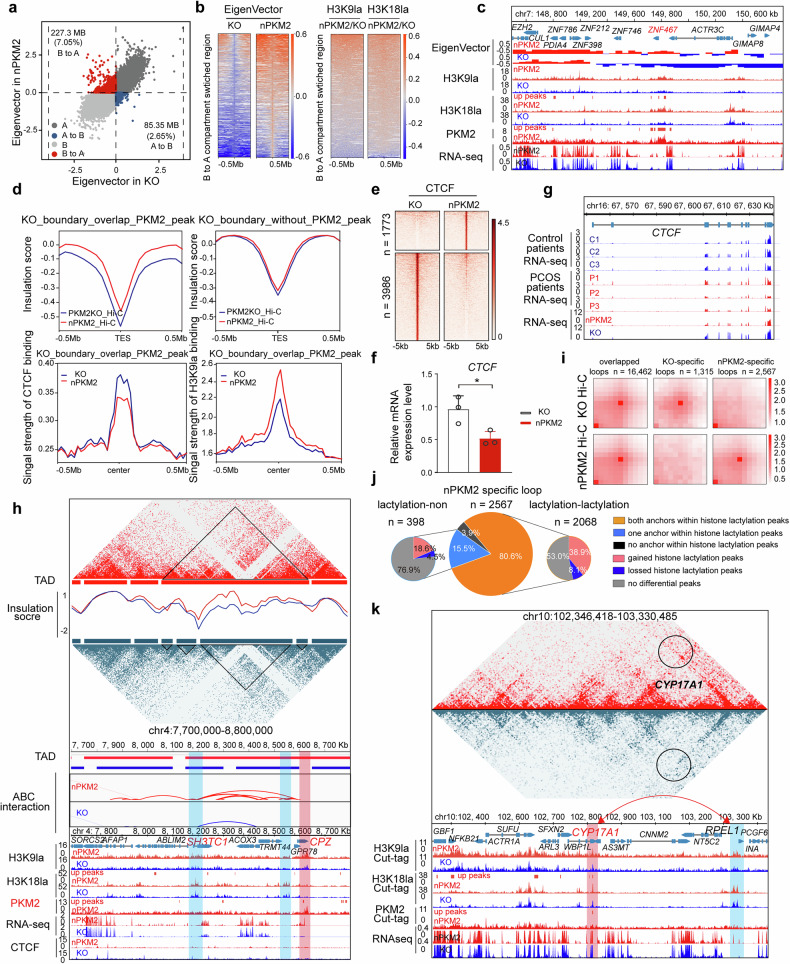 Figure 5
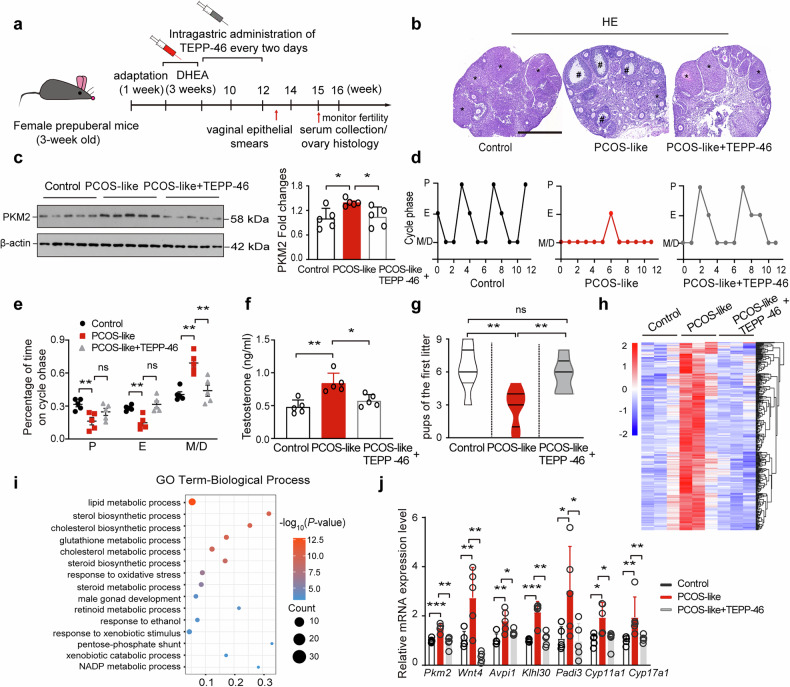 Figure 6
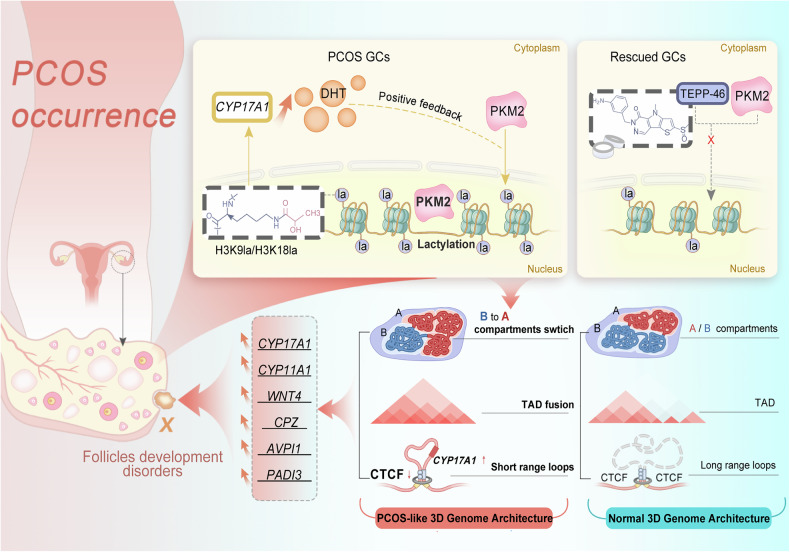 Figure 7
Peer Reviews
No public reviews on file for this paper yet. If you reviewed it on a platform where reviews are public (OpenReview, ICLR, NeurIPS, ICML), you can paste yours below so the community can read it here.
Videos
No videos yet. Explain this paper in a talk, walkthrough, or lecture? Add one.
Taxonomy
TopicsOvarian function and disorders · Reproductive Biology and Fertility · Plant Molecular Biology Research