Loss of p190A RhoGAP induces aneuploidy and enhances bladder cancer cell migration and invasion by modulating actin dynamics
Qianyu Kang, Xue Kong, Gregoire Najjar, Anca Azoitei, Markus Eckstein, Axel John, Friedemann Zengerling, Felix Wezel, Christian Bolenz, Cagatay Günes

TL;DR
Loss of p190A protein leads to abnormal cell division and increased bladder cancer cell movement, suggesting it acts as a tumor suppressor.
Contribution
This study identifies p190A as a tumor suppressor in bladder cancer through its role in ploidy control and actin regulation.
Findings
p190A mutations are present in up to 8% of bladder cancer cases.
Lower p190A expression correlates with increased cancer invasiveness and worse survival.
Loss of p190A disrupts actin dynamics and promotes cancer cell migration and invasion.
Abstract
p190A has been studied across various cancer types, and mutation rates of up to 20% were observed in some cancers, supporting the significance of p190A in carcinogenesis. Since the relevance of p190A in bladder cancer has not been addressed so far, we attempted to explore it. Evaluation of TCGA high-throughput sequencing datasets revealed p190A mutations in up to 8% of bladder cancer samples across several studies. Employing immunohistochemistry on tissue microarray that included 202 BC patient samples, we observed that lower p190A expression correlates with increased invasiveness and poorer survival outcomes. These findings suggested that p190A may have a tumor suppressor function in bladder tissue, consistent with its anticipated function in ploidy-control. p190A knockdown resulted in chromosomal instability in ureter-derived epithelial cells with otherwise normal karyotype,…
Genes, proteins, chemicals, diseases, species, mutations and cell lines named across the full text — each resolved to its canonical identifier and authoritative record.
Click any figure to enlarge with its caption.
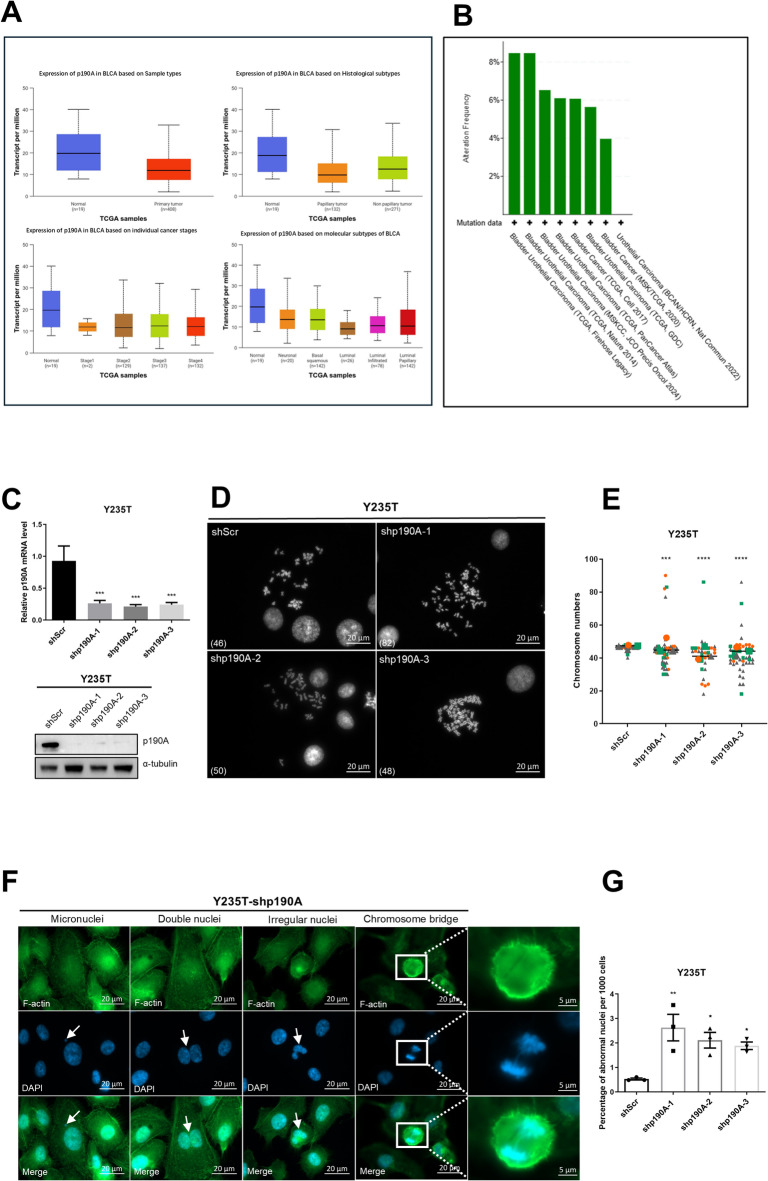 Figure 1
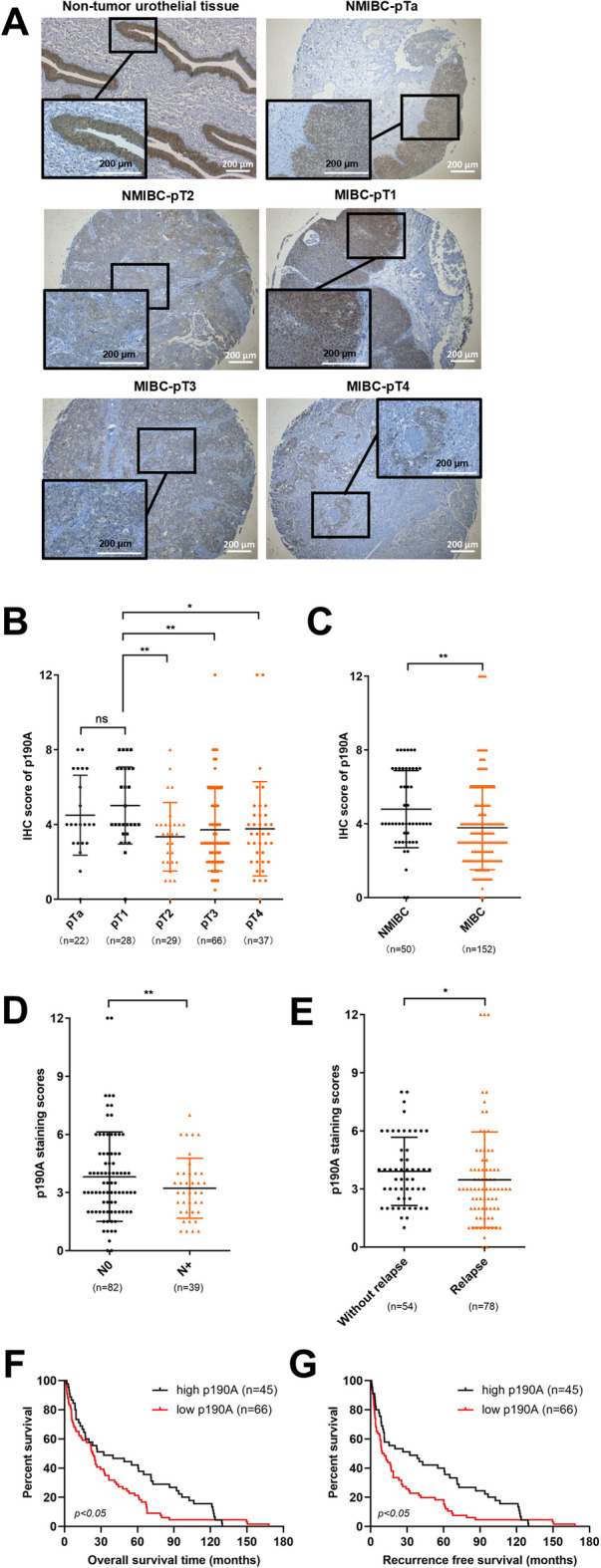 Figure 2
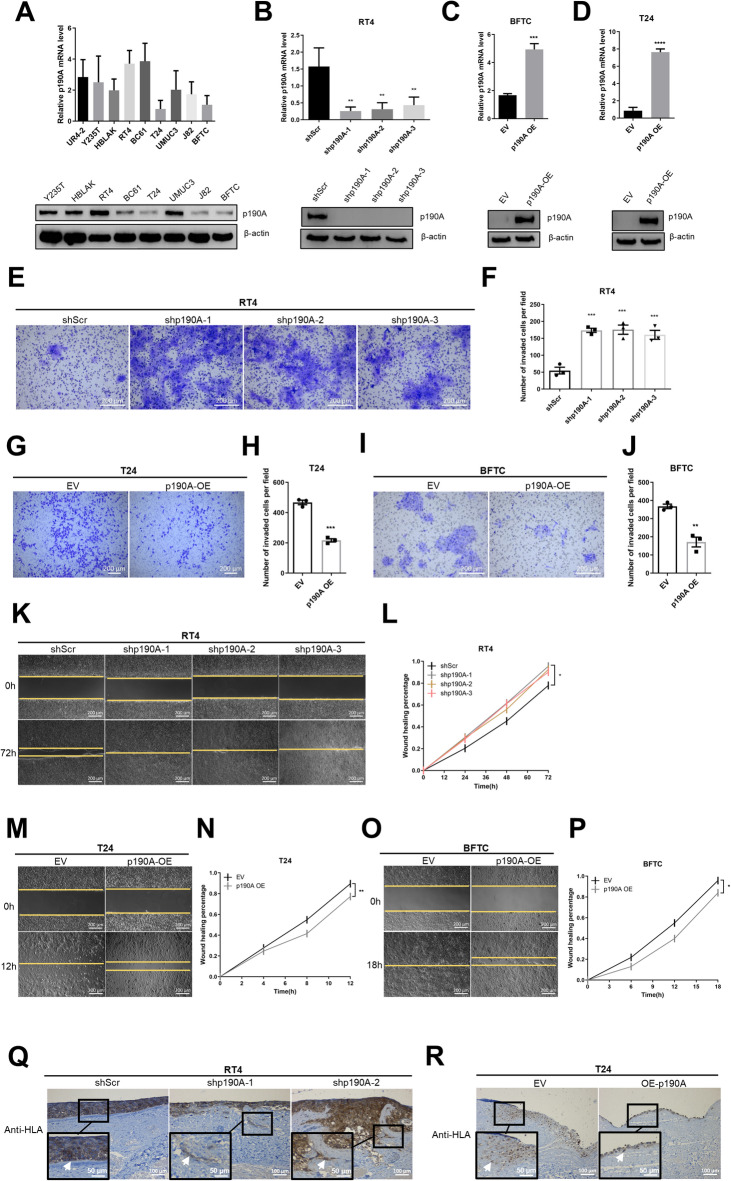 Figure 3
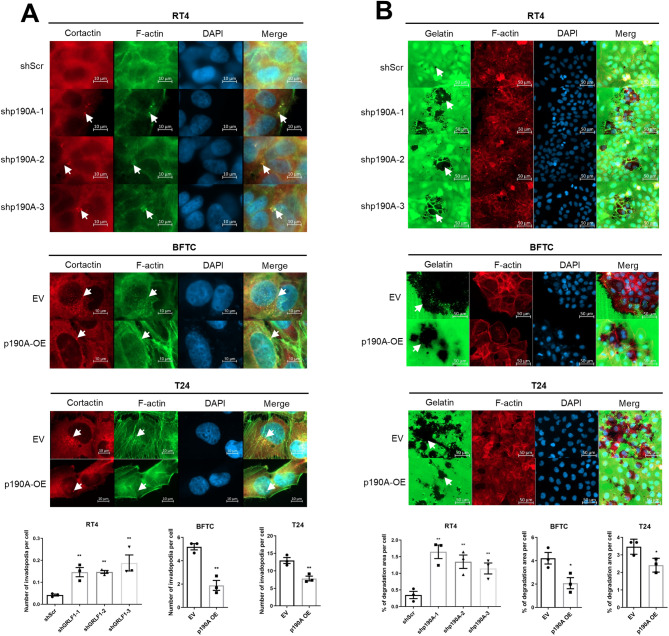 Figure 4
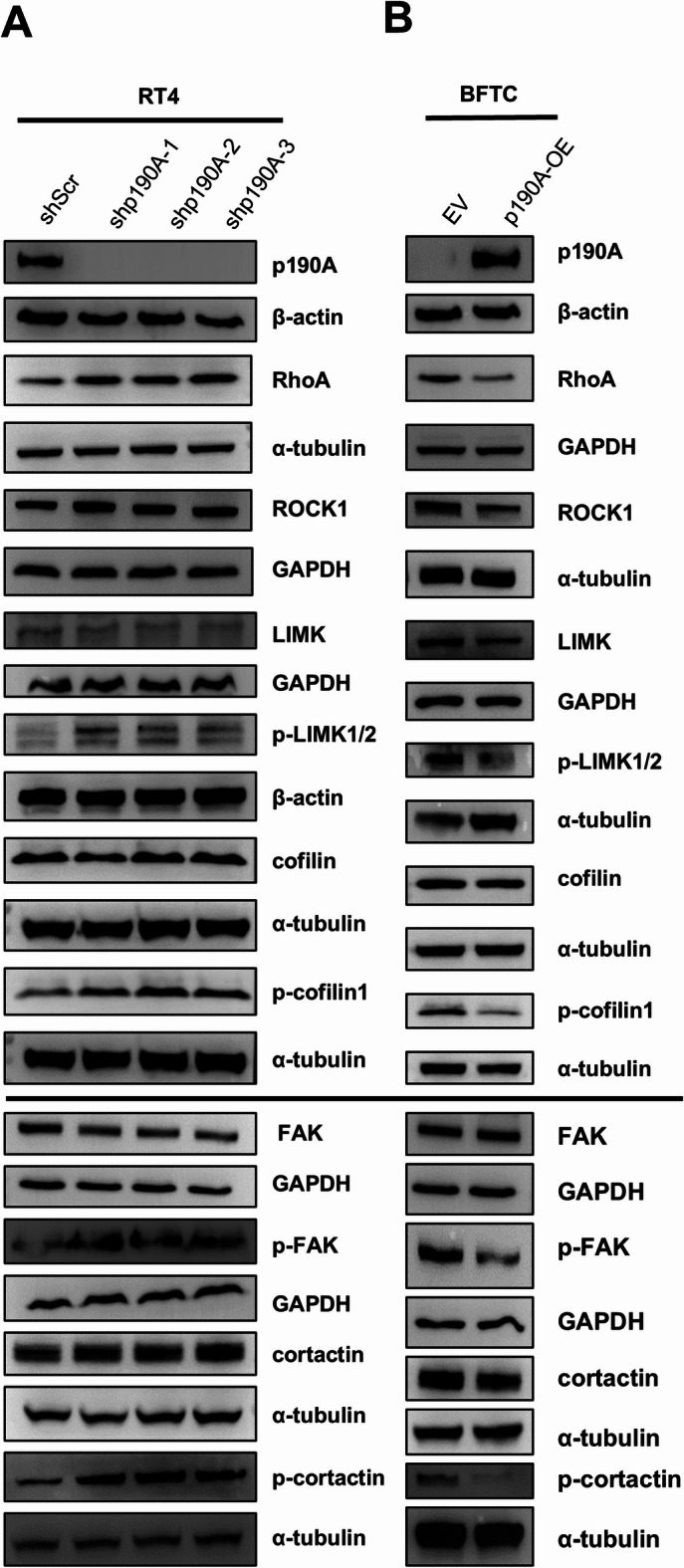 Figure 5
Peer Reviews
No public reviews on file for this paper yet. If you reviewed it on a platform where reviews are public (OpenReview, ICLR, NeurIPS, ICML), you can paste yours below so the community can read it here.
Videos
No videos yet. Explain this paper in a talk, walkthrough, or lecture? Add one.
Taxonomy
TopicsBladder and Urothelial Cancer Treatments · Microtubule and mitosis dynamics · Cancer-related Molecular Pathways