WF-PINNs: solving forward and inverse problems of burgers equation with steep gradients using weak-form physics-informed neural networks
Xianke Wang, Shichao Yi, Huangliang Gu, Jing Xu, Wenjie Xu

TL;DR
The paper introduces a new neural network framework to solve complex fluid dynamics problems involving shocks with improved accuracy and stability.
Contribution
The novel weak-form PINN framework enables stable and accurate solutions for forward and inverse problems with steep gradients in conservation laws.
Findings
WF-PINNs outperform strong-form PINNs in accuracy and robustness for problems with shocks.
The framework successfully identifies unknown initial conditions and viscosity coefficients in inverse problems.
The weak-form formulation and entropy condition improve stability and physical consistency near shocks.
Abstract
This study tackles the numerical challenges posed by solutions with steep gradients in the Burgers equation, particularly poor stability in high-gradient regions and the ill-posedness of inverse problems in shock wave modeling. We propose a Weak-Form Physics-Informed Neural Network (WF-PINN) that fundamentally enhances both forward and inverse problem solving. Key innovations include: (i) a weak-form integral formulation of the PDE loss, which improves training stability near shocks; (ii) enforcement of an entropy condition to ensure unique and physically consistent shock capture; (iii) a dual-network architecture for inverse problems, where an auxiliary network dedicated to initial condition reconstruction is coupled with the main solver via consistency constraints. Numerical experiments show that WF-PINNs achieve significantly higher accuracy and convergence robustness compared to…
Genes, proteins, chemicals, diseases, species, mutations and cell lines named across the full text — each resolved to its canonical identifier and authoritative record.
Click any figure to enlarge with its caption.
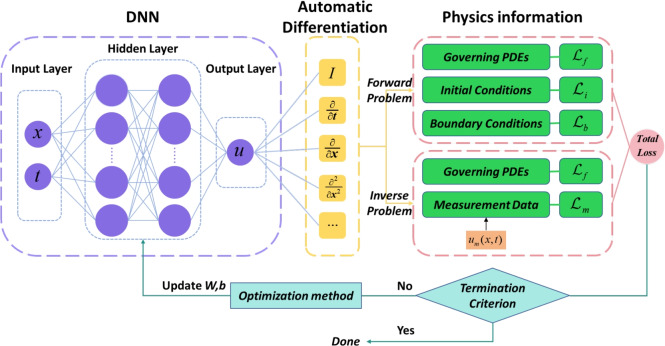 Figure 1
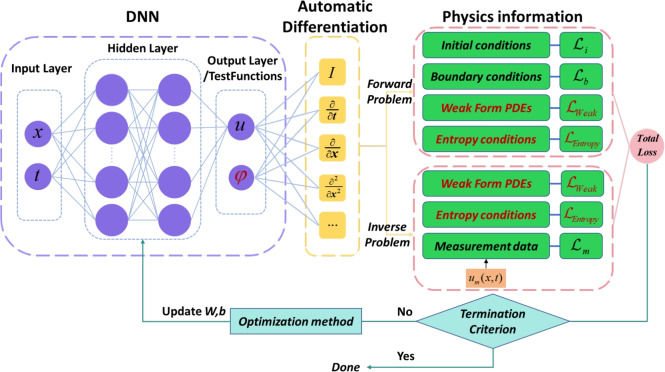 Figure 2
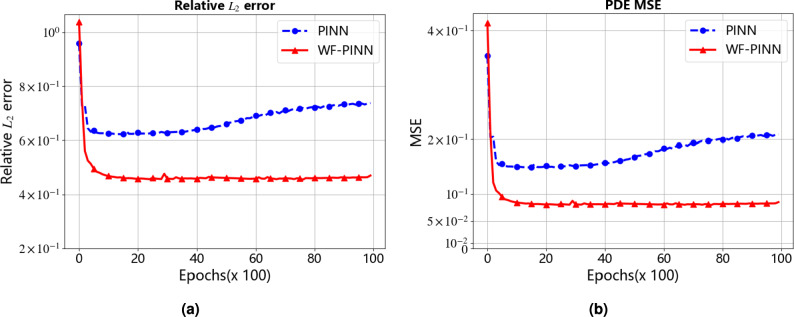 Figure 3
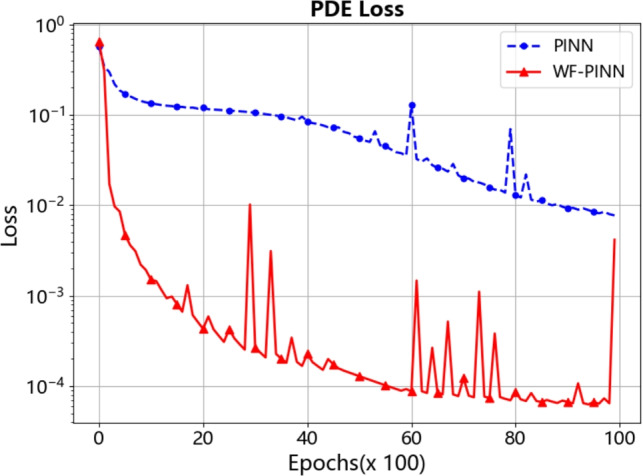 Figure 4
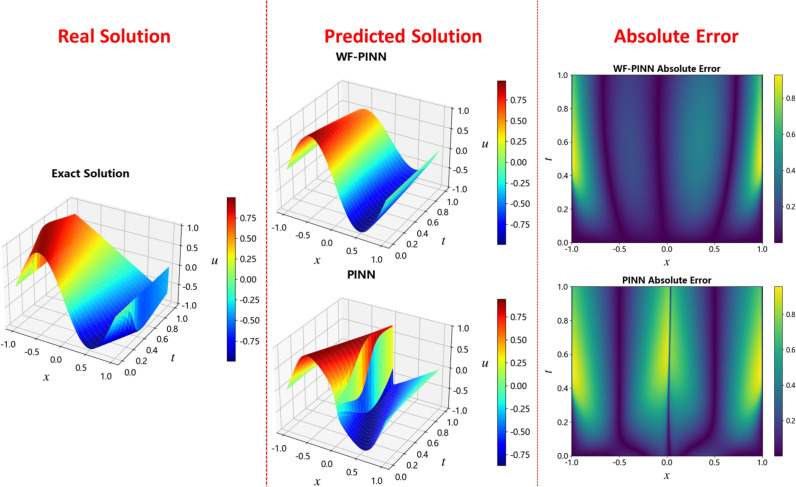 Figure 5
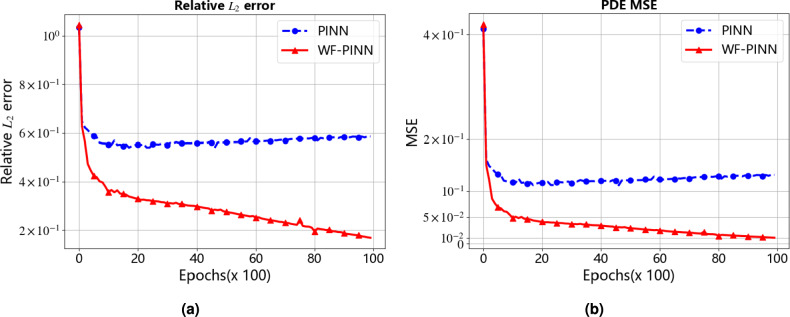 Figure 6
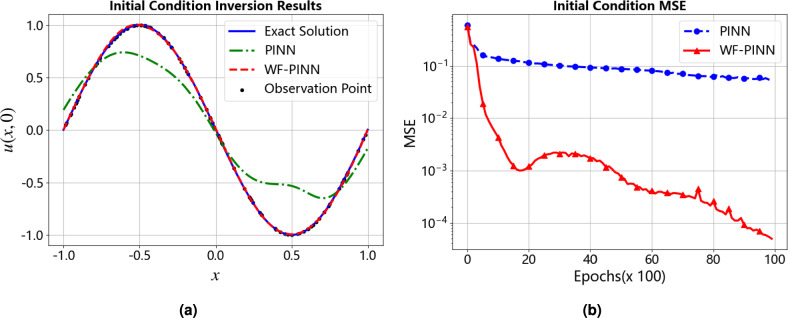 Figure 7
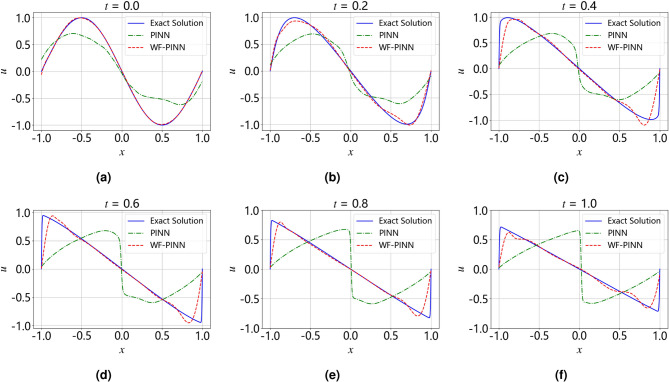 Figure 8
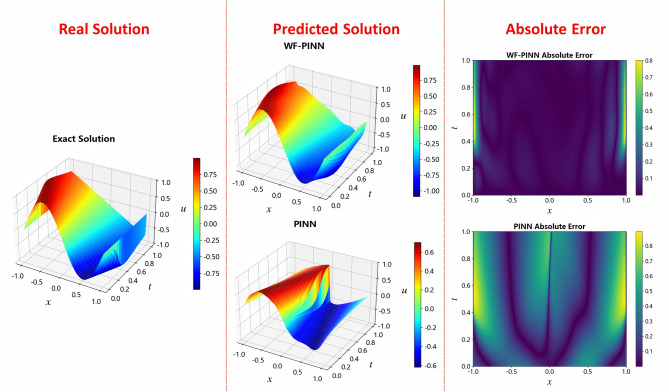 Figure 9
Peer Reviews
No public reviews on file for this paper yet. If you reviewed it on a platform where reviews are public (OpenReview, ICLR, NeurIPS, ICML), you can paste yours below so the community can read it here.
Videos
No videos yet. Explain this paper in a talk, walkthrough, or lecture? Add one.
Taxonomy
TopicsModel Reduction and Neural Networks · Computational Fluid Dynamics and Aerodynamics · Probabilistic and Robust Engineering Design