Controllability changes pain perception by increasing the precision of expectations
Marie Habermann, Christian Büchel

TL;DR
Having control over pain changes how intense it feels, and this happens because control increases how precise our expectations are about the pain.
Contribution
The paper shows that pain modulation by control is due to increased expectation precision, not just predictability.
Findings
Control increases expectation precision, which modulates pain perception.
Control-induced changes in expectation precision activate specific brain regions.
These effects are distinct from situations where pain is predictable but not controllable.
Abstract
The ability to exert control over an intensely unpleasant experience, such as pain, can modulate its perception. It is often assumed that control exerts this modulatory effect through a specific control mechanism. We revisit this issue using a task that allowed participants to either control or predict the intensity of a painful stimulus. By approximating Bayesian perceptual integration with computational models, our data show that acute pain modulation by control can be parsimoniously explained by an increase in expectation precision. Importantly, this effect is present in contrast to a condition in which pain is equally predictable, but not controllable. The control-induced increase in expectation precision leads to activation changes in the periaqueductal gray, the supplementary motor area and the rostral anterior cingulate cortex, regions that mediate the interplay between threat…
Genes, proteins, chemicals, diseases, species, mutations and cell lines named across the full text — each resolved to its canonical identifier and authoritative record.
Click any figure to enlarge with its caption.
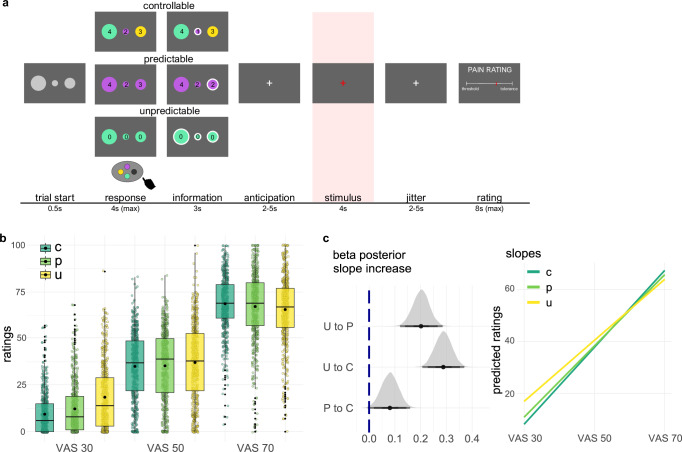 Figure 1
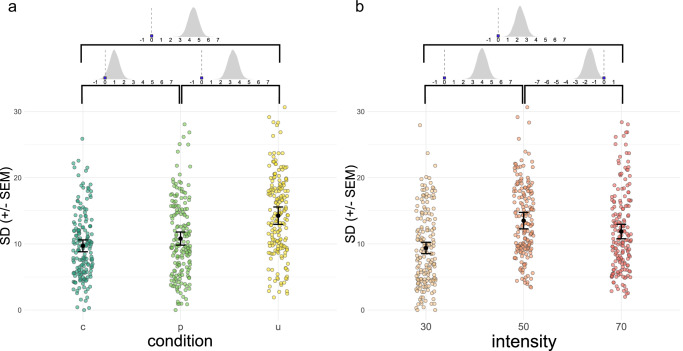 Figure 2
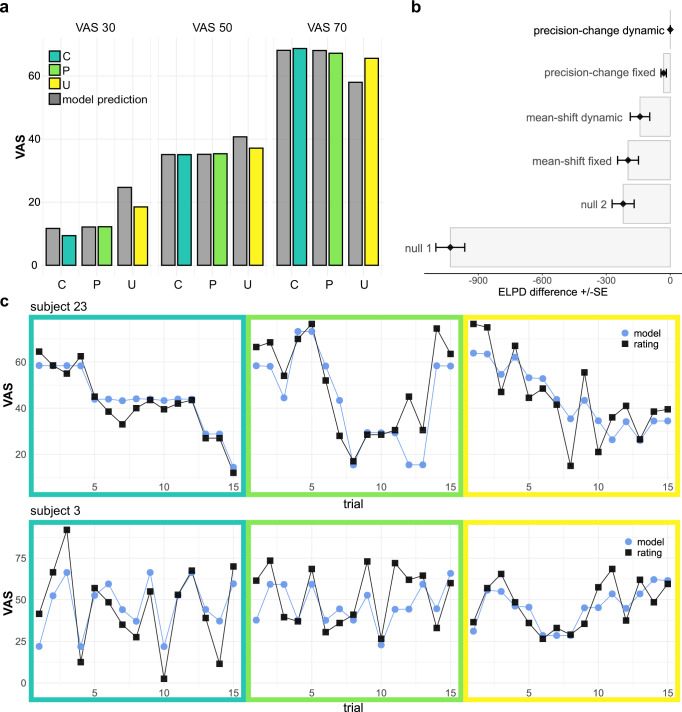 Figure 3
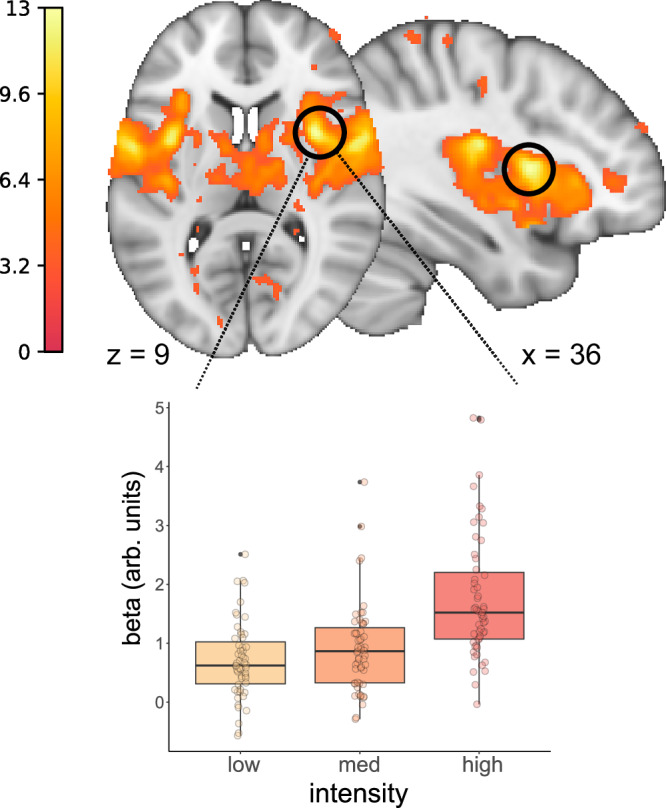 Figure 4
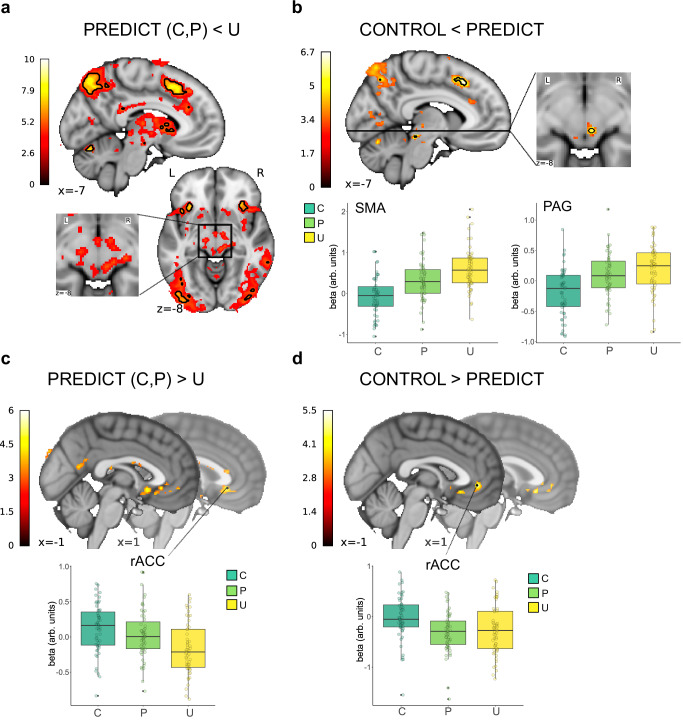 Figure 5
Peer Reviews
No public reviews on file for this paper yet. If you reviewed it on a platform where reviews are public (OpenReview, ICLR, NeurIPS, ICML), you can paste yours below so the community can read it here.
Videos
No videos yet. Explain this paper in a talk, walkthrough, or lecture? Add one.
Taxonomy
TopicsPain Mechanisms and Treatments · Neural and Behavioral Psychology Studies · Musculoskeletal pain and rehabilitation