Rapid and minimally invasive preimplantation genetic testing for aneuploidies (PGT-A) based on polar body and nanopore sequencing: a viable alternative to conventional trophectoderm-based PGT-A?
Di Song, Taoli Ding, Tuan Li, Peng Zhang, Yangyun Zou, Yuanbo Hu, Hong Ye, Yajun Xu, Shengnan Wang, Tuanping Zhou, Sijia Lu, Hongli Yan

TL;DR
This study explores using polar body and nanopore sequencing as a less invasive alternative to traditional methods for preimplantation genetic testing of aneuploidies, showing promising results for clinical use.
Contribution
The study introduces a novel TGS-based polar body analysis method as a viable alternative to conventional trophectoderm biopsy for PGT-A.
Findings
PB-based PGT-A showed a higher euploidy rate (55.4%) compared to blastocyst-stage PGT-A (43.1%).
TGS improved the cost-effectiveness and reduced the turnaround time for PB-based PGT-A.
PB analysis is minimally invasive and reduces the number of cryopreserved aneuploid embryos.
Abstract
Can third-generation sequencing (TGS)-based polar body (PB) analysis serve as a viable alternative to conventional trophectoderm (TE) biopsy for preimplantation genetic testing for aneuploidy (PGT-A)? This study demonstrates the feasibility of using TGS and PB biopsy for clinical PGT-A, particularly in advanced maternal age (AMA) patients. TE biopsy, the current standard approach for PGT-A, is limited by embryonic mosaicism. Mosaicism potentially leads to false-positive aneuploidy diagnoses, resulting in the discard of genetically normal embryos and compromising the cumulative live birth rates (CLBRs). A total of 125 oocytes were collected from 30 couples. First (PB1) and second (PB2) polar bodies from 89 oocytes were individually amplified and sequenced, while those from the remaining 36 oocytes were processed jointly (PB1 + PB2). Then, 74 oocytes were successfully fertilized and…
Genes, proteins, chemicals, diseases, species, mutations and cell lines named across the full text — each resolved to its canonical identifier and authoritative record.
Click any figure to enlarge with its caption.
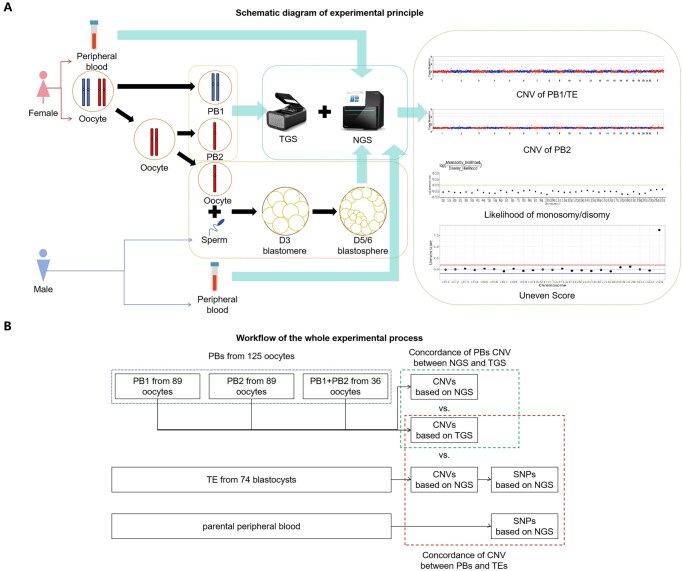 Figure 1
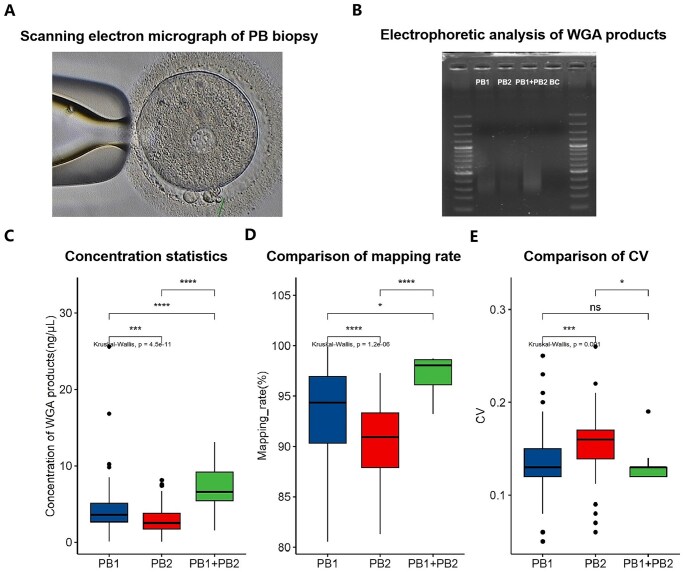 Figure 2
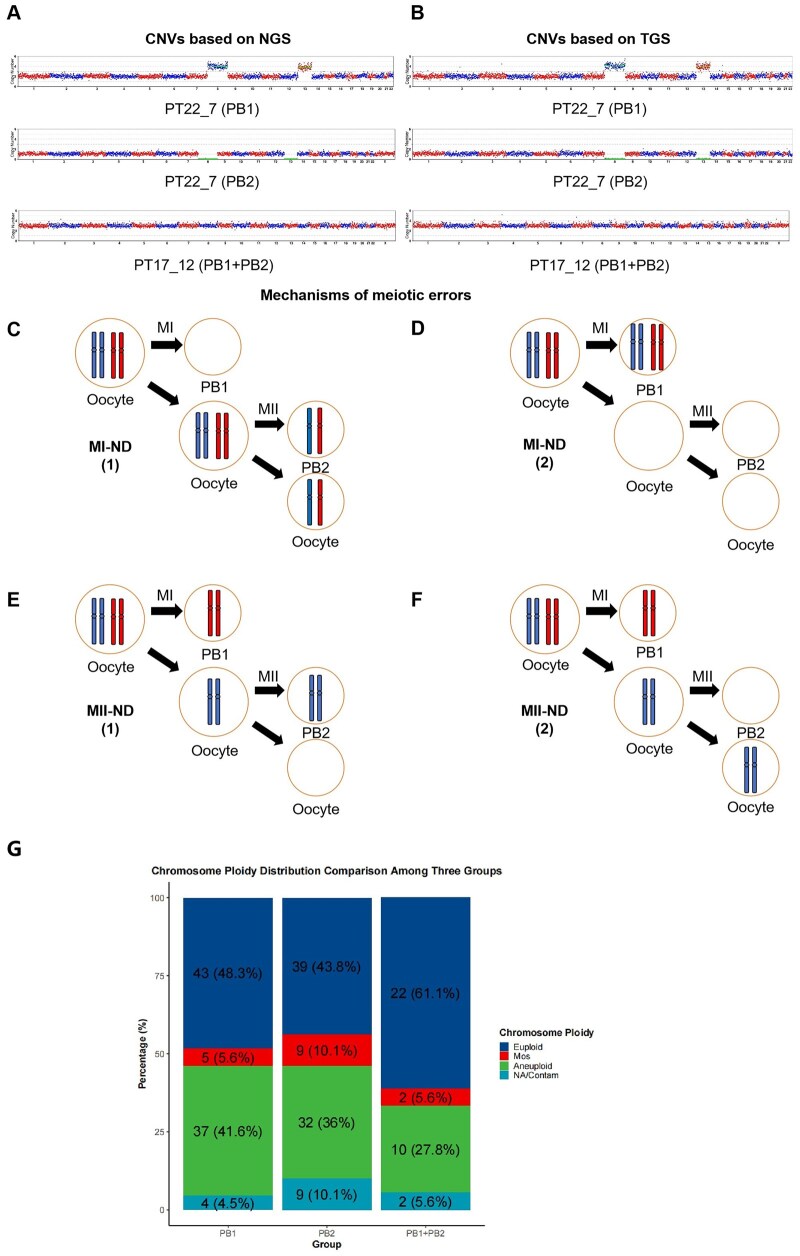 Figure 3
 Figure 4
 Figure 5
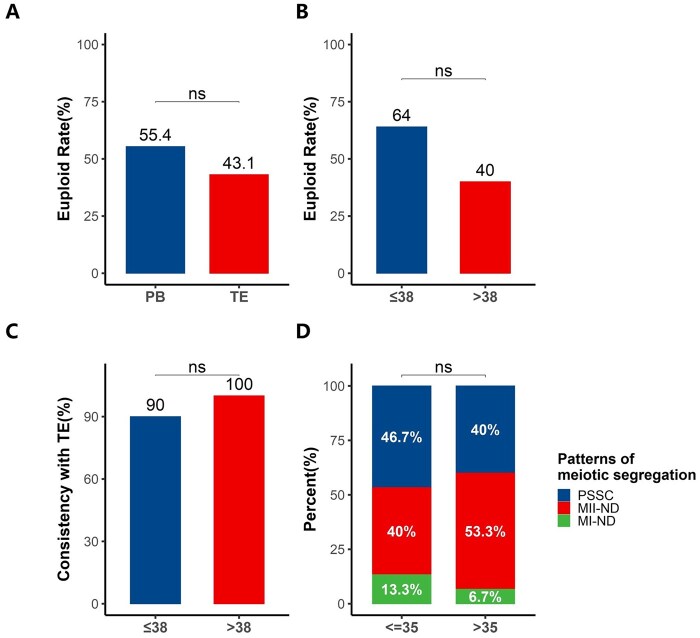 Figure 6
Peer Reviews
No public reviews on file for this paper yet. If you reviewed it on a platform where reviews are public (OpenReview, ICLR, NeurIPS, ICML), you can paste yours below so the community can read it here.
Videos
No videos yet. Explain this paper in a talk, walkthrough, or lecture? Add one.
Taxonomy
TopicsPrenatal Screening and Diagnostics · Genetic Syndromes and Imprinting · Genomic variations and chromosomal abnormalities