Environmental Enrichment Suppresses Food Seeking and Increases Inhibitory Interneuron Excitability While Decreasing Corticothalamic Neuronal Recruitment in the Prelimbic Cortex
Kate Z. Peters, Romarua Agbude, Oliver G. Steele, Nobuyoshi Suto, Eisuke Koya

TL;DR
Environmental enrichment reduces food cravings by boosting brain inhibitory cells and suppressing specific brain pathways linked to food cues.
Contribution
The study identifies cell-type and circuit-specific mechanisms by which environmental enrichment suppresses cue-evoked food seeking.
Findings
Environmental enrichment increases baseline excitability of inhibitory interneurons in the prelimbic cortex.
Environmental enrichment selectively suppresses recruitment of corticothalamic (PL → PVT) neurons during cue-evoked food seeking.
Environmental enrichment does not affect corticoaccumbens (PL → NAc) projections during cue exposure.
Abstract
Cues such as fast‐food advertisements associated with food can provoke food cravings which may lead to unhealthy overeating. To effectively control such cravings, we need to better understand the factors that reduce food cue reactivity and reveal corresponding ‘anti‐craving’ brain mechanisms. We previously reported that access to environmental enrichment (EE), that provides cognitive and physical stimulation in mice, reduced cue‐evoked sucrose seeking and prelimbic cortex (PL) neuronal reactivity. To date, the phenotype of PL neurons that undergo EE‐induced adaptations has not been fully elucidated. Therefore, we used brain slice electrophysiology to investigate how EE modulated intrinsic excitability in the general population of PL interneurons and pyramidal cells. Additionally, we used retrograde tracing and the neuronal activity marker ‘Fos’ to investigate how EE modulated…
Genes, proteins, chemicals, diseases, species, mutations and cell lines named across the full text — each resolved to its canonical identifier and authoritative record.
Click any figure to enlarge with its caption.
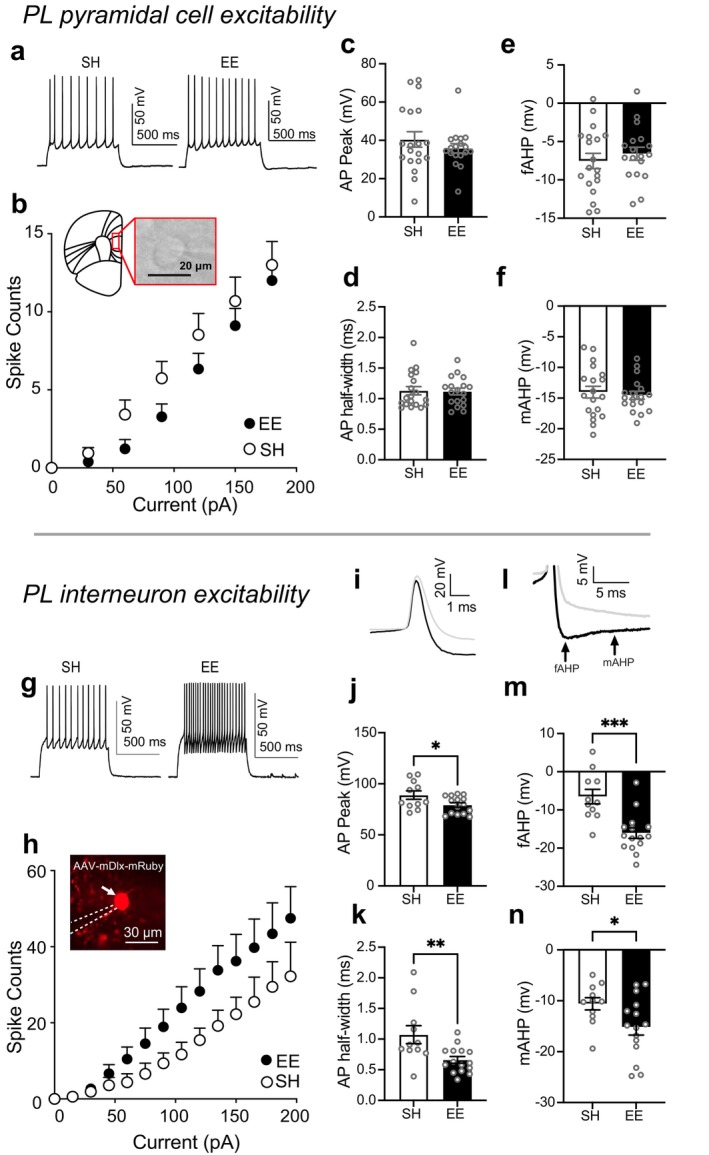 Figure 1
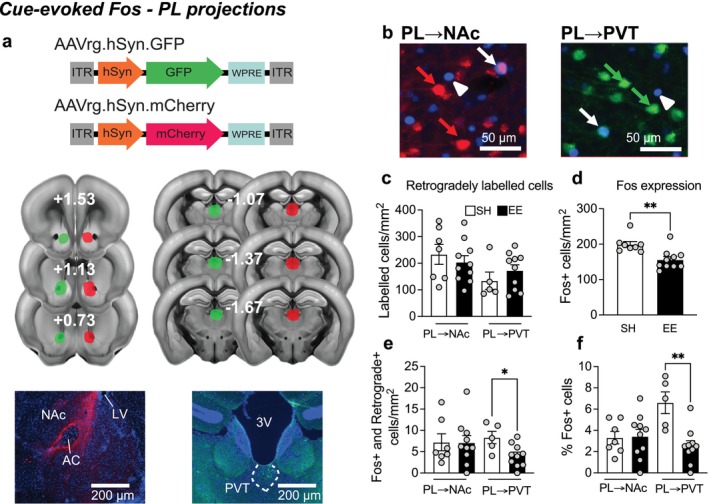 Figure 2
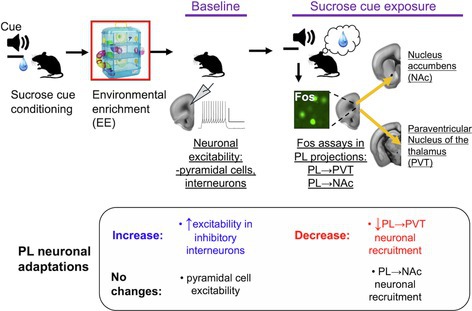 Figure 3
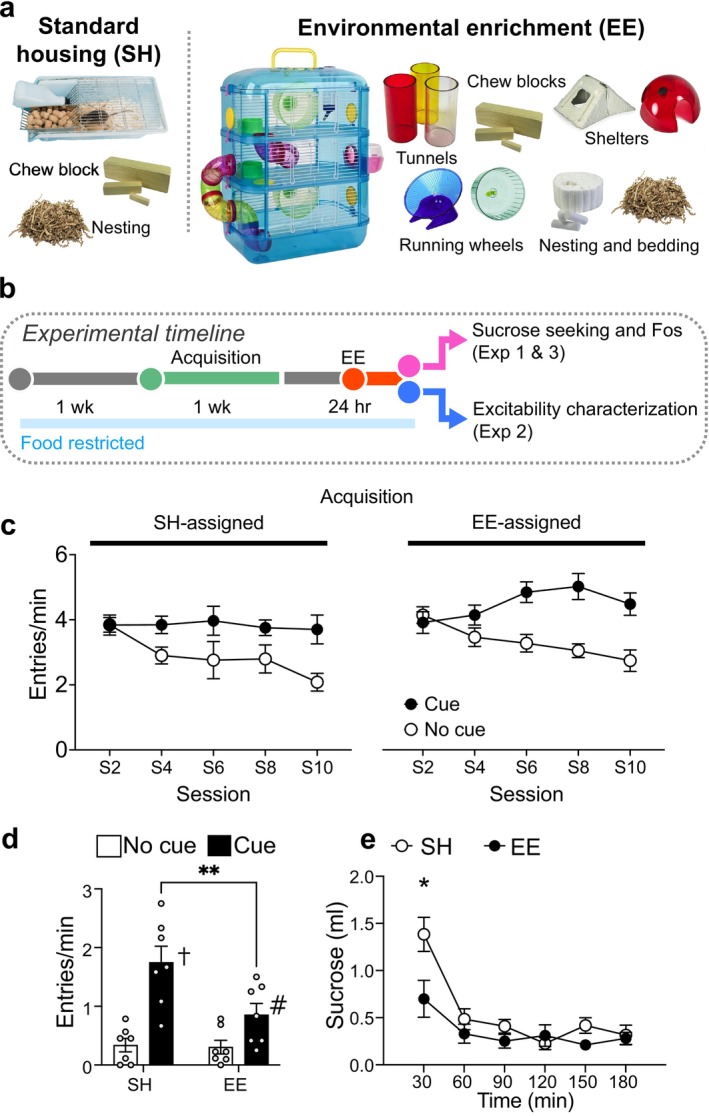 Figure 4
Peer Reviews
No public reviews on file for this paper yet. If you reviewed it on a platform where reviews are public (OpenReview, ICLR, NeurIPS, ICML), you can paste yours below so the community can read it here.
Videos
No videos yet. Explain this paper in a talk, walkthrough, or lecture? Add one.
Taxonomy
TopicsStress Responses and Cortisol · Regulation of Appetite and Obesity · Neuroendocrine regulation and behavior