Neither measurement error nor speed–accuracy trade-offs explain the difficulty of establishing attentional control as a psychometric construct: Evidence from a latent-variable analysis using diffusion modeling
Alodie Rey-Mermet, Henrik Singmann, Klaus Oberauer

TL;DR
This study finds that attentional control cannot be reliably measured as a single psychological trait, even when accounting for common measurement issues.
Contribution
The paper introduces a novel method combining diffusion modeling and structural equation modeling to rigorously test attentional control as a psychometric construct.
Findings
Measures of attentional control did not correlate with each other.
Attentional control measures failed to load onto a latent variable.
The difficulty of establishing attentional control as a psychometric construct remains unresolved.
Abstract
Attentional control refers to the ability to maintain and implement a goal and goal-relevant information when facing distraction. Previous research has failed to substantiate strong evidence for a psychometric construct of attentional control. This could result from two methodological shortcomings: (a) the neglect of individual differences in speed–accuracy trade-offs when only speed or accuracy is used as dependent variable, and (b) the difficulty of isolating attentional control from measurement error. To overcome both issues, we combined hierarchical Bayesian Wiener diffusion modeling with structural equation modeling. We reanalyzed six datasets that included data from three to eight attentional-control tasks, and data from young and older adults. Overall, the results showed that measures of attentional control failed to correlate with each other and failed to load on a latent…
Genes, proteins, chemicals, diseases, species, mutations and cell lines named across the full text — each resolved to its canonical identifier and authoritative record.
Click any figure to enlarge with its caption.
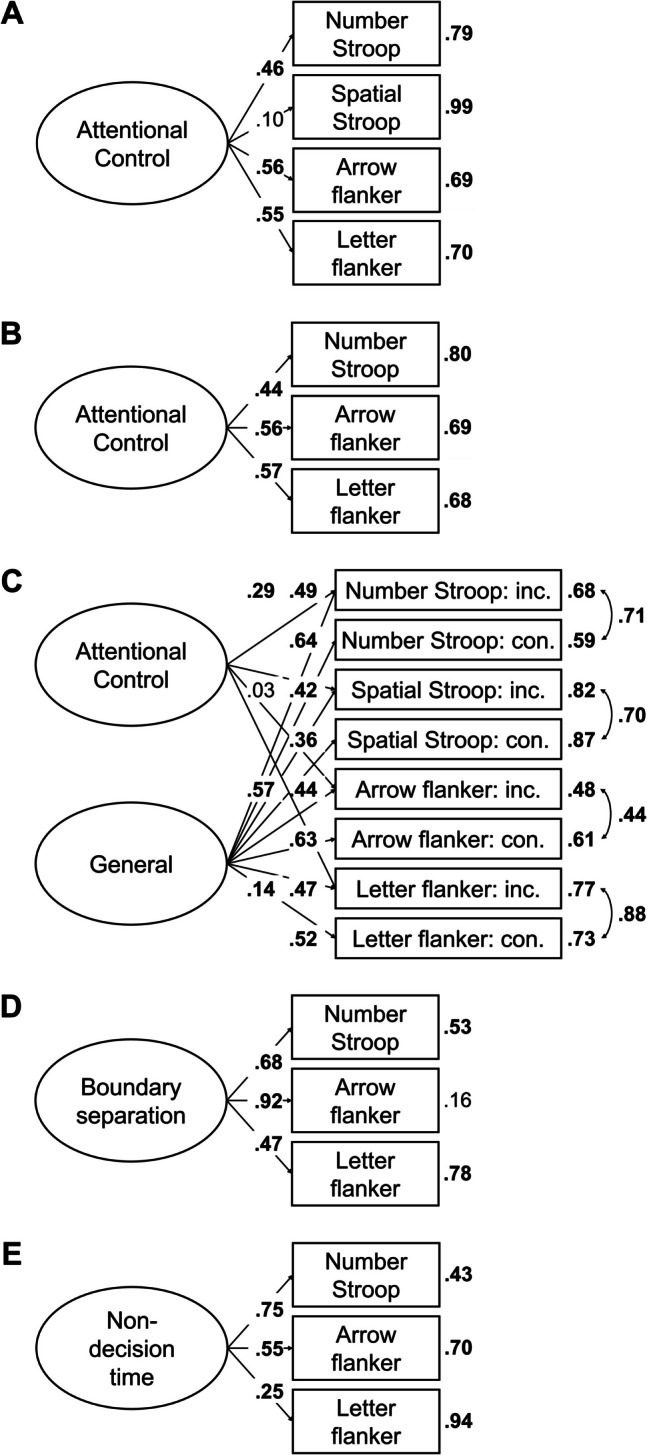 Figure 10
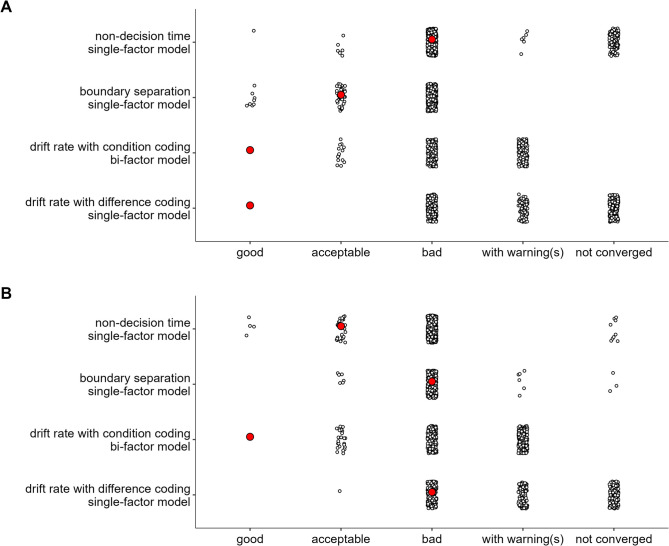 Figure 11
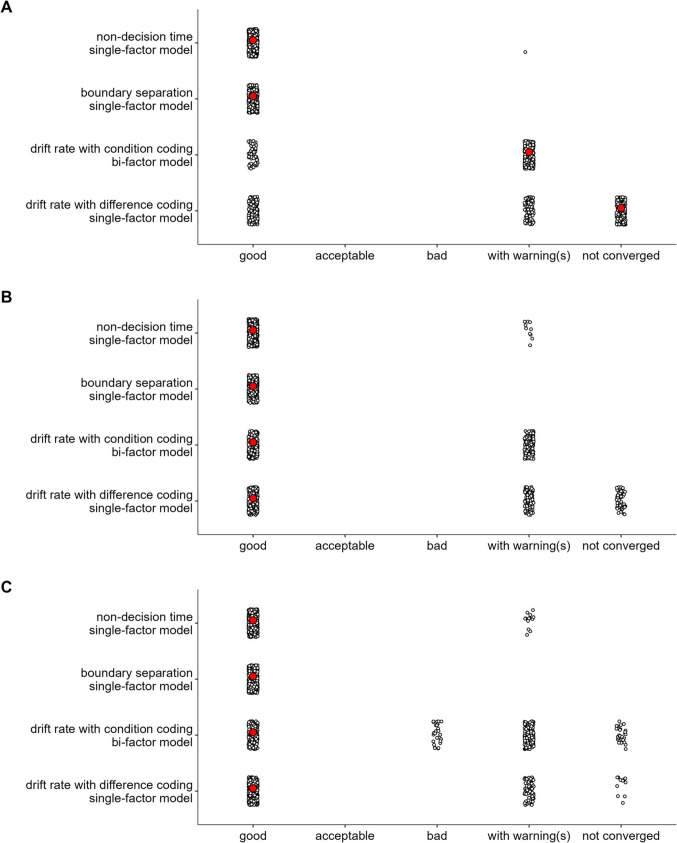 Figure 12
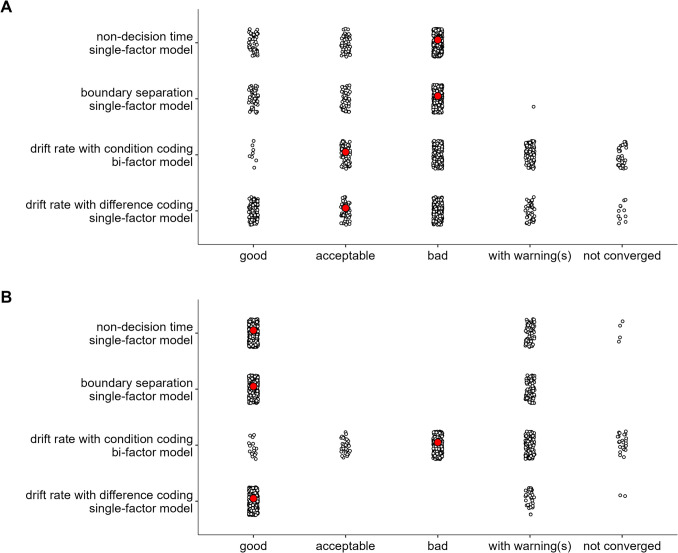 Figure 13
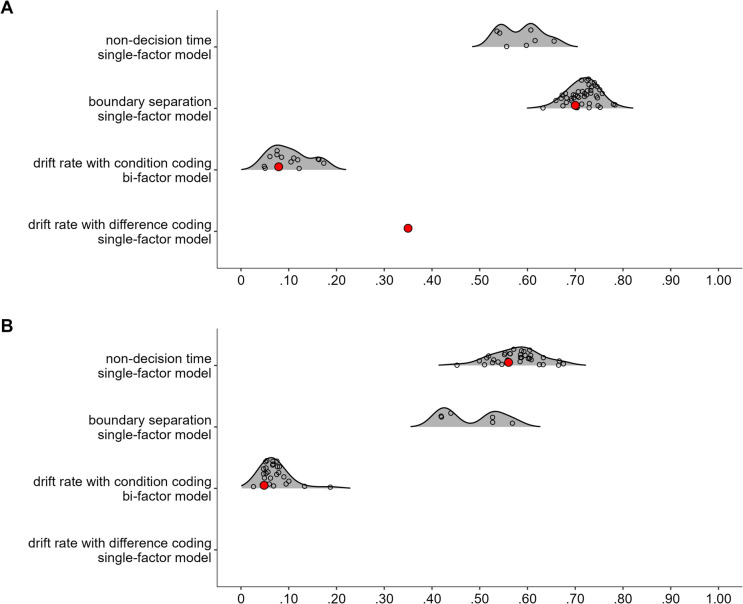 Figure 14
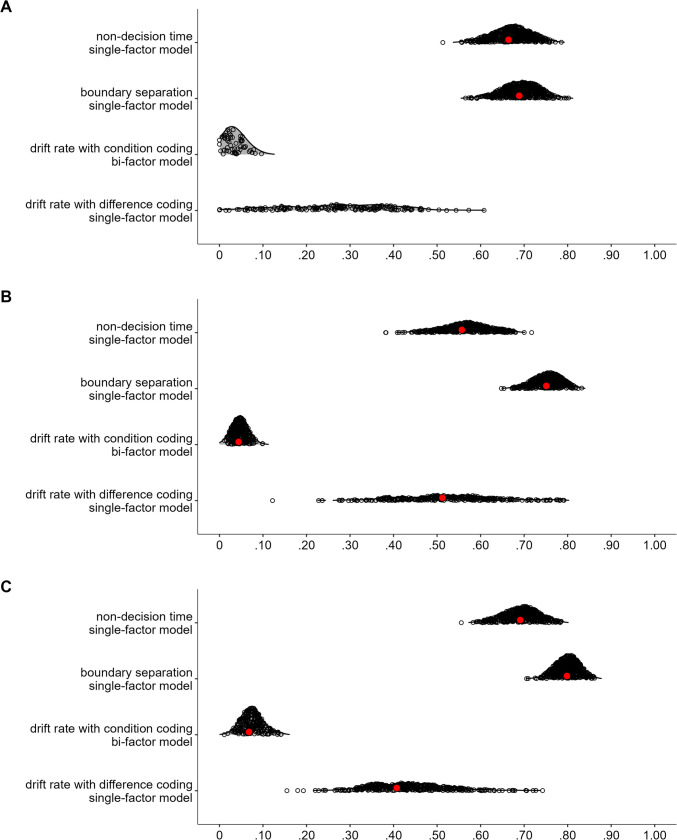 Figure 15
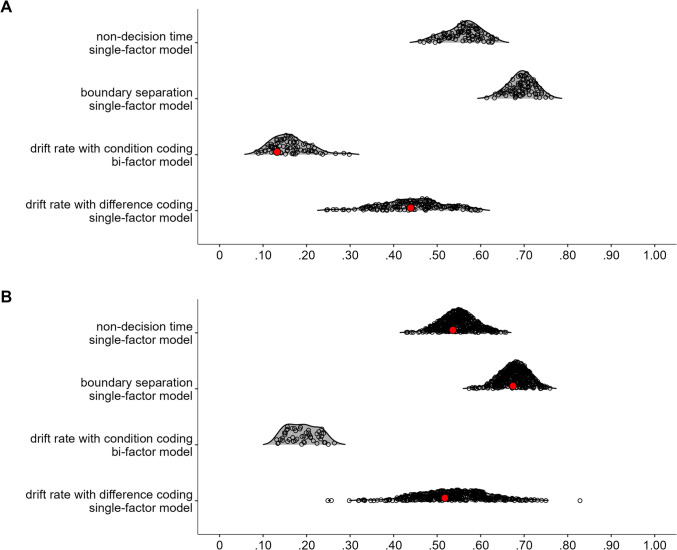 Figure 16
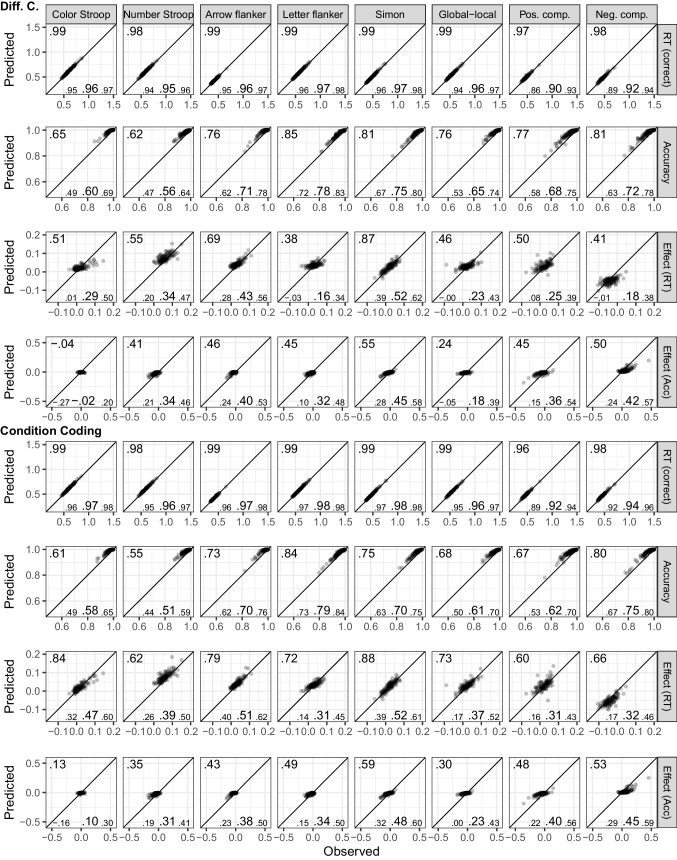 Figure 1
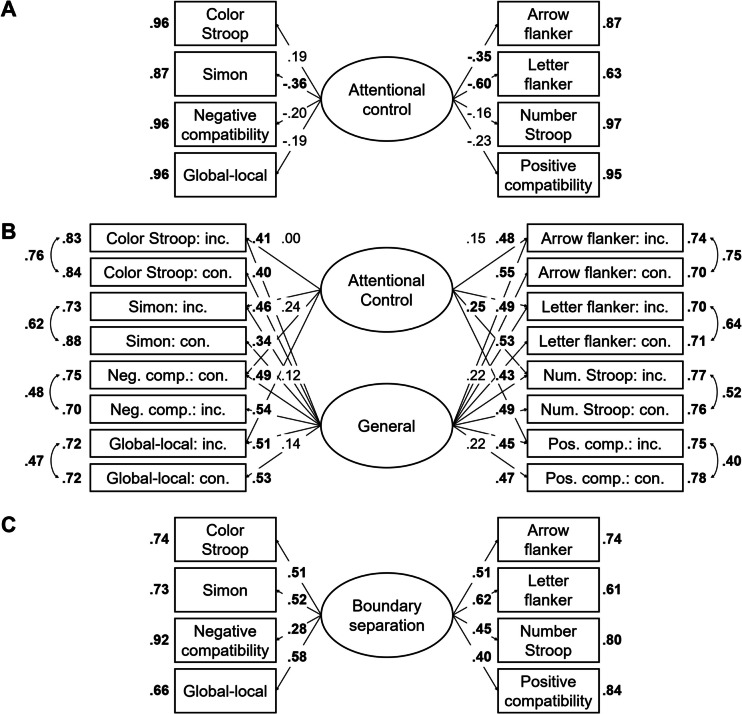 Figure 2
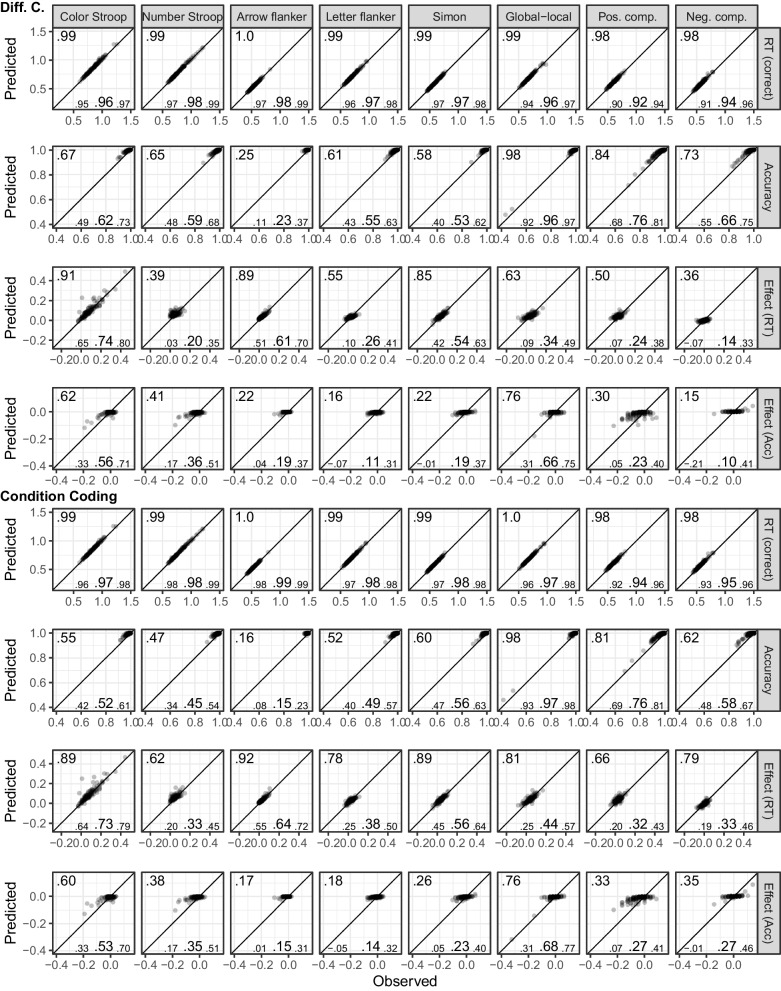 Figure 3
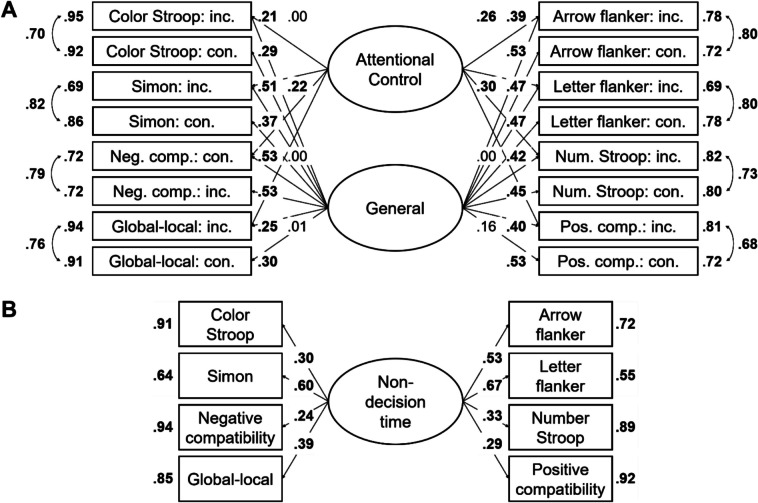 Figure 4
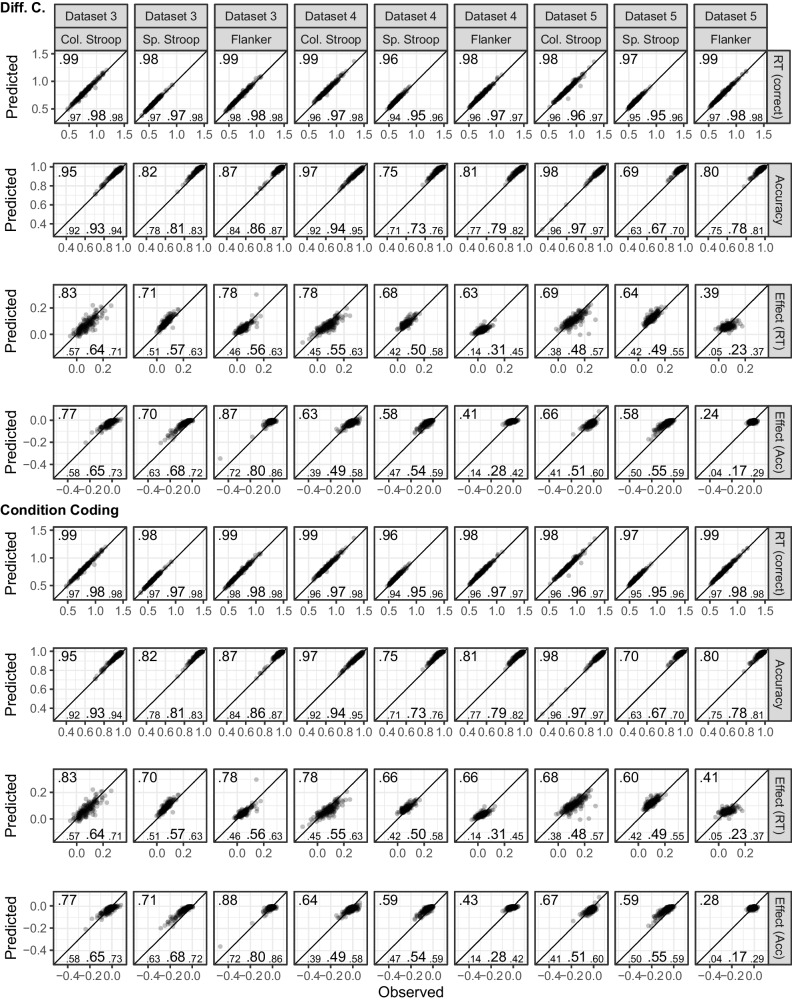 Figure 5
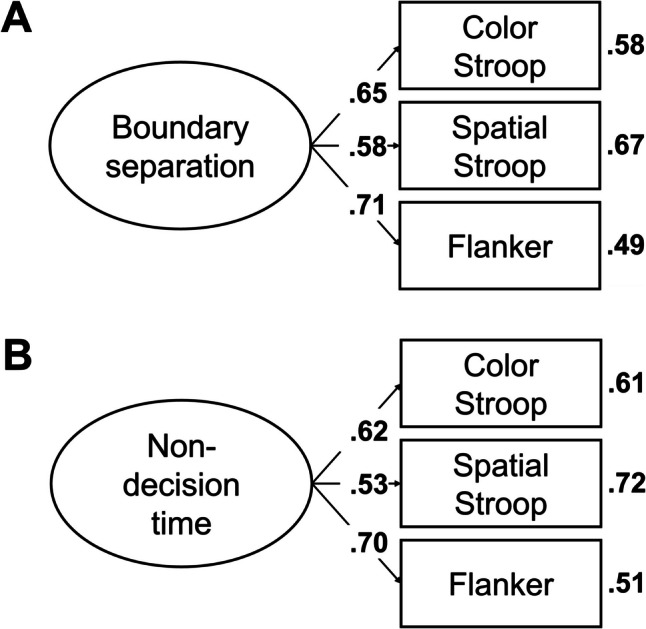 Figure 6
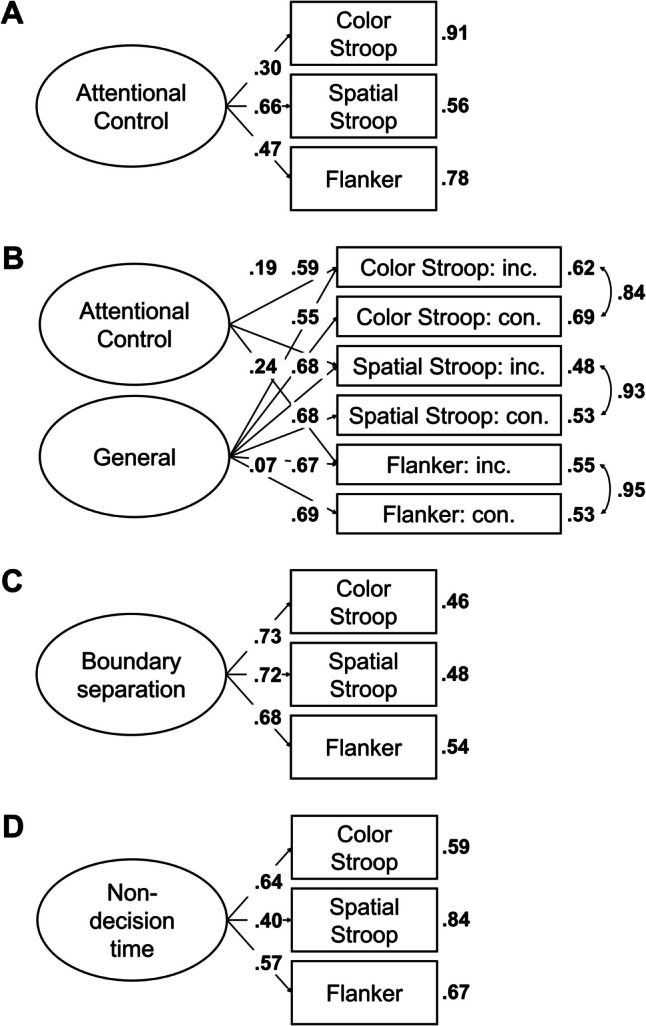 Figure 7
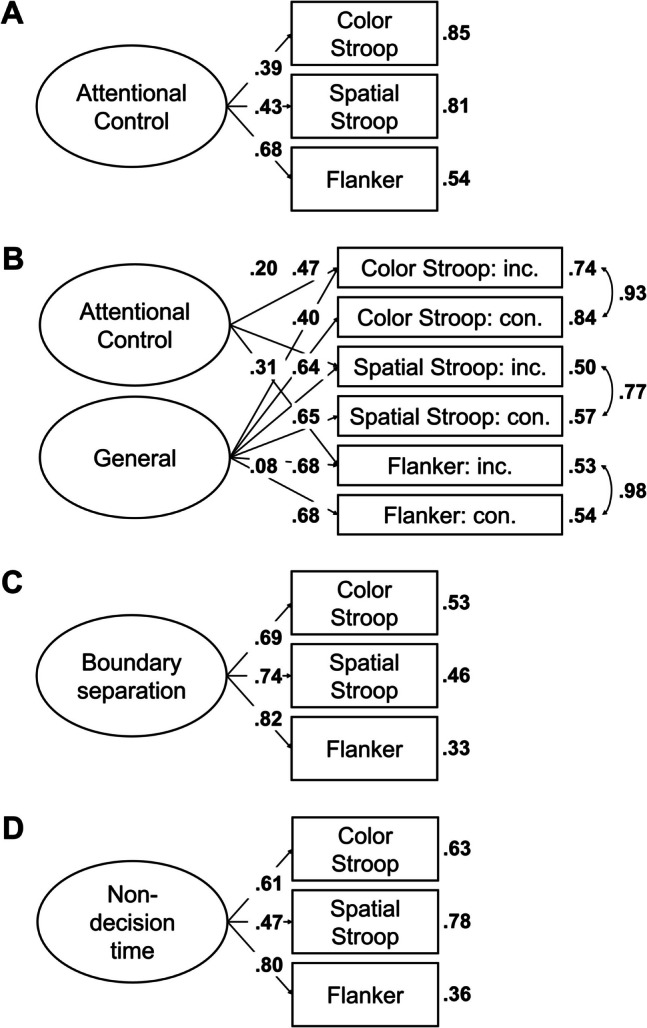 Figure 8
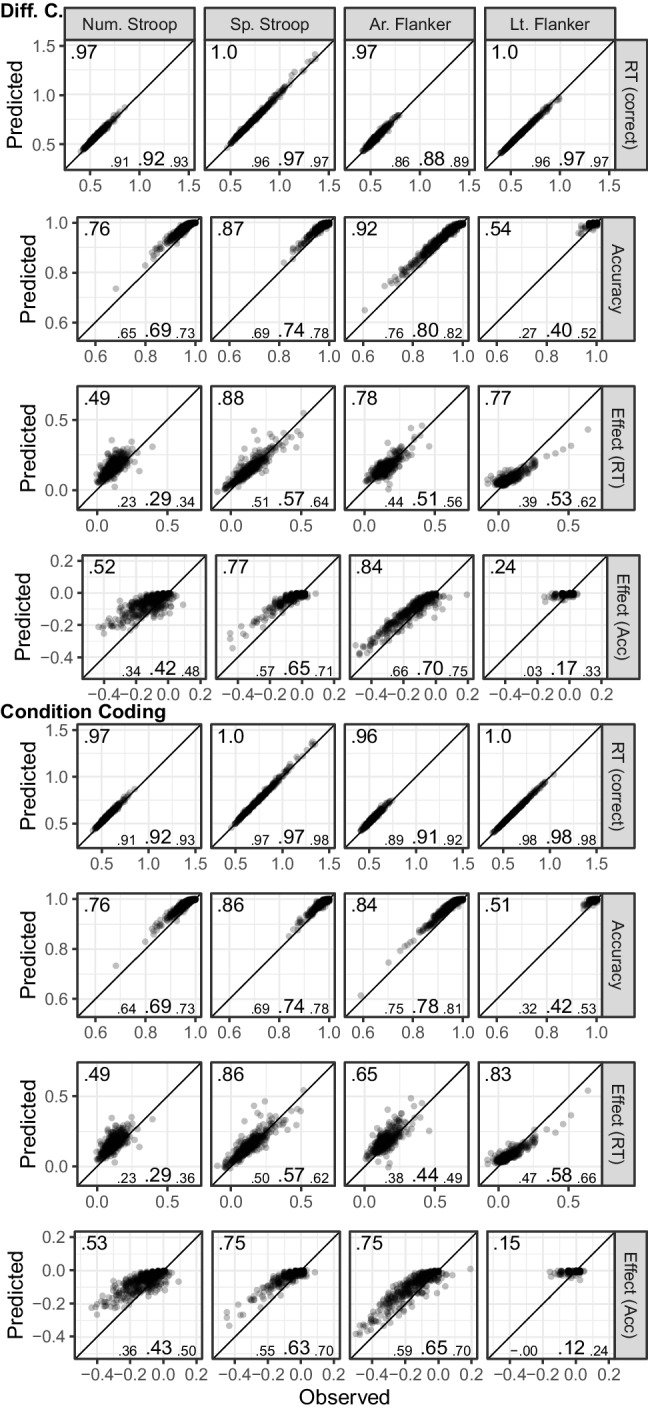 Figure 9
Peer Reviews
No public reviews on file for this paper yet. If you reviewed it on a platform where reviews are public (OpenReview, ICLR, NeurIPS, ICML), you can paste yours below so the community can read it here.
Videos
No videos yet. Explain this paper in a talk, walkthrough, or lecture? Add one.
Taxonomy
TopicsMental Health Research Topics · Functional Brain Connectivity Studies · Neural and Behavioral Psychology Studies