Case Report: Effective use of eculizumab in treating recurrent atypical HUS following renal transplantation triggered by SARS-CoV-2 infection
Zhe Yang, Dongdong Chen, Xiaoyu Xu, Xiaoqing Yang, Wenzhi Du, Minrui Zhang, Xianduo Li, Jianning Wang

TL;DR
A kidney transplant patient developed a rare disease triggered by a virus and was successfully treated with a drug called eculizumab.
Contribution
This case report demonstrates the successful treatment of SARS-CoV-2-triggered recurrent aHUS with eculizumab in a kidney transplant recipient.
Findings
The patient showed significant clinical improvement after eculizumab therapy, including stabilized blood pressure and normalized lab values.
Genetic analysis identified mutations in complement-related genes CFHR and C3.
The case suggests that SARS-CoV-2 infection can trigger aHUS recurrence in transplant patients.
Abstract
Atypical hemolytic uremic syndrome (aHUS) is a severe post-transplant complication associated with a high risk of graft loss and mortality. Based on its pathophysiological mechanism, aHUS can be classified into recurrent aHUS (reactivation post-transplantation) and de novo aHUS (new-onset disease after transplantation). This study reports a case of a 52-year-old kidney transplant recipient who developed recurrent aHUS 10 months post-transplantation, triggered by SARS-CoV-2 infection. Genetic analysis revealed mutations in complement-related genes CFHR and C3. Following the diagnosis, the patient received a course of eculizumab induction therapy (900 mg/week for the first 4 weeks), followed by long-term maintenance therapy (900 mg every 2 weeks). Significant clinical improvement was observed, including stabilization of blood pressure, normalization of hemoglobin and lactate dehydrogenase…
Genes, proteins, chemicals, diseases, species, mutations and cell lines named across the full text — each resolved to its canonical identifier and authoritative record.
Click any figure to enlarge with its caption.
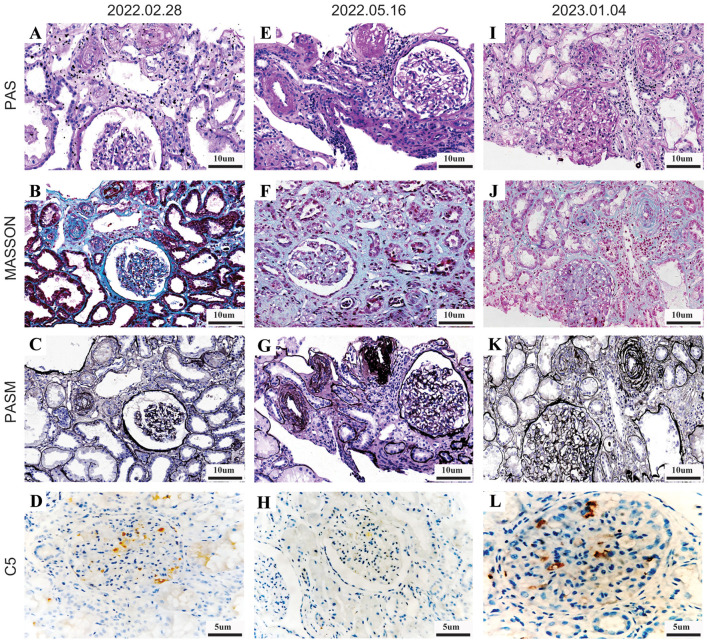 Figure 1
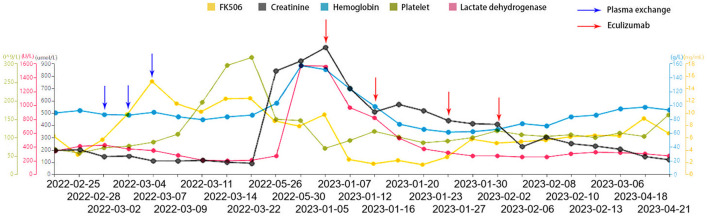 Figure 2
Peer Reviews
No public reviews on file for this paper yet. If you reviewed it on a platform where reviews are public (OpenReview, ICLR, NeurIPS, ICML), you can paste yours below so the community can read it here.
Videos
No videos yet. Explain this paper in a talk, walkthrough, or lecture? Add one.
Taxonomy
TopicsComplement system in diseases · Blood groups and transfusion · Escherichia coli research studies