Dynamic evolution of postoperative hemodynamics in moyamoya angiopathy: a quantitative assessment of 4D Flow MRI and prognostic relevance
Chao Xia, Mingzhu Fu, Rui Tian, Yutao Ren, Xu Xu, Jinge Zhang, Chunchao Xia, Chao You, Na Hu, Su Lui, Rui Li, Yi Liu

TL;DR
This study uses 4D Flow MRI to track blood flow changes in moyamoya angiopathy patients after surgery, showing how these changes relate to recovery and brain blood supply improvement.
Contribution
The study introduces 4D Flow MRI as a tool to assess long-term hemodynamic changes and their clinical relevance in moyamoya angiopathy patients.
Findings
Contralateral carotid siphon velocity increased significantly one week post-surgery.
Both carotid siphons showed reduced flow at one-year follow-up, correlating with improved cerebral perfusion and collateralization.
No hemodynamic changes were observed in patients with poor collateral development (Matsushima grade C).
Abstract
The hemodynamic mechanisms underlying revascularization efficacy in moyamoya angiopathy (MMA) and their prognostic implications remain incompletely characterized. This study leverages four-dimensional flow magnetic resonance imaging (4D Flow MRI) to investigate longitudinal hemodynamic changes at the carotid siphons of MMA patients undergoing revascularization, and to evaluate their association with surgical outcomes. A prospective cohort of 35 consecutive MMA patients undergoing unilateral revascularization was enrolled at West China Hospital from July 2018 to January 2020. Using 4D Flow MRI, hemodynamic parameters, including mean/maximum flow, velocity, and wall shear stress, were quantified in the ipsilateral and contralateral carotid siphons at three timepoints: baseline, 1-week postoperative, and 1-year follow-up. Repeated-measures analysis of variance with Bonferroni correction…
Genes, proteins, chemicals, diseases, species, mutations and cell lines named across the full text — each resolved to its canonical identifier and authoritative record.
Click any figure to enlarge with its caption.
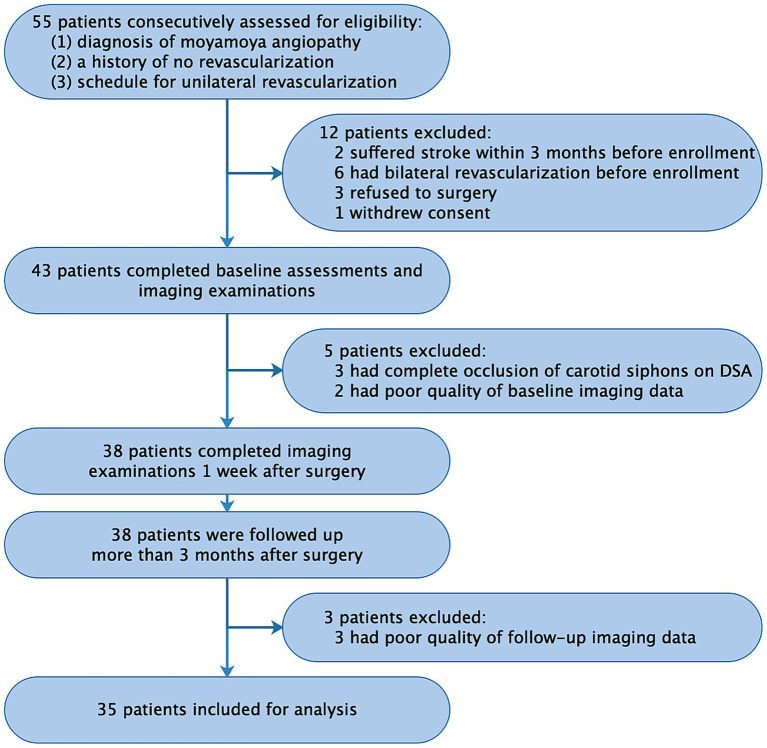 Figure 1
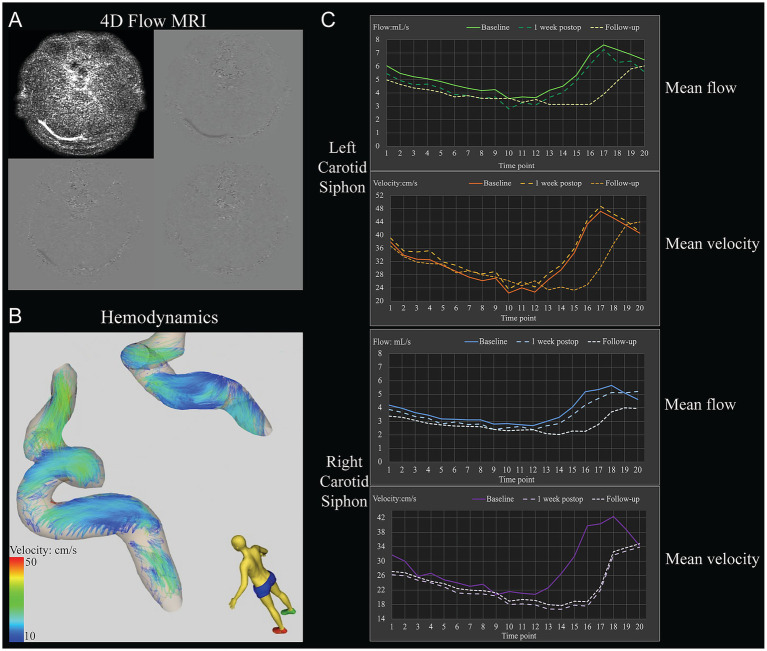 Figure 2
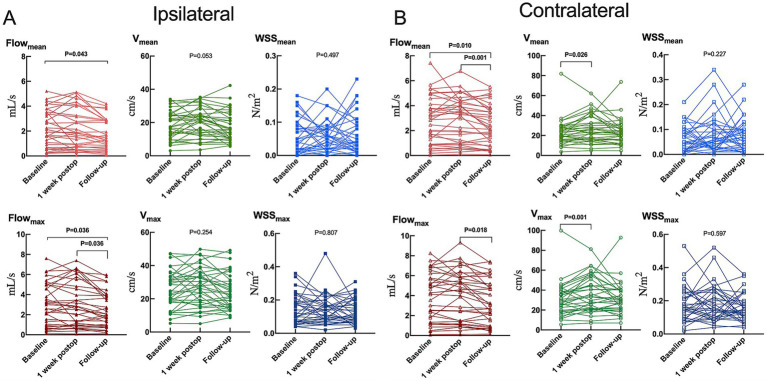 Figure 3
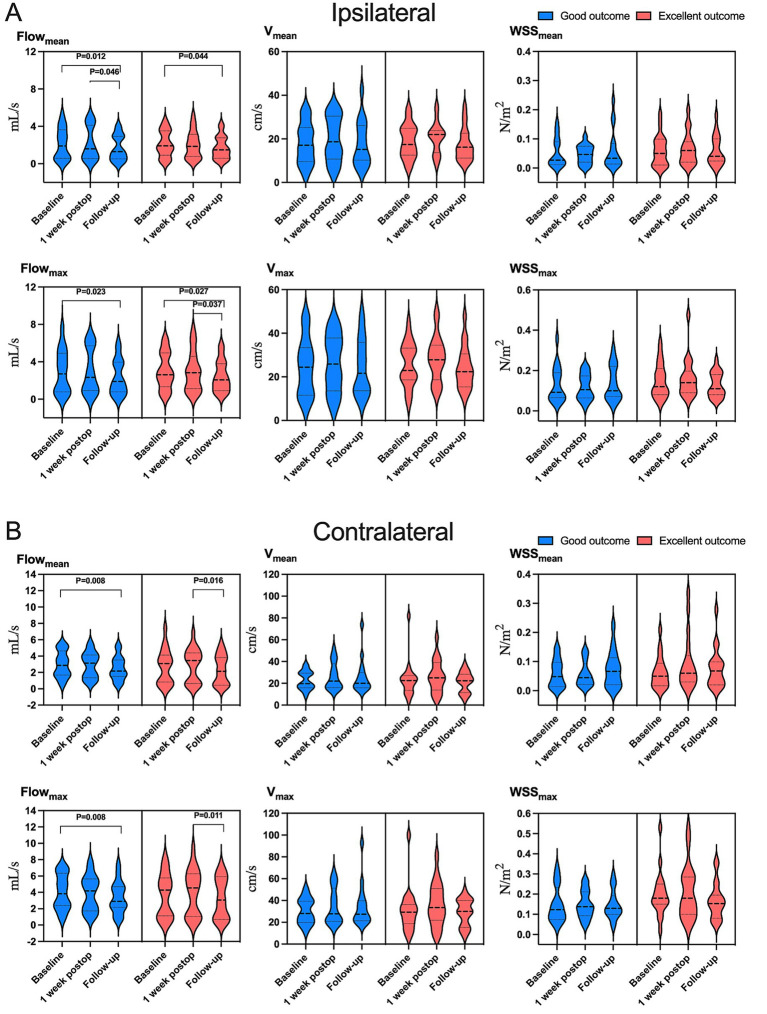 Figure 4
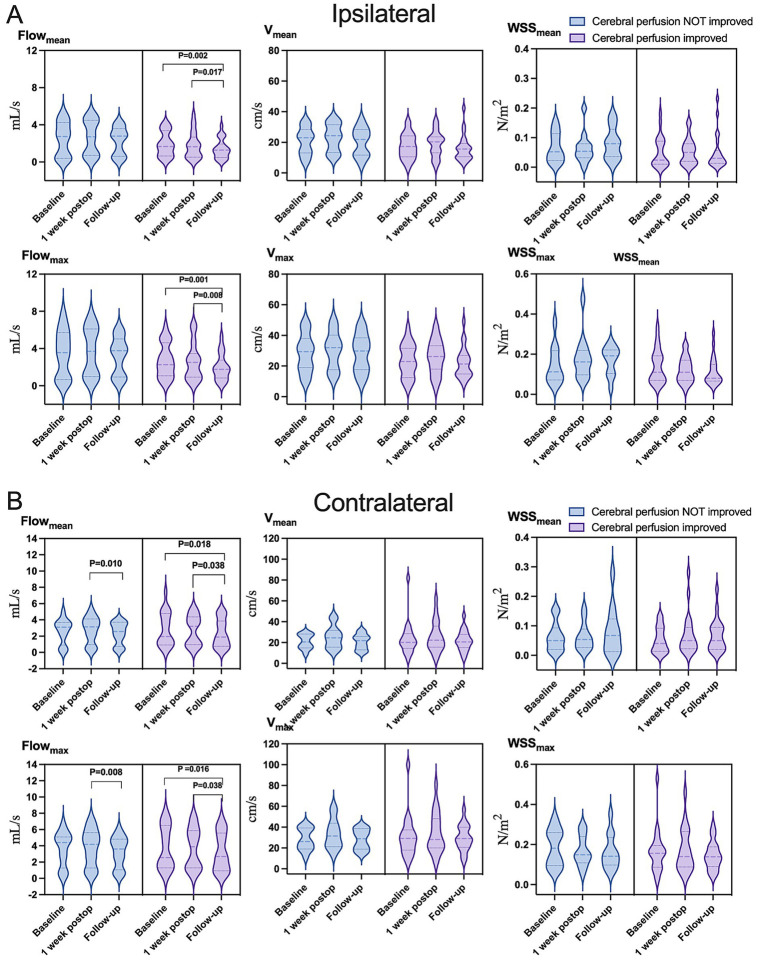 Figure 5
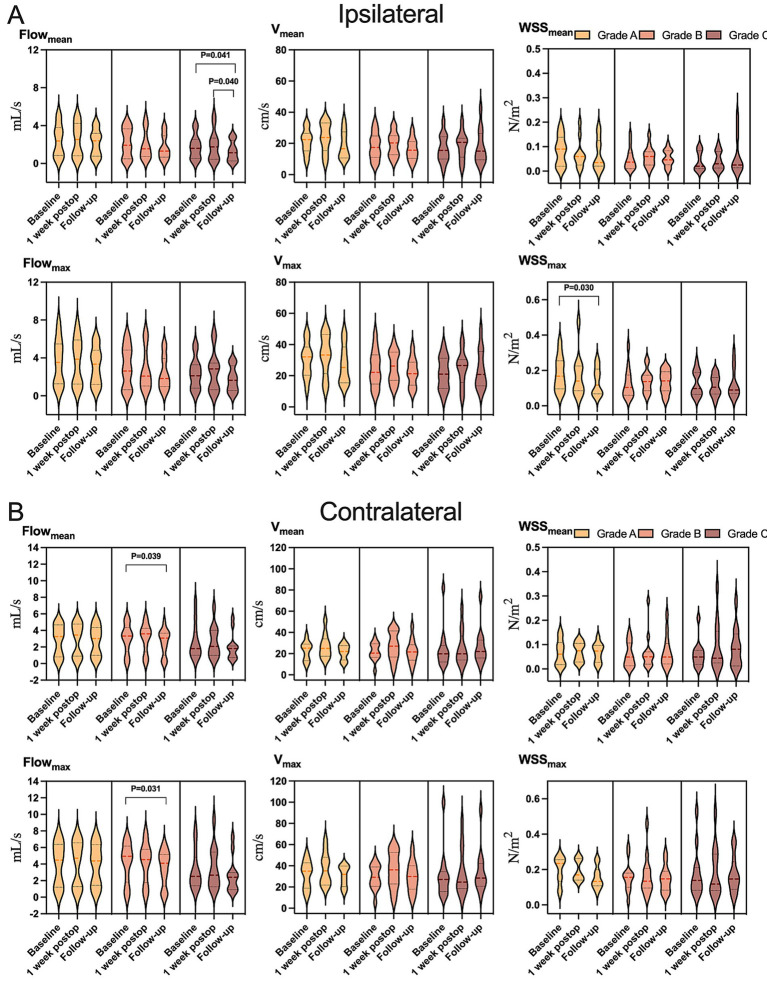 Figure 6
Peer Reviews
No public reviews on file for this paper yet. If you reviewed it on a platform where reviews are public (OpenReview, ICLR, NeurIPS, ICML), you can paste yours below so the community can read it here.
Videos
No videos yet. Explain this paper in a talk, walkthrough, or lecture? Add one.
Taxonomy
TopicsMoyamoya disease diagnosis and treatment · Vascular Malformations Diagnosis and Treatment · Intracranial Aneurysms: Treatment and Complications