Comparative analysis of laparoscopic and open enucleation for pediatric solid pseudopapillary neoplasm: a retrospective study
Xiaogang Zhou, Yi Sun, Jianlei Chen, Peng Cai, Haowei Zhao, Yuliang Jiang, Qi Wang, Menglei Zhu, Jie Zhu, Zhenwei Zhu

TL;DR
The study compares laparoscopic and open enucleation for treating pancreatic tumors in children, finding laparoscopic surgery reduces blood loss and pain without compromising safety.
Contribution
This is the first comparative study of laparoscopic enucleation for pediatric solid pseudopapillary neoplasm, highlighting its advantages over open surgery.
Findings
Laparoscopic enucleation reduced intraoperative blood loss and postoperative pain duration in pediatric SPN patients.
Operative time, hospital stay, and pancreatic fistula incidence were similar between laparoscopic and open enucleation.
No tumor recurrence or pancreatic dysfunction occurred in either group, indicating comparable safety.
Abstract
This study compares the efficacy and safety of laparoscopic enucleation (LEN) vs. open enucleation (OEN) for pediatric solid pseudopapillary neoplasm (SPN) of the pancreas, aiming to provide clinical evidence for optimizing treatment strategies. A retrospective analysis evaluated clinical data from 20 pediatric SPN patients undergoing enucleation at the Children's Hospital of Soochow University, with 9 in the LEN group and 11 in the OEN group. Data included baseline characteristics, intraoperative parameters, postoperative outcomes, and complications. Baseline characteristics were comparable between groups (p > 0.05), with a median age of 11 years, and 75.0% female patients. The LEN group exhibited significantly reduced intraoperative blood loss (50.00 mL vs. 90.00 mL, p = 0.029) and postoperative pain duration (3.00 days vs. 5.00 days, p = 0.037) compared to the OEN group. No…
Genes, proteins, chemicals, diseases, species, mutations and cell lines named across the full text — each resolved to its canonical identifier and authoritative record.
Click any figure to enlarge with its caption.
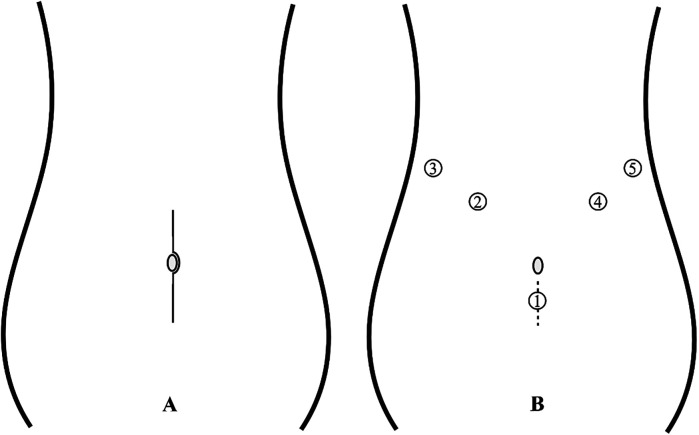 Figure 1
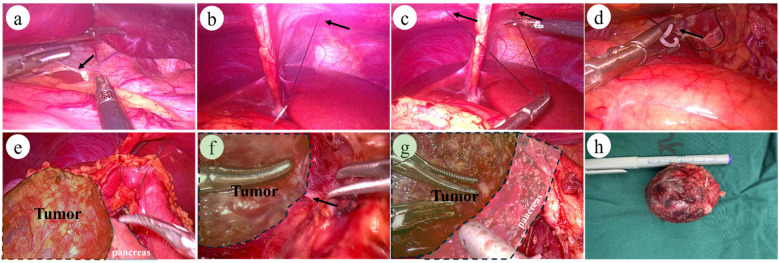 Figure 2
Peer Reviews
No public reviews on file for this paper yet. If you reviewed it on a platform where reviews are public (OpenReview, ICLR, NeurIPS, ICML), you can paste yours below so the community can read it here.
Videos
No videos yet. Explain this paper in a talk, walkthrough, or lecture? Add one.
Taxonomy
TopicsBreast Lesions and Carcinomas · Nasolacrimal Duct Obstruction Treatments · Head and Neck Surgical Oncology