Phosphoprofile reorganization of the actin binding protein Drebrin during long term depression
Rafaela Pedro Silva, Till G. A. Mack, Marieluise Kirchner, Philipp Mertins, Britta J. Eickholt, Patricia Kreis

TL;DR
This paper shows how the actin-binding protein Drebrin is regulated by phosphorylation during synaptic weakening, suggesting a role in brain plasticity.
Contribution
The study reveals phosphorylation changes and proteolytic cleavage of Drebrin during chemically induced long-term depression.
Findings
Drebrin undergoes rapid phosphorylation changes after cLTD induction.
Phosphorylation decreases are accompanied by proteolytic cleavage of Drebrin.
These changes suggest a regulated mechanism linking post-translational modification to synaptic remodeling.
Abstract
Drebrin (DBN), an actin-binding protein critical for the structural integrity and function of dendritic spines, is highly phosphorylated at steady state in neurons. Here, we investigate the phosphorylation dynamics of DBN in the context of chemically induced long-term depression (cLTD), a synaptic plasticity model mimicking activity-dependent weakening of synapses. Using biochemical analyses and mass spectrometry analyses, we show that DBN undergoes rapid and robust changes in phosphorylation following cLTD induction. Notably, cLTD triggers a marked decrease in many DBN phosphorylation sites, accompanied by proteolytic cleavage of the protein, suggesting a tightly regulated mechanism linking post-translational modification to structural remodelling of the synapse. Our findings highlight the dynamic regulation of DBN by phosphorylation during synaptic depression and support its potential…
Genes, proteins, chemicals, diseases, species, mutations and cell lines named across the full text — each resolved to its canonical identifier and authoritative record.
Click any figure to enlarge with its caption.
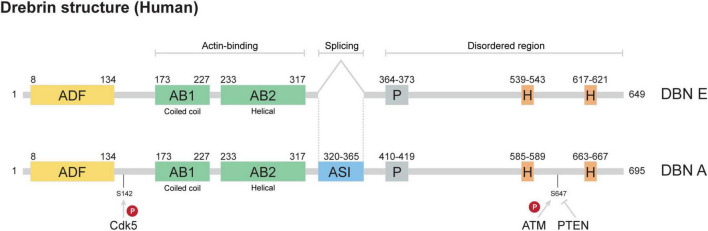 Figure 1
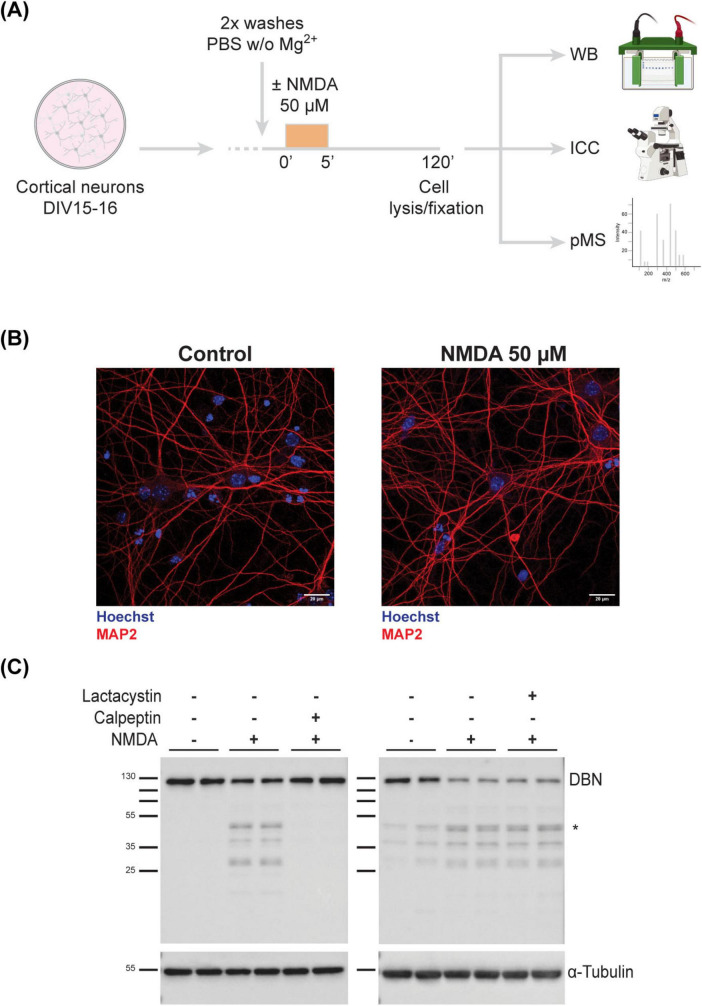 Figure 2
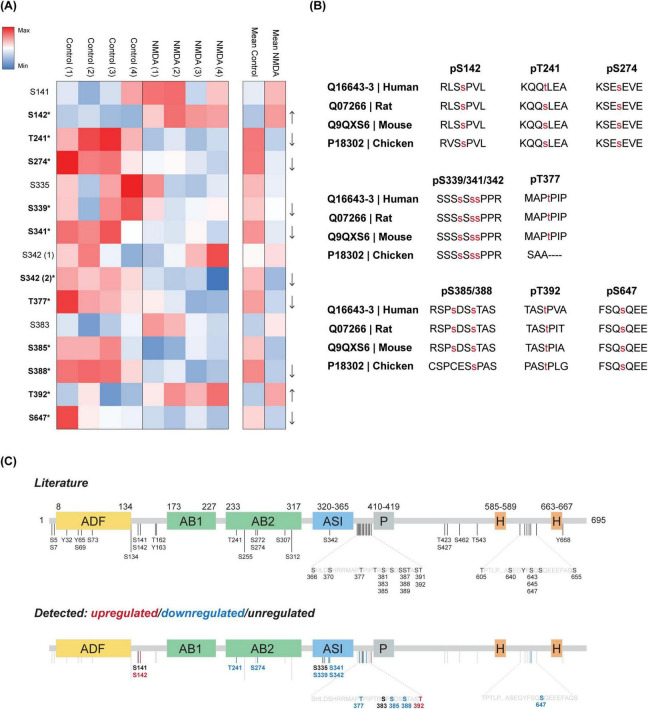 Figure 3
Peer Reviews
No public reviews on file for this paper yet. If you reviewed it on a platform where reviews are public (OpenReview, ICLR, NeurIPS, ICML), you can paste yours below so the community can read it here.
Videos
No videos yet. Explain this paper in a talk, walkthrough, or lecture? Add one.
Taxonomy
TopicsNeuroscience and Neuropharmacology Research · Cellular Mechanics and Interactions · Alzheimer's disease research and treatments