Short-term outcomes associated with fluoxetine, low-frequency rTMS, and their combination in first-onset adolescent OCD: a single-center retrospective cohort
Zhenzhen Yang, Chunfeng Hu, Huan Wang, Tao Yang, Haixia Wang, Meng Jiang

TL;DR
This study compared the short-term effects of fluoxetine, low-frequency rTMS, and their combination in treating obsessive-compulsive disorder in adolescents.
Contribution
The study provides new evidence that combined fluoxetine and LF-rTMS may improve OCD symptoms and cognitive function more effectively than monotherapies.
Findings
Combined treatment showed the highest response rate (85%) compared to fluoxetine (63.64%) and LF-rTMS alone (34.38%).
Combined treatment also led to greater cognitive improvements and favorable neural changes compared to monotherapies.
No significant differences in adverse reactions were found among the treatment groups.
Abstract
This study aimed to compare the short-term clinical outcomes of low-frequency repetitive transcranial magnetic stimulation (LF-rTMS), fluoxetine, and their combination in adolescents with first-onset obsessive-compulsive disorder (OCD) using a single-center retrospective, non-randomized design. A single-center retrospective, non-randomized analysis was conducted on 167 adolescents (aged 12–18 years) diagnosed with obsessive-compulsive disorder (OCD) and treated at Dazhuang Hospital, Shandong Province, between January 2018 and June 2024. Based on treatment received, patients were categorized into three observational groups: LF-rTMS alone (n=32), fluoxetine alone (n=55), and combined fluoxetine plus LF-rTMS (n=80). LF-rTMS was delivered at 1 Hz over the right supplementary motor area (SMA), 20 sessions in total. Clinical outcomes were assessed using the Yale-Brown Obsessive-Compulsive…
Genes, proteins, chemicals, diseases, species, mutations and cell lines named across the full text — each resolved to its canonical identifier and authoritative record.
Click any figure to enlarge with its caption.
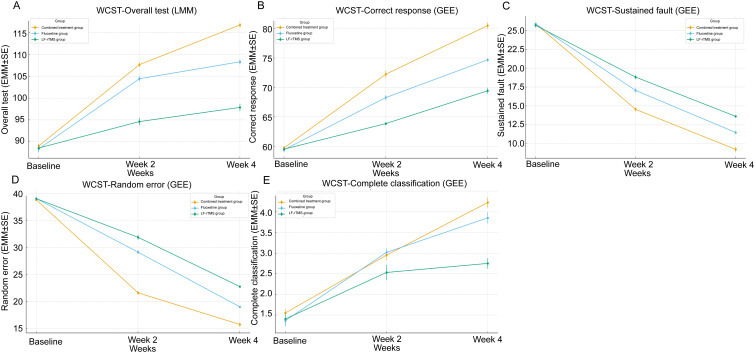 Figure 1
Peer Reviews
No public reviews on file for this paper yet. If you reviewed it on a platform where reviews are public (OpenReview, ICLR, NeurIPS, ICML), you can paste yours below so the community can read it here.
Videos
No videos yet. Explain this paper in a talk, walkthrough, or lecture? Add one.
Taxonomy
TopicsObsessive-Compulsive Spectrum Disorders · Transcranial Magnetic Stimulation Studies · Sexual function and dysfunction studies