Mylabris: a review of its biological characteristics, chemical composition, pharmacological, toxicology, pharmacokinetics, and marketed drugs
Qingqing Cai, Jing Yan, Xinghong Li, Lihua He, Shan Xie, Yaxin Yang, Hongwei Wu, Fangbo Zhang

TL;DR
This paper reviews Mylabris, a traditional Chinese medicine derived from blister beetles, covering its biology, chemistry, effects, toxicity, and drug development.
Contribution
The first comprehensive review of Mylabris, summarizing its biological, chemical, pharmacological, and toxicological aspects.
Findings
Mylabris contains terpenoids, fatty acids, peptides, and metallic elements, with cantharidin as the main active and toxic component.
Pharmacological studies show anticancer, antithrombotic, and antiviral effects, but improper use causes gastrointestinal and cardiovascular toxicity.
Orally administered cantharidin accumulates in the liver and kidneys, with low bioavailability and strong irritancy.
Abstract
Mylabris (“斑蝥’’), derived from the dried bodies of the Chinese blister beetles Mylabris phalerata Pallas and Mylabris cichorii Linnaeus, which has the effect of breaking blood and chasing blood stasis (“破血逐瘀”), dispersing knots and eliminating symptoms (“散结消癥”), and attacking poison and eroding sores (“攻毒蚀疮”). This review provides the firstly comprehensive summary of mylabris, covering its biological characteristics, chemical composition, pharmacological, toxicology, pharmacokinetics, and clinical use. A systematic literature search was conducted in databases (“Web of Science”, “PubMed”, “Google Scholar”, “CNKI”, and “WanFang”) using the following query (“Mylabris phalerata Pallas” OR “Mylabris cichorii Linnaeus” OR “Mylabris” OR “Banmao” OR “Cantharidin”) AND (“Pharmacology” OR “Toxicity” OR “Pharmacokinetics” OR “Marketed drugs”), to identify literature published between 2000 and…
Genes, proteins, chemicals, diseases, species, mutations and cell lines named across the full text — each resolved to its canonical identifier and authoritative record.
Click any figure to enlarge with its caption.
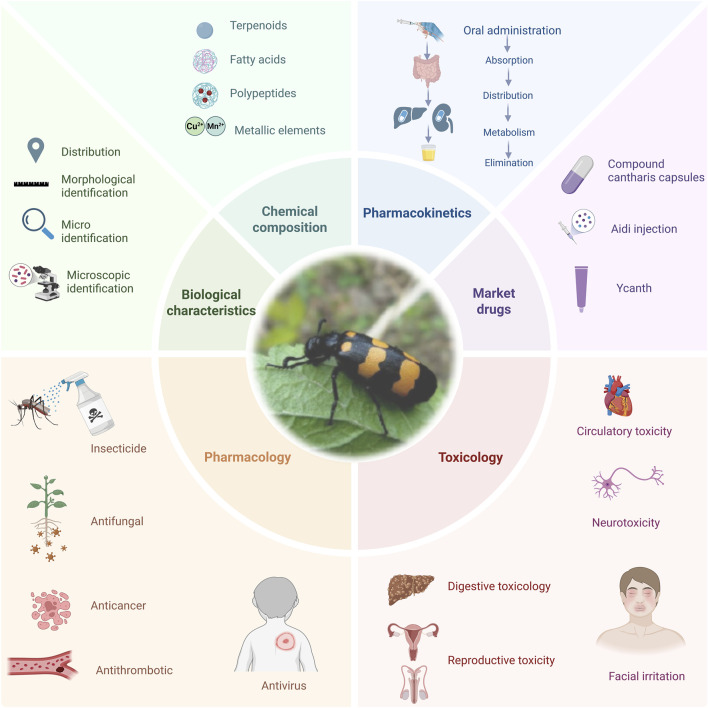 Figure 1
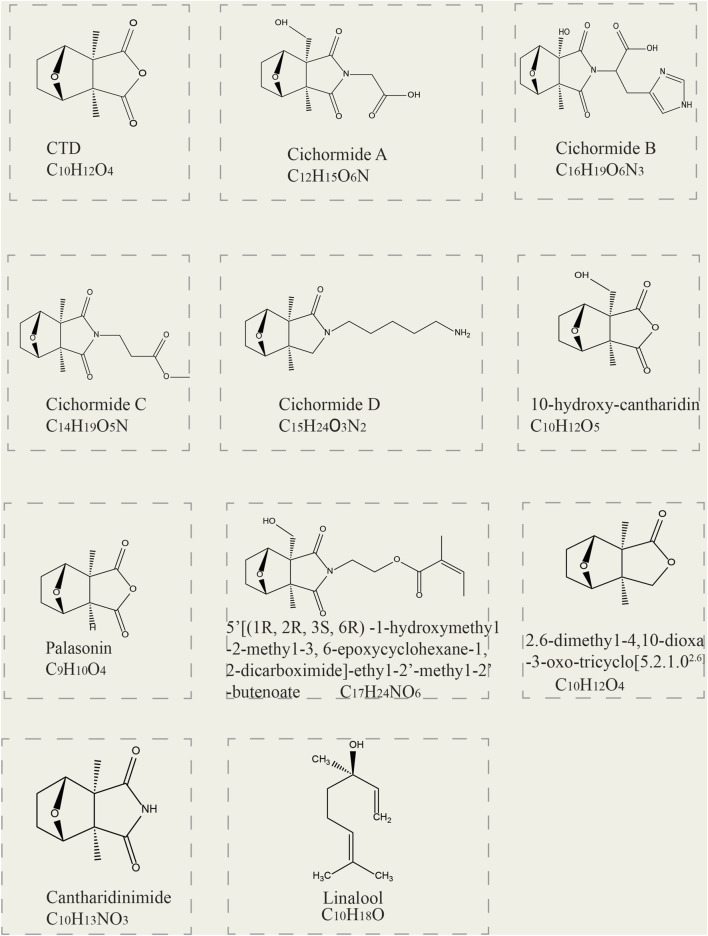 Figure 2
 Figure 3
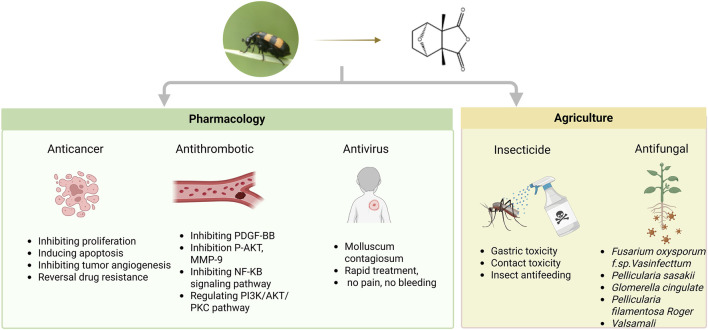 Figure 4
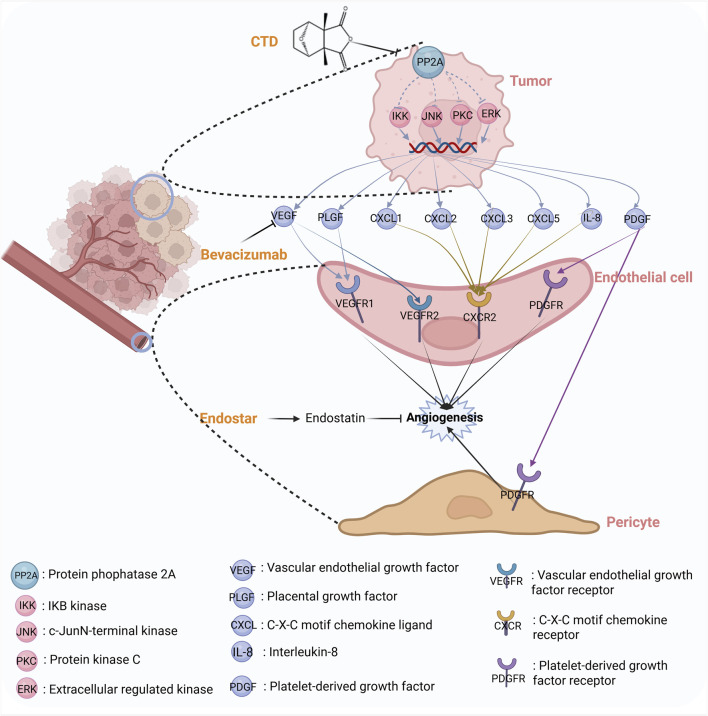 Figure 5
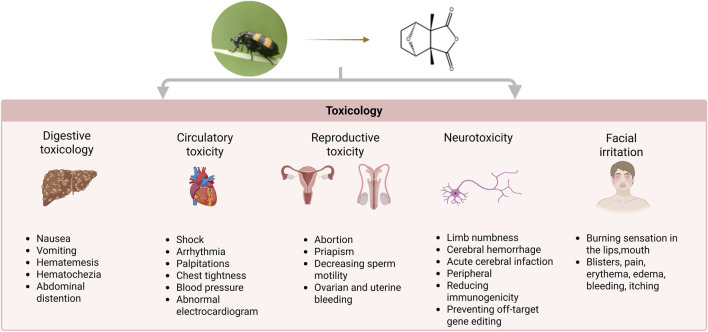 Figure 6
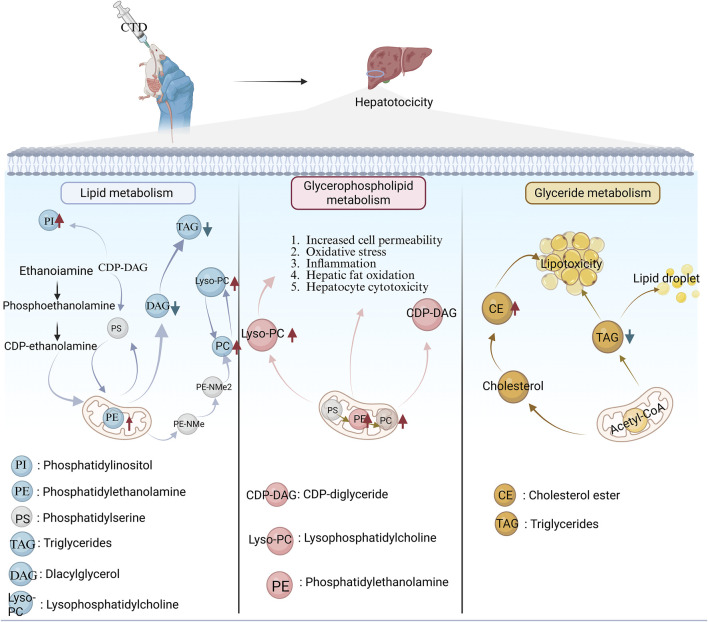 Figure 7
Peer Reviews
No public reviews on file for this paper yet. If you reviewed it on a platform where reviews are public (OpenReview, ICLR, NeurIPS, ICML), you can paste yours below so the community can read it here.
Videos
No videos yet. Explain this paper in a talk, walkthrough, or lecture? Add one.
Taxonomy
TopicsBeetle Biology and Toxicology Studies · Dermatological diseases and infestations · Leech Biology and Applications